
Summarise & Save this Recipe on:
Summarise & Save this Recipe on:
If there’s one bake that reminds me of my Dad, it’s Belgian Buns. Whether it’s following a lunch at Greggs or buying them by the trayful at Costco, he just can’t resist them. And who can blame him?!
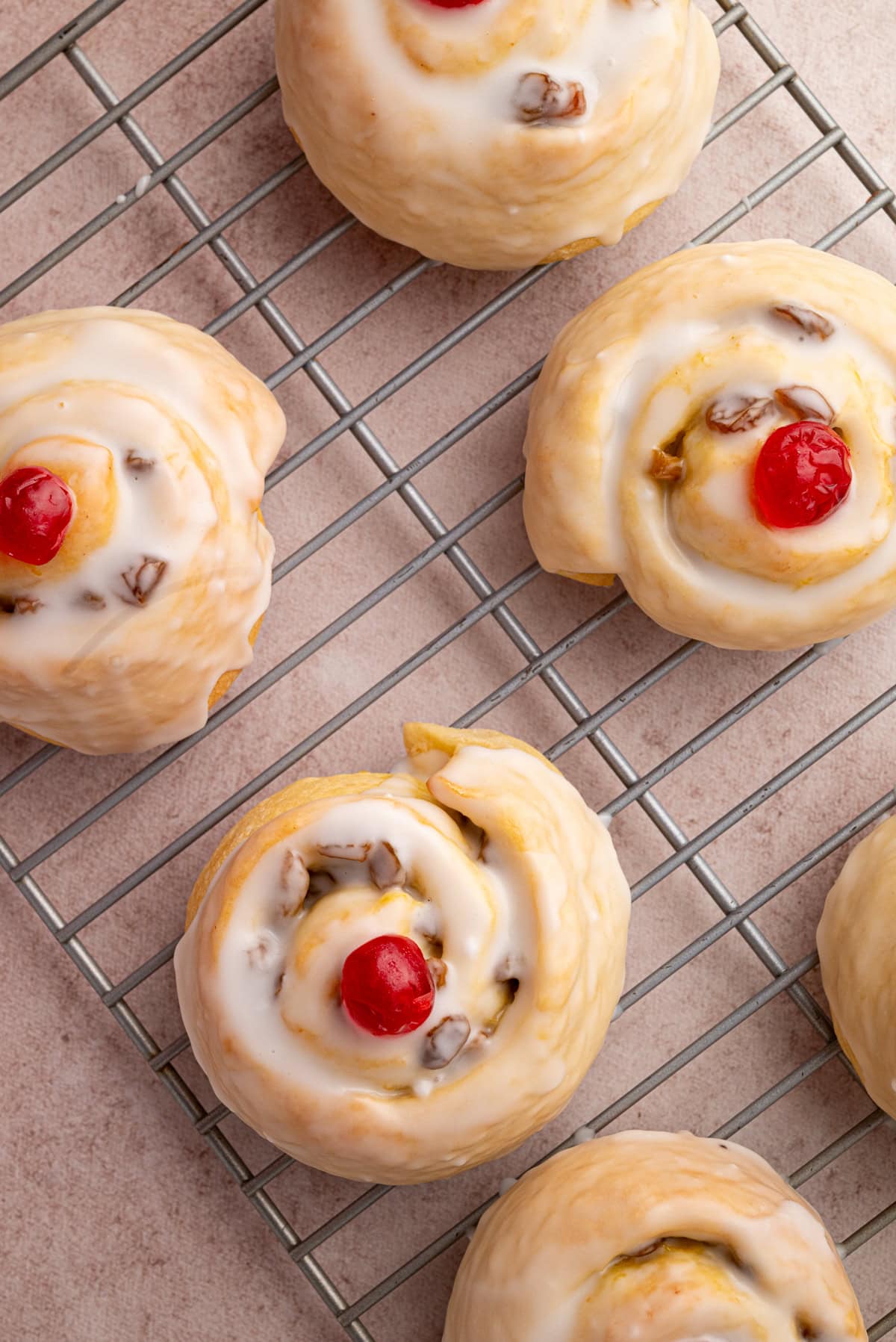
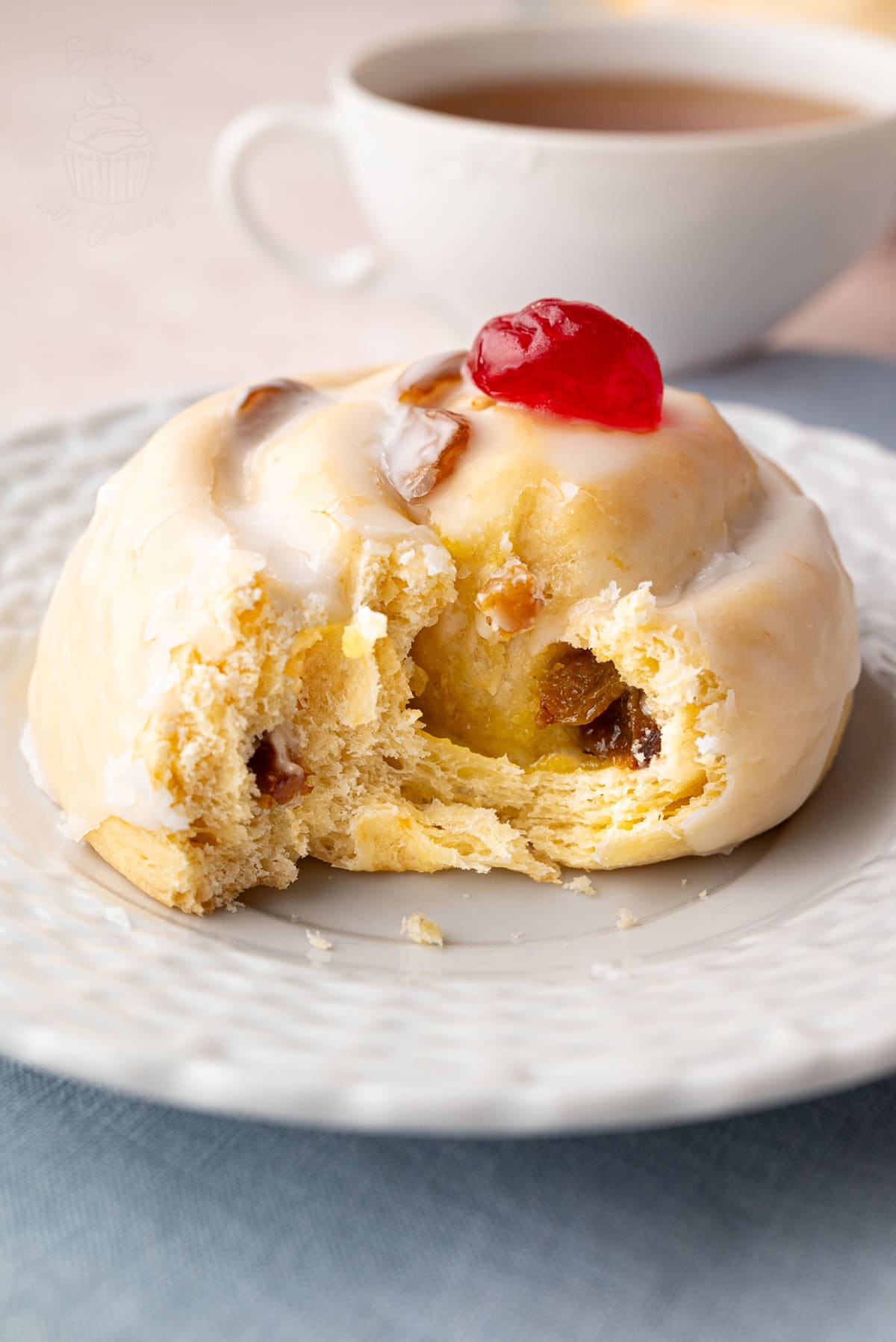
In many ways, they are similar to a Chelsea Bun recipe, or easy Cinnamon Buns. Lovely, sweet, doughy swirls, filled with plump sultanas and lemon curd, topped with a generous share of icing and lovingly crowned with a glacé cherry! What better accompaniment is there to a cup of tea?
It’s taken me a good few attempts to make this as soft and doughy as they deserve to be, and the filling is always best when you go the extra mile with a homemade lemon curd. Don’t worry, though, they still taste fantastic even with a store-bought curd.
When you do make these Belgian Buns, don’t expect them to stick around for long. If you only manage to eat one, you’re a stronger person than I am. What can I say? I’m my father’s daughter!
Free-from & Vegan:
Gluten-free: To make these gluten-free Belgian Buns, you can try swapping the flour for a gluten-free blend and adding ½ teaspoon of xanthan gum if your blend doesn’t already include it. Be aware that the dough may be softer and more delicate -chilling it before rolling can help. Alternatively, Becky Excell has a tried-and-tested gluten-free Belgian Buns recipe that you could use instead.
Dairy-free: To make this a dairy-free Belgian Buns recipe, you can swap the milk for your favourite milk alternative (soya, almond, oat…), use a dairy-free margarine in place of butter, and check your lemon curd is dairy-free also.
Egg-free: To make this an egg-free Belgian Buns recipe, you can try using an egg replacer, such as 3 tbsp of aquafaba (chickpea water) or flaxseed or chia seed “eggs”. You will also want to use an egg-free lemon curd.
Nut-free: This Belgian Buns recipe doesn’t contain any nuts, but be sure to double-check all your individual ingredients for any hidden nuts when making for those with allergies.
Vegan: To make this a vegan Belgian Buns recipe, simply follow the dairy-free and egg-free steps above.
N.B. Any advice or suggestions to make recipes “free-from” or vegan are purely that – suggestions. Please be careful to double-check all ingredients individually, taking extra caution when serving to those with allergies & intolerances.
For more info on common food allergies, please see food.gov.uk | For more info on coeliac disease, please see coeliac.org.uk | For more info on a vegan diet, please see vegansociety.com
Top Tips for Homemade Belgian Buns:
- Don’t Rush the Rise: Give your Belgian Bun dough time to prove properly, both the first and second rise. It helps develop the best flavour and gives your buns a lighter texture.
- Keep Your Lemon Curd in Check: It’s good to be generous, but don’t go overboard. Too much curd will spill out when rolling or baking. A thin, even layer works best here.
- Roll Tightly, But Not Too Tight: You want a neat swirl without squishing out the filling or tearing the dough. Aim for snug but remain gentle.
- Space Out Your Buns: Leave a little room between each bun on the tray, as they’ll expand during the second rise, and further again while baking.
- Cool Before Icing: Make sure your buns are completely cool before adding the icing, or it’ll melt and slide right off, making them stickier than normal Belgian Buns.
- Best Enjoyed Fresh: As with most homemade buns, these Belgian Buns are at their best the same day they’re made, but they can be kept for a day or two in an airtight container.
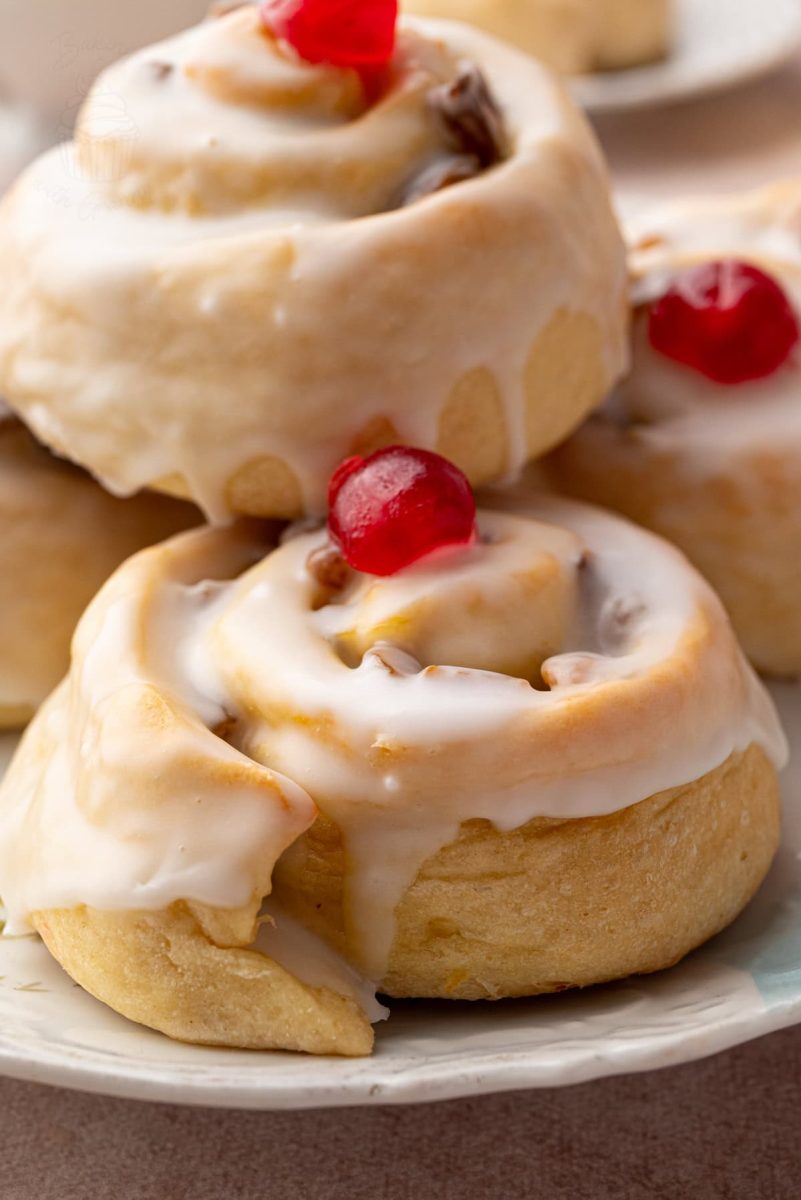
Thank you to Naomi Seiler for creating these photos.
Belgian Bun FAQ
Belgian Buns are sweet, yeasted buns filled with juicy sultanas and lemon curd, rolled like a Chelsea Bun or Cinnamon Bun and baked until soft and golden. They’re finished with a sticky layer of icing and topped with a glacé cherry. Belgian Buns are a popular treat in British bakeries, loved for their soft texture, fruity filling, and sweet, sticky finish.
To make Belgian buns, you start by preparing a soft yeast dough and letting it rise until doubled in size. You’ll then roll it out, spread it with lemon curd, and sprinkle it with sultanas before rolling it up and slicing it into buns. After a second rise, you bake the buns until golden, then finish with icing and a glacé cherry on top.
Despite the name, Belgian Buns are actually a classic British bake with no real link to Belgium. No one’s entirely sure where the name came from, but it’s likely it was chosen to sound a bit more fancy or exotic. It might also be a nod to the sweet icing and dried fruit – both common in Belgian-style baking.
More Classic Buns
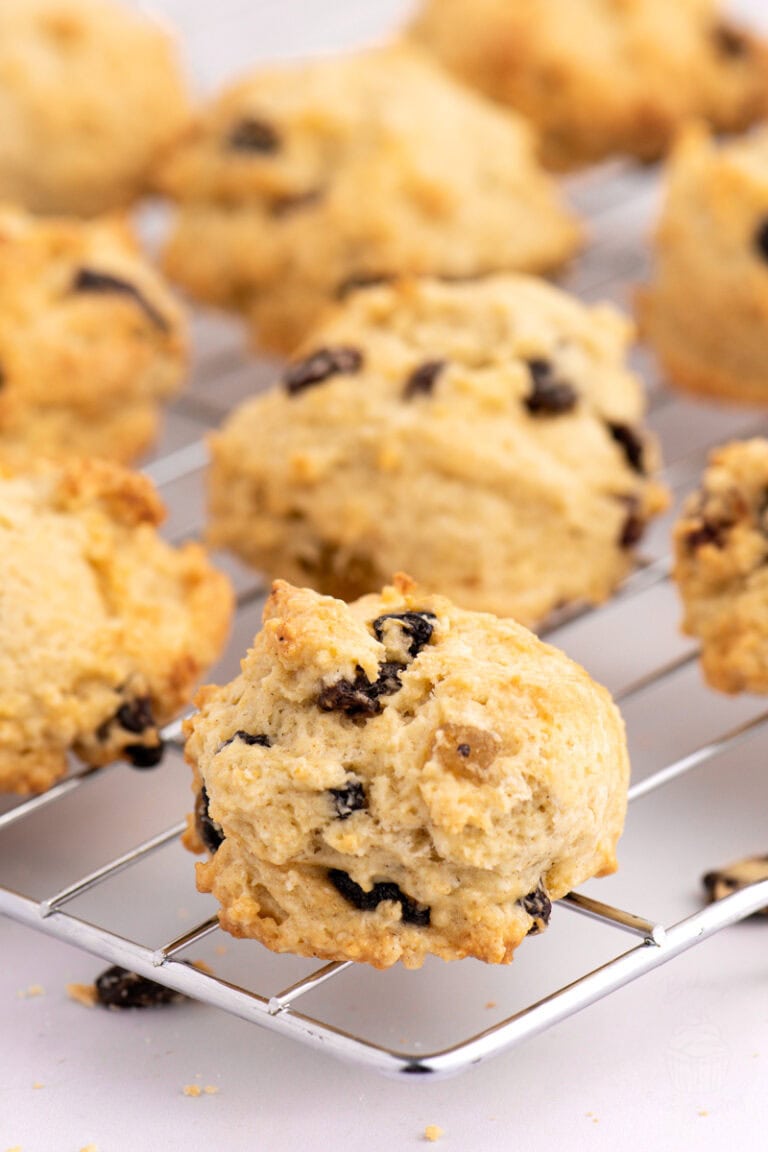
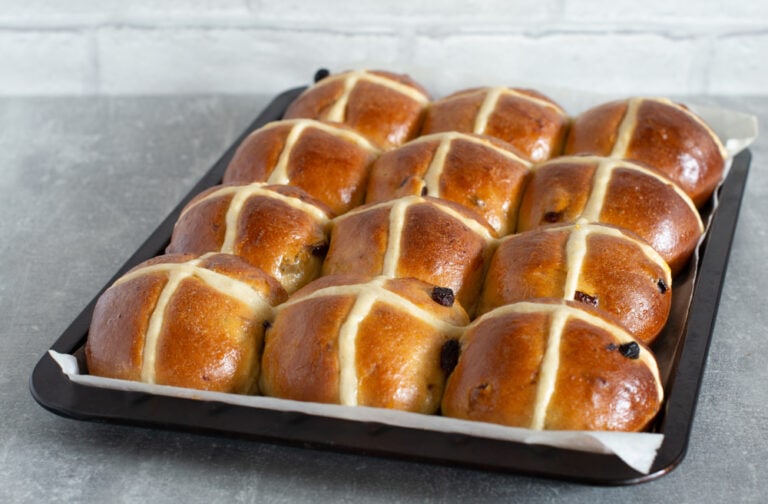
If you loved these Belgian Buns, here are some more of my favourite British bun recipes for you to try next:

Save this recipe!
Want to save this recipe for later? Pop your email below and come back to it when you’re ready to bake.

Belgian Buns
INGREDIENTS
- 120 ml Milk
- 275 g Plain Flour (plus extra for dusting)
- 7 g Easy Bake Instant Yeast (usually 1 sachet)
- 40 g Caster Sugar
- 60 g Block Margarine or Butter (at room temperature; plus extra for greasing)
- 1 Free-range Egg (at room temperature; see Egg Size note below)
- 3 tbsp Lemon Curd
- 150 g Sultanas
- 200 g Icing Sugar
- 3 tbsp Warm Water
- 6 Glacé Cherries
EQUIPMENT
INSTRUCTIONS
- In a small pan warm the milk until it's lukewarm. Set aside.
- Sift the flour into a large bowl and add the yeast. Make a well in the middle and add the butter, sugar, milk and egg. Mix to combine.
- Transfer the dough to a well-floured surface, and using well-floured hands, knead the dough for around 10 minutes.
- Form the dough into a ball and transfer it into a lightly greased bowl, and cover loosely with some oiled
cling film or a damp tea towel. Leave to rise in a draught-free place until it has doubled in size (around 1 to 2 hours). - Generously grease a
baking tray with some extra butter/margarine. Set aside. - After your dough has doubled in size, turn it out onto a lightly floured surface and knock it back. Using a rolling pin, roll it into a rectangle about 25 ×35cm (10×14 inches). Make sure your dough is evenly thick throughout to ensure you have nice, neat buns.
- Spread the lemon curd from edge to edge of the dough and sprinkle the sultanas evenly over.
- Roll the dough tightly to create a long sausage shape. Cut the sausage into 6 buns – I tend to cut it in half, then into thirds to ensure even buns. Arrange the rolls in your pre-greased
baking tray and cover them loosely with a piece of lightly greasedcling film . - Leave to rise in a draught-free place for 1-2 hours until they look light and puffy.
- After your buns have gone through their second rise, remove the
cling film and place thebaking tray in a preheated oven at 180°C (160°C for fan-assisted ovens, Gas Mark 4 or 350°F) and bake for around 10-15 minutes until golden brown. Transfer to a wire rack when cool enough to touch and leave to cool completely.
For the Icing
- In a medium bowl, mix the
icing sugar with warm water, adding a tablespoon of water at a time. When it has a "gloopy" consistency, dip the top of each bun into the icing to get an even topping, spreading off the excess with a clean finger. - Finish with a glacé cherry on top of each bun.
IMPORTANT NOTE:
All my recipes are developed using a digital scale and the metric system (grams and millilitres). Cup measurements are available as a conversion, but these, unfortunately, won’t always be as accurate. For best results, I always recommend baking with a digital scale.
RECIPE NOTES:
Substitutions:
- Sultanas: If you’re not a fan of sultanas, you can leave these out or replace them with another dried fruit of your choice, like raisins or dried cranberries.
- Lemon Icing: If you’d prefer a zestier icing, you can use lemon juice instead of water when making the icing.
LIKE THIS RECIPE?
Leave a comment and rating below!Originally published in July 2017.