
Summarise & Save this Recipe on:
Summarise & Save this Recipe on:
What are Chelsea Buns?
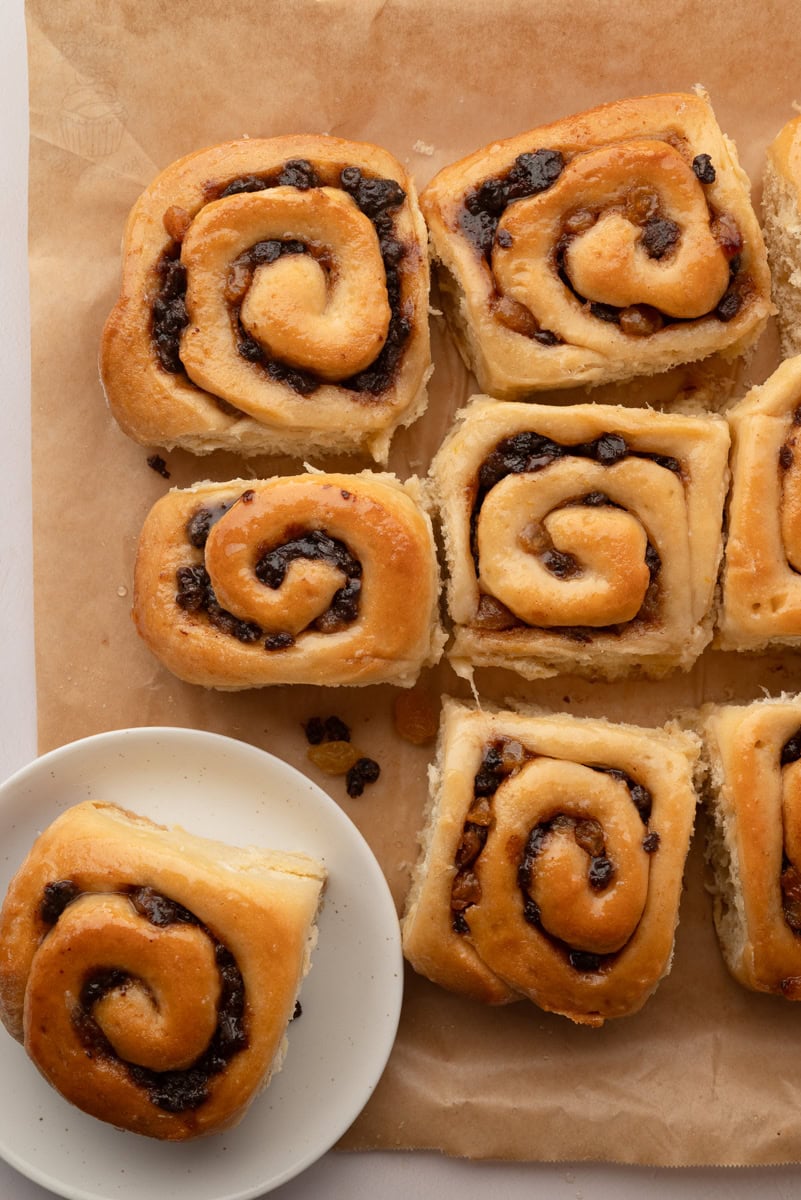
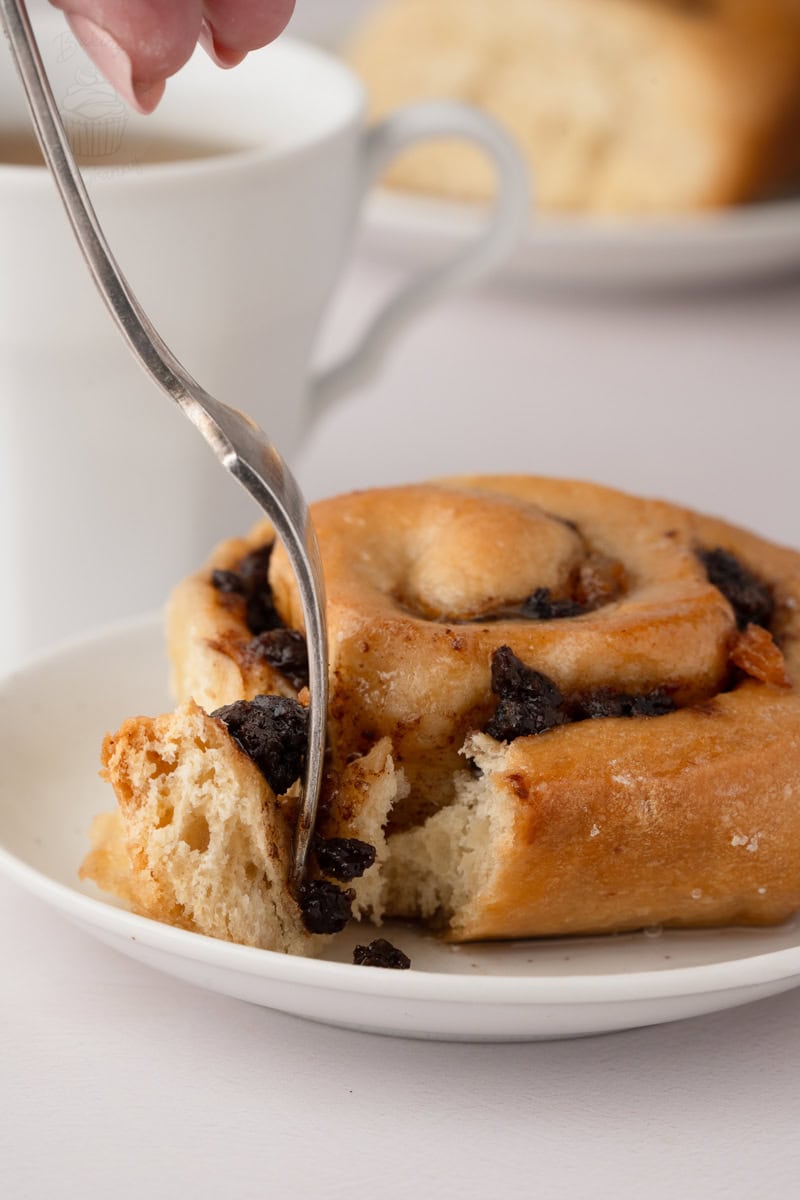
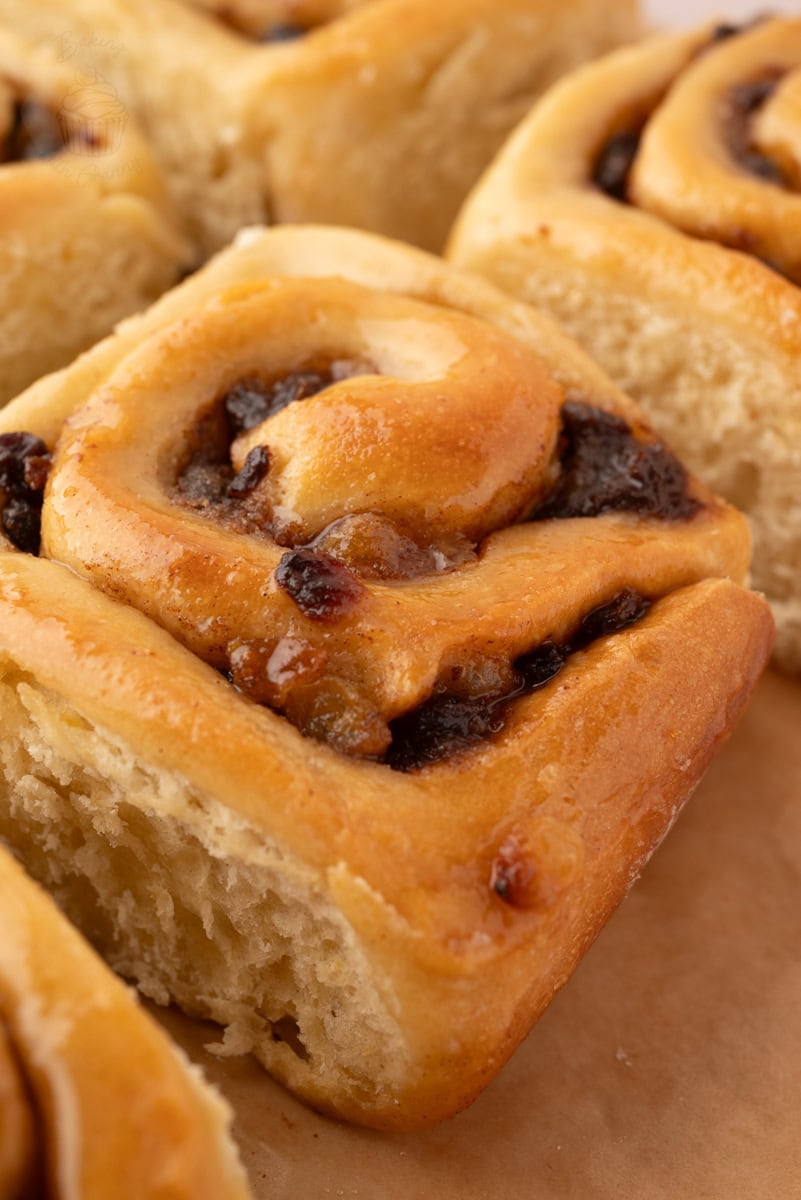
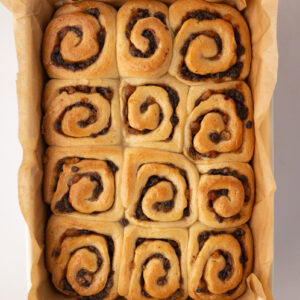
Chelsea Buns are a true British classic. Soft, fluffy swirls of sweet yeast dough, filled with dried fruit, brown sugar, and warming mixed spice. Finished with a sticky sugar glaze when right out of the oven and still warm.
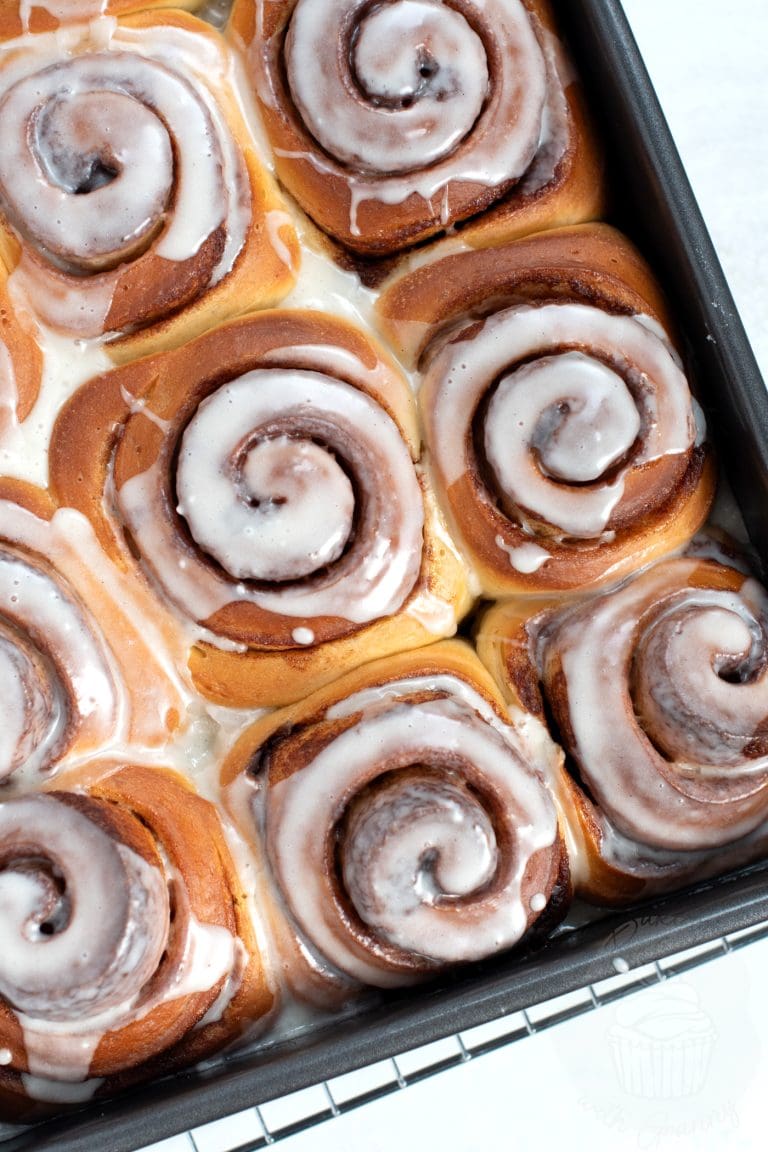
Although somewhat similar to Cinnamon Buns (at least in appearance), Chelsea Buns have an identity that is entirely their own. Instead of a heavily cinnamon-tasting filling and usually a thick icing, Chelsea Buns traditionally use currants and sultanas, paired with mixed spice and a simple sugar glaze for that lovely sticky finish.
The History of Chelsea Buns
Chelsea Buns are believed to have originated in the 18th century at the famous “Bun House” in Chelsea, London. The bakery became so well known for them that people would queue in the streets to buy them fresh, with visitors travelling from across the city just to get their hands on one.
Over the years, they have remained a popular sight in British bakeries and cafes. Also a firm favourite in our family!
A Bun Worth Giving a Go
Once you try making them yourself, you’ll instantly see why they have always been so popular. The easy yeast dough is lovely, soft & fluffy, the fruit filling becomes sweet & sticky as it cooks, and the glaze gives the buns that classic sticky, shiny finish. They look beautiful too, with those iconic spirals running through each bun. But the actual making of Chesea Buns is surprisingly easy, if a little time-consuming – 100% worth it, though!
If you have ever made Cinnamon Rolls or Belgian Buns before, the process here is very similar: make the dough, roll it out, spread the filling over it, roll it up, slice, and bake. The main thing Chelsea Buns need is a little patience while the dough rises, but the actual hands-on work is very simple.
One of my favourite things about homemade Chelsea Buns is the way they fill my kitchen with a warm, buttery, spiced smell while baking 🤤 Between the mixed spice, dried fruit, and sweet glaze, they have that amazing bakery aroma that makes it very difficult to wait for them to cool down before digging in!
Top Tips for Chelsea Buns:
- Lukewarm Warm Milk: Make sure your milk is only lukewarm when making the dough. If it’s too hot, it can kill the yeast and prevent your dough from rising properly.
- Soft, Sticky Dough: Your dough will feel quite soft and slightly sticky at first – this is exactly what you want for soft, fluffy Chelsea Buns. Try not to add too much extra flour while kneading, or you risk having a drier, tougher dough.
- Roll Them Even: Roll your dough as evenly as possible before adding the filling. An even thickness throughout the dough will give you neater swirls and more even-sized buns.
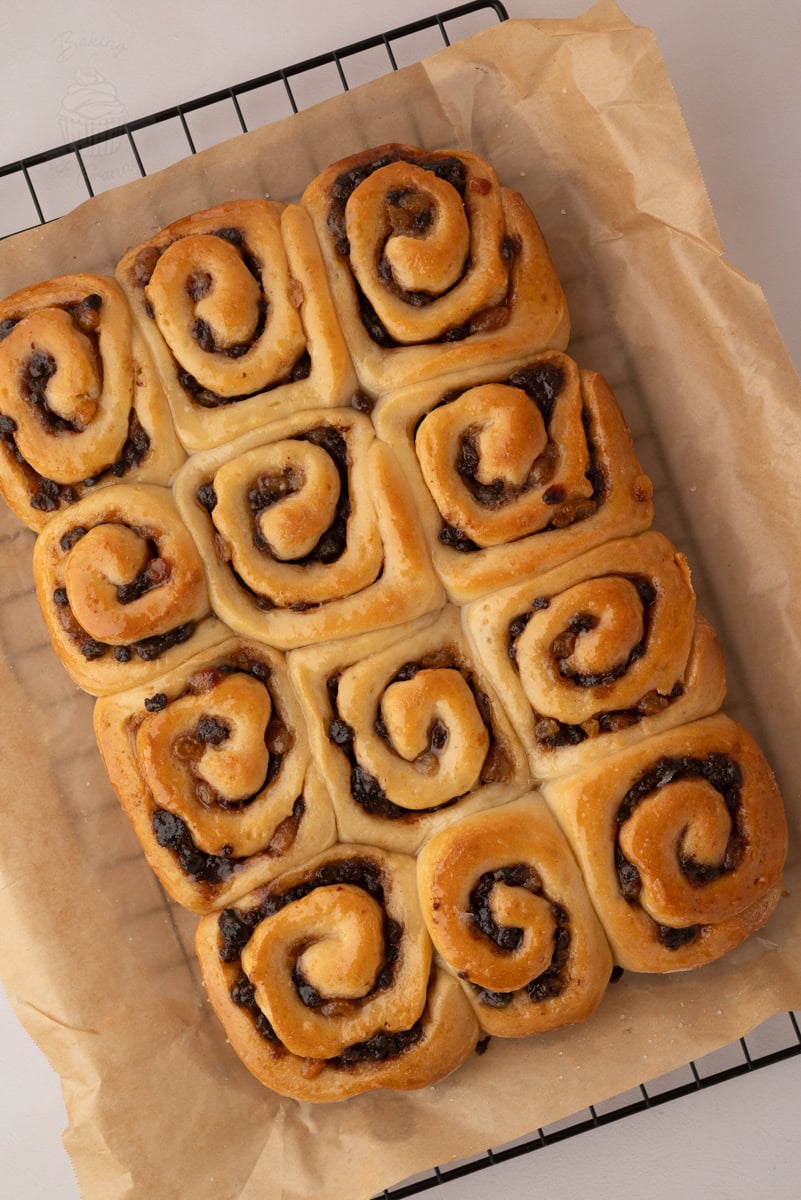
- Give Them Space: Leave a little space between each bun in the tray. As they rise and bake, they will expand and join together around the edges, giving that lovely pull-apart finish.
- Cold Kitchen? If your kitchen is a little on the cooler side, place your dough somewhere slightly warm and draught-free to help it rise. Near (not on!) a radiator or in your boiler cupboard usually works well.
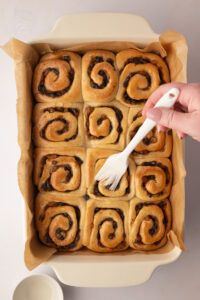
- Always Glaze While Warm: Brush the glaze over the buns while they are still warm, fresh from the oven. This gives the glaze a little time to set in place as they cool, giving your Chelsea Buns their classic sticky, shiny finish.
Free-from & Vegan:
Gluten-Free: Being a yeast dough, simply swapping for gluten-free flour in this recipe, unfortunately, probably won’t work. Instead, I would recommend using a dedicated Gluten-free Chelsea Buns recipe, like this one from Gluten-free Alchemist.
Nut-free: There are no nuts used in this Chelsea Buns recipe, but be sure to check the allergens on your individual ingredients, particularly the dried fruits.
Dairy-Free: You can make dairy-free Chelsea Buns by simply using a dairy-free margarine and a plant-based milk in place of the milk and butter.
Vegan: To make vegan Chelsea Buns, along with the dairy-free swaps above. You would also need to replace the eggs with an egg substitute, such as Oggs or Bob’s Red Mill Egg Replacer. – I haven’t personally tried these with this recipe, however, so can’t vouch for their success. Alternatively, one of my favourite baking books, The Elements of Baking, has a fab guide on how to make any baking recipe vegan, including suitable egg substitutes based on the type of bake.
N.B. Any advice or suggestions to make recipes “free-from” or vegan are purely that – suggestions. Please be careful to double-check all ingredients individually, taking extra caution when serving to those with allergies & intolerances.
For more info on common food allergies, please see food.gov.uk | For more info on coeliac disease, please see coeliac.org.uk | For more info on a vegan diet, please see vegansociety.com
With thanks to Naomi Seiler for creating these photos.
Chelsea Buns FAQs
Chelsea Buns are a traditional British sweet bun made from soft yeast dough, rolled with a filling of dried fruit, brown sugar, and mixed spice. Once baked, they are finished with a simple sugar glaze for their classic sticky finish. They are known for their soft, fluffy texture and distinctive spiral shape.
Chelsea Buns are said to have originated in the 18th century at the famous “Bun House” bakery in Chelsea, London. The bakery became incredibly popular for these sweet buns, eventually giving them the name we still use today.
Chelsea Buns are made by first preparing a sweet yeasted dough using flour, milk, butter, sugar, eggs, and yeast. The dough is then rolled out into a rectangle before being spread with a spiced dried fruit filling. The dough is then rolled into a long log, sliced into individual buns, left to rise again, then baked until golden brown. Once out of the oven, they are brushed with a simple sugar glaze while still warm.
Your dough should look noticeably puffy and have roughly doubled in size. The time your dough will take to rise depends on a number of factors, including temperature and humidity. So it is always best to use time as a guide, but the appearance of your dough is the main indicator of when it has risen enough.
This usually happens for two reasons: adding too much extra flour during the kneading process, or overbaking. Try and keep the dough as tacky as possible while kneading – resist the urge to dump lots of flour onto your counter! Also, keep a close eye on your oven; you want them to be a golden brown, but overbaking will dry them out, too.
Not quite. Although Chelsea Buns and Cinnamon Buns look similar, the filling and topping are usually different. Chelsea Buns traditionally contain currants, sultanas, mixed spice, and brown sugar, finished with a sticky sugar glaze. Cinnamon Buns usually have a much more sugary cinnamon filling and are often topped with thick icing or a cream cheese frosting.
Chelsea Buns and Belgian Buns are very similar in style, both made using soft enriched dough with a spiral shape. However, Belgian Buns are usually topped with icing and a glacé cherry, while Chelsea Buns are finished with a simple sticky glaze and traditionally contain more dried fruit and spice.
Chelsea Buns are still commonly found in many British bakeries, supermarkets, and cafes across the UK. However, homemade Chelsea Buns are hard to beat, especially when still warm from the oven with their freshly glazed sticky tops.
Chelsea Buns are best enjoyed on the day they are made, but they will keep well in an airtight container at room temperature for up to 3 days. To bring back that freshly-baked texture, just pop a bun in the microwave for 10-15 seconds before eating.
Absolutely. Wrap the buns individually or store them in a freezer-safe container for up to 3 months. Allow to defrost at room temperature and warm slightly before serving. Alternatively, you can freeze them before baking: after shaping and placing the buns into the tray, cover tightly and freeze before the second rise. Defrost fully in the fridge overnight, then allow them to come to room temperature and rise until light and puffy before baking.
Save this recipe!
Want to save this recipe for later? Pop your email below and come back to it when you’re ready to bake.
Chelsea Buns
INGREDIENTS
For the Dough:
- 200 ml Milk
- 115 g Block Margarine or Butter
- 300 g Strong White Flour
- 250 g Plain Flour
- 140 g Caster Sugar
- 7 g Easy Bake Instant Yeast (usually 1 sachet)
- Zest of 1 Lemon
- 2 Free-range Eggs (at room temperature; beaten; see Egg Size note below)
For the Filling:
- 50 g Block Margarine or Butter (at room temperature)
- 100 g Soft Light Brown Sugar
- 2 tsp Mixed Spice
- 100 g Currants
- 50 g Sultanas
For Glazing:
- 2 tbsp Caster Sugar
- 1 tbsp Hot Water
EQUIPMENT
- 35×24cm (14×9½ inch) Baking Tin (or approx.)
INSTRUCTIONS
For the Dough:
- In a small pan, warm the milk & butter/margarine until the milk is lukewarm (not hot!) and the butter/margarine is melted.
- Meanwhile, sift the flours into a large bowl. Gently mix in the sugar, yeast and lemon zest to combine. Add the milk mixture and stir in a little before adding the eggs too. Mix until you have a soft, somewhat sticky dough.
- Transfer the dough to a lightly-floured surface and, using floured hands, knead for around 10 minutes, adding more flour as required.
- Place the dough into an oiled bowl (to prevent it from sticking) and cover with an oiled piece of cling film, or a damp tea towel. Leave to rise in a draught-free location for 1 hour, or until it has doubled in size.
- Once your dough has doubled in size, turn it out onto a lightly floured surface and roll it into a rectangle about 40×25cm using a rolling pin. It's important to make sure your dough is evenly thick all over to get nice, neat buns.
For the Filling:
- Line a large baking/roasting tin with greaseproof paper and set aside.
- In a small bowl, cream the butter/margarine, sugar, brown sugar and mixed spice. Add the dried fruits and mix until everything is coated and you have a somewhat clumpy mixture. Spoon the mixture evenly over your dough, and push it into the dough with your fingers.
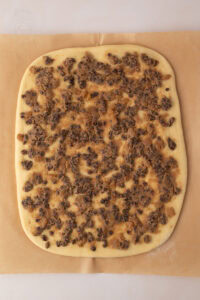
- Roll the dough tightly & evenly, from the long side to the long side, to create a 45cm sausage. Cut the sausage into 12 individual buns. Arrange the buns in your pre-prepared tin, leaving space between each bun (they need room to grow!). Cover loosely with the oiled cling film or a damp tea towel.
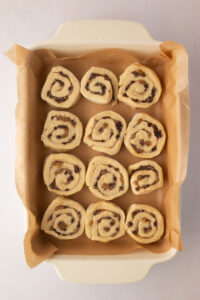
- Leave to rise in a warm place for around 1 hour until they look light and puffy.
- After the buns have gone through their second rise, preheat your oven to 180°c (160°c for fan-assisted ovens, Gas Mark 4 or 350°F). Remove the cling film/tea towel, place the tray in the oven, and bake for around 20-25 minutes, until golden brown.
- While the buns are still warm, prepare the glaze by mixing the sugar and water, then brush the tops of the buns to create that shiny, sticky finish. Leave in the tray until cool enough to touch, then transfer to a wire rack to cool completely, or enjoy while still warm.
IMPORTANT NOTE:
All my recipes are developed using a digital scale and the metric system (grams and millilitres). Cup measurements are available as a conversion, but these, unfortunately, won’t always be as accurate. For best results, I always recommend baking with a digital scale.
RECIPE NOTES:
Substitutions:
- Flour: I like a combination of Plain (All-purpose) and Strong flours when making a yeast dough for buns to get the best balance between softness and structure. You can, however, use just one or the other – your kneading and rising times, as well as overall texture, may vary slightly, though.
- Lemon Zest: I like to use some lemon zest in my dough, but orange zest works well too. Or, you can skip the zest completely and go for a plainer dough.
- Dried Fruit: Currants and sultanas are traditional in Chelsea Buns, but raisins can also be used if preferred. You can even use a mixture of all three to suit your own taste.









ABOUT THE AUTHOR
Amy Beth Reid
Amy Beth Reid is an award-winning food blogger, mother, wife and cookbook author. Inspired by her childhood in the kitchen with her Mum – a professional baker and her children’s Granny – Amy now shares her tried-and-tested traditional home baking recipes with bakers of all abilities around the world. She lives in Scotland with her husband, two sons and her small pack of Siberian huskies.