
Summarise & Save this Recipe on:
Summarise & Save this Recipe on:
Have You Heard of Japs Before?
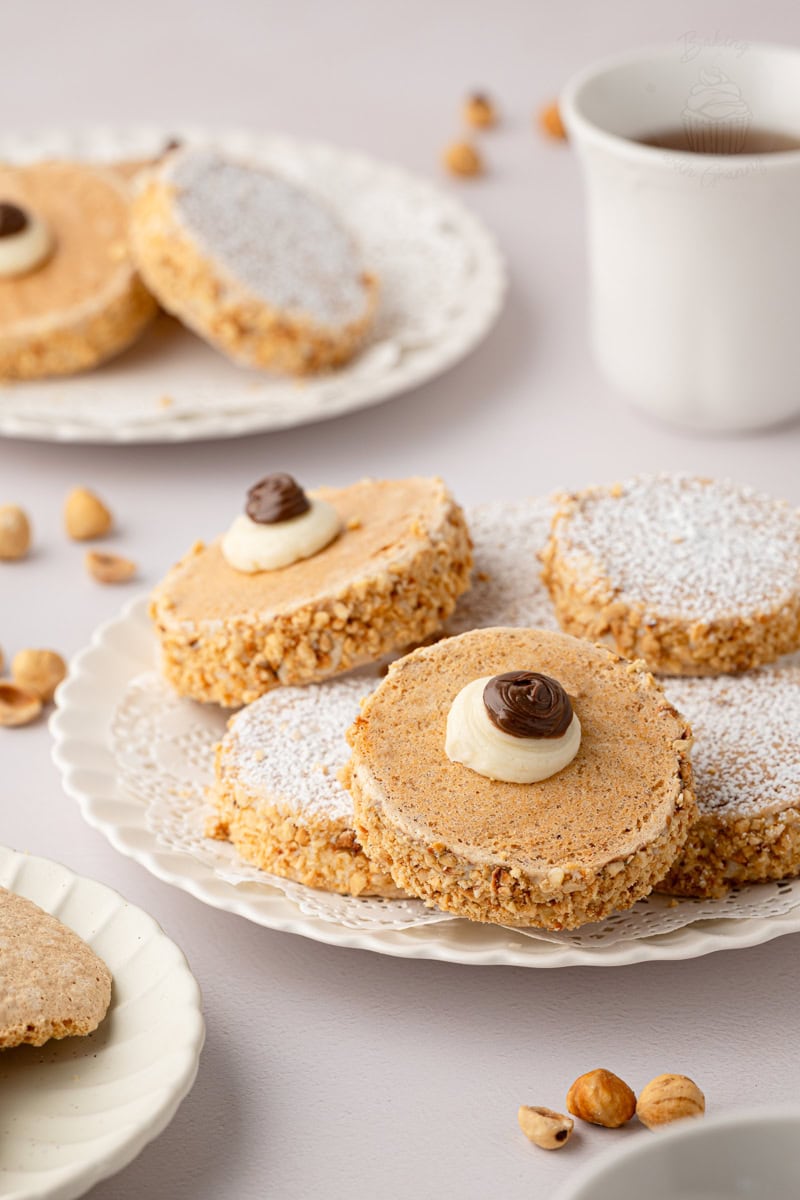
Japonaise biscuits, or simply “Japs” as they’re known in many Scottish bakeries, are a traditional bakery treat that seems to be a little harder to find these days. They’re certainly not something I come across very often, but one my Mum has always reminisced about.
Like Empire Biscuits and Coffee Buns, my Mum remembers Japs from when she used to make them while working in the bakery – the bakers would prepare the hazelnut meringue shells before she filled & coated them in buttercream and then decorated them.
Despite the name potentially raising a few eyebrows, the bakery term “Japs” simply comes from shortening the word “Japonaise”!
Japonaise are a European confection traditionally made from nut-based meringue layers, usually sandwiched together with a rich filling. The exact origins of the Scottish bakery version are a little unclear. My Mum’s old recipe books describe a Japonaise as “a French or Swiss pastry consisting of crisp nut meringue discs, joined together with buttercream” – which is actually a pretty good description of these.
What are Scottish Japs like?
If you’ve never tried a Jap before, they are a bit like a French or Italian Macaron (not a Scottish Macaroon!), but a little less fiddly to make, and a decent bit bigger. They have the same combination of crisp, nutty meringue and a soft filling, but they’re a little more rustic in appearance and much easier to make – no worrying about perfect feet, smooth-topped shells, or overly precise piping with Scottish Japs!
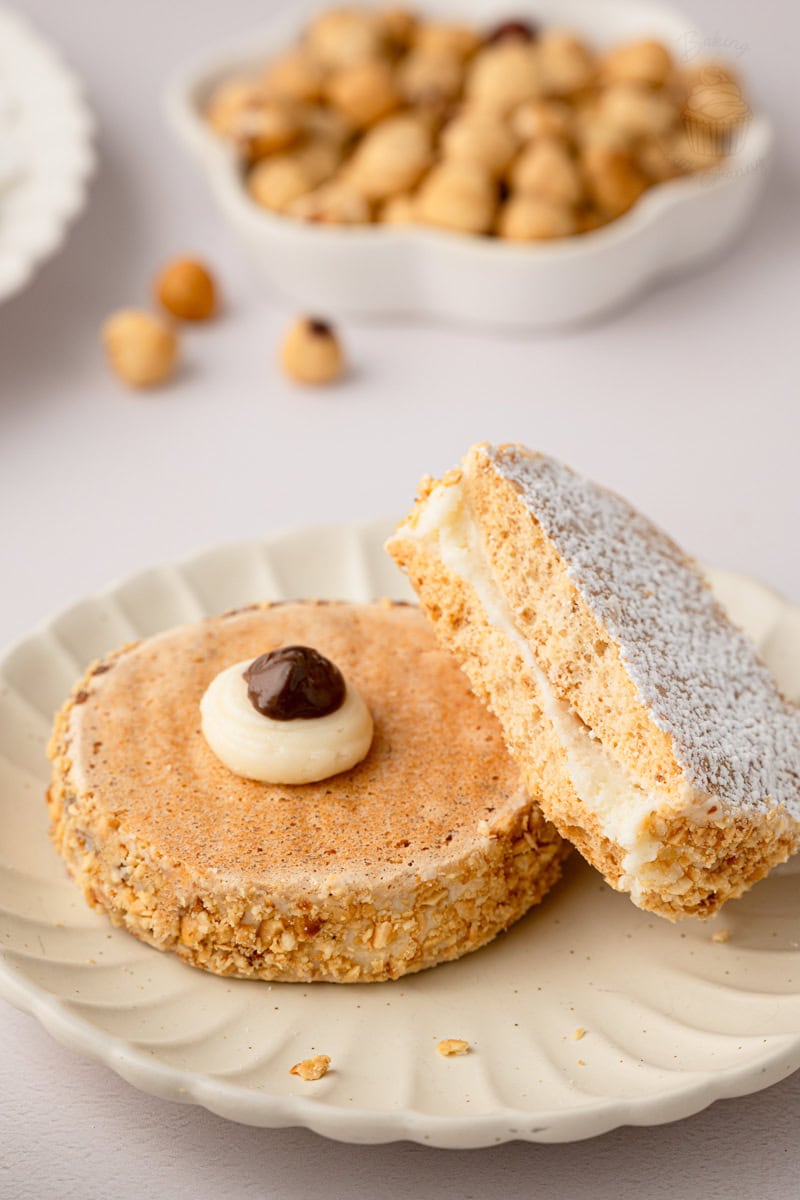
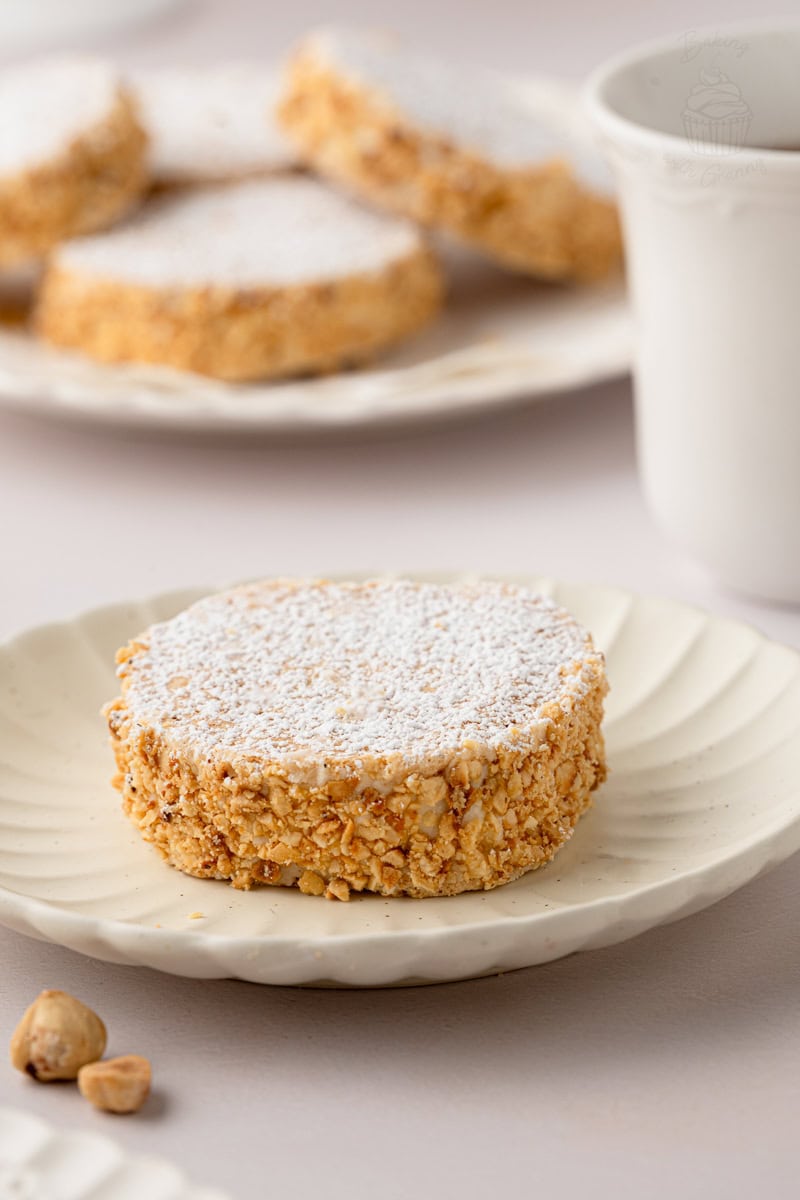
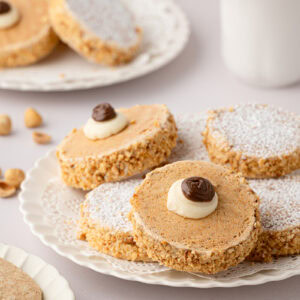
Some Japs recipes call for almonds, or a combination of almonds and hazelnuts, but my Mum always recalls them just being a purely hazelnut-based bake when she made them. The hazelnut meringue biscuits are light and crisp on the outside, with a slightly chewy centre, thanks to the ground hazelnuts folded through the mixture. They’re then sandwiched together with sweet buttercream, rolled in more hazelnuts, and finished with a dusting of icing sugar. The result is a sweet, nutty bake with a delicious buttercream filling and just the right amount of crunch.
My personal favourite way to enjoy them is with a wee dollop of Nutella snuck into the middle alongside the buttercream – it gives them a flavour that’s surprisingly similar to a Ferrero Rocher! But you can decorate them in any way you like, depending on how fancy you want to get.
Free-from & Vegan
Gluten-free Options:
Japonaise cakes are naturally gluten-free. Just be sure to check your individual ingredients, particularly your icing sugar, cornflour (corn starch), and any decorations, to ensure they are definitely labelled as gluten-free.
Nut-free Adjustments:
The addition of nuts is a big part of the overall flavour of Japonaise. If you wanted to make a nut-free version, you could omit the nuts and use a simple nut-free meringue biscuit and instead achieve the nutty flavour with something like Foodie Flavours Hazelnut Natural Flavouring.
Dairy-free Swaps:
To make this a dairy-free Scottish Japs recipe, simply use a dairy-free block margarine in the buttercream.
Egg-Free Adaptations:
In theory, you could make egg-free Scottish Japs by using a vegan meringue mix made with aquafaba instead of eggs. I haven’t tried this yet, so I can’t comment on how successful it would be (please let me know if you do!).
Vegan Substitutions:
To make these vegan Scottish Japs, you could try the dairy-free and egg-free tips above. I haven’t yet tried this myself, but if you do, let me know the results!
Allergy Disclaimer & Resources:
Any advice or suggestions to make recipes “free-from” or vegan are purely suggestions. Please double-check all packaged ingredients individually, taking extra caution when baking for those with allergies or intolerances.
For official guidance on food allergies, please see Food Standards Agency (food.gov.uk) | For more info on coeliac disease, please see Coeliac UK (coeliac.org.uk) | For more info on a vegan diet, please see The Vegan Society (vegansociety.com)
Top Tips for Japonaise cakes:
- Roasted Hazelnuts for the Best Flavour: You can usually find ground hazelnuts in large supermarkets or create your own by blitzing blanched hazelnuts in a food processor. And while normal ground hazelnuts work completely fine for Scottish Japs, using ground roasted hazelnuts will give the very best flavour. You can buy ground roasted hazelnuts online (I use these ones from Amazon). Or you can easily “roast” them yourself by spreading the ground nuts evenly onto a baking sheet and baking at 170°c (150°c fan / Gas Mark 3 / 325°F) for 5 to 10 minutes. Just keep a close eye on them, give them a stir every few minutes, and allow them to cool completely before adding to the meringue mixture.
- Nice and Neat: If you want neat, uniform Japs, you can draw circles on the underside of your greaseproof paper to use as a guide when piping; around a 6cm (2-inch) diameter is ideal. Just be sure to leave a few centimetres of space between each circle.
- Keep Everything Spotless: Any trace of grease or moisture can make the meringue mixture fail, so make sure all your equipment is absolutely clean and dry. Wash your bowl, whisk, and spatula in very hot, soapy water, then dry them with a clean paper towel. Avoid touching the inside of the bowl afterwards. And for the piping bag, choose a fresh, unused disposable one.
- Separate Eggs Carefully: Even a tiny bit of yolk will stop your egg whites from whisking properly. It’s best to separate each egg into a small bowl first before adding it to your main mixing bowl, just in case a yolk does break.
- Save Your Arms: You can absolutely make Scottish Japs with just a standard hand whisk, but I like in my classic Pavlova and Meringue recipe, I would always recommend using an electric whisk (or better yet, a stand mixer!) if you have one. As the base for Japs uses a meringue mixture, it requires A LOT of whisking.
- Slow Sugar Matters: Add your sugar to the egg whites slowly, one spoonful at a time. This helps the sugar dissolve completely, the mixture reach “stiff peaks,” and gives you that lovely glossy finish we are looking for.
- Be Patient with the Meringue: How quickly the meringue mixture will reach “stiff peaks” depends on various factors, including the quality of your eggs, the temperature and humidity of your kitchen, the power of your mixer… Sometimes it may take a few minutes; sometimes it may take 15 minutes. Stick with it!
- Cornflour for the Nuts: Tossing the hazelnuts in cornflour (corn starch) helps prevent them from clumping but also stops the oil from the nuts from causing the meringue mixture to split – don’t skip this step!
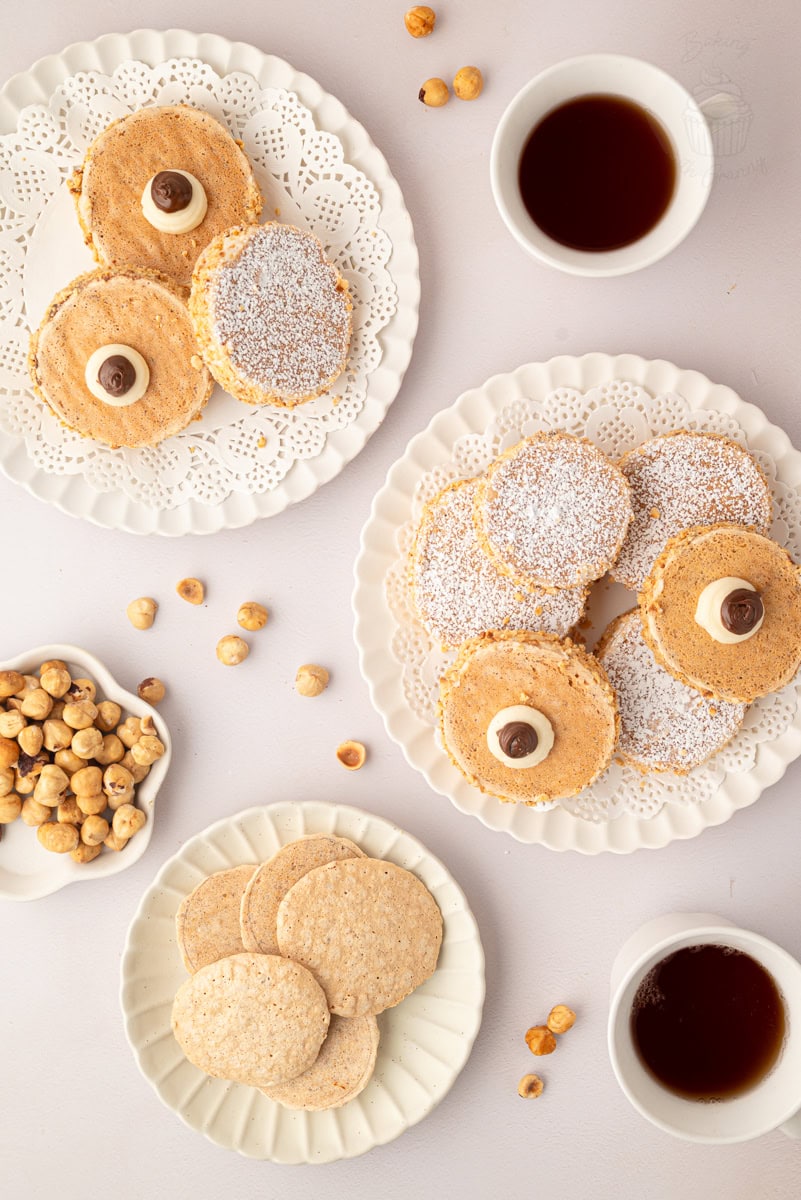
- Fill & Decorate to Your Taste: Traditionally, Japonaise are sandwiched with buttercream, before the sides are also covered in buttercream & rolled in ground hazelnuts, and either finished with a dusting of icing sugar, or a little blob of buttercream on the top. But I also like to pop a little dollop of Nutella into the middle of my Japs, too! Sometimes you would also see them with a drizzle of chocolate over them, or even dipped in chocolate. Why not get creative and make them to suit your own taste?
With thanks to Naomi Seiler for creating these photos.
Scottish Japs FAQs
Japonaise cakes, often called “Japs” in Scottish bakeries, are a traditional bakery treat made from hazelnut meringue biscuits sandwiched together with buttercream. The outside is light and crisp, while the centre has a slightly chewy texture – like any good meringue. They are usually filled with buttercream, finished with ground hazelnuts, and a dusting of icing sugar.
The name “Japs” is simply a shortened version of the word Japonaise, which is the name of the confection these cakes/biscuits originate from.
Japonaise itself is believed to have European origins, often described as a French or Swiss confection made with nut-based meringue and buttercream. However, the bakery version, known as “Japs,” appears to originate from Scottish bakeries and is a familiar sight for many of us who grew up visiting traditional Scottish bakers.
Not quite. Both Japonaise cakes and Macarons use nut-based meringue and have a filling sandwiched between two shells, but Japonaise cakes are generally larger, more rustic in appearance and a little less delicate to make than Macarons. Japs also traditionally use hazelnuts in the meringue biscuits, whereas Macarons use almonds.
Yes. Some Japonaise recipes seem to use ground almonds, while others use a mixture of almonds and hazelnuts. My Mum always remembers them being made with hazelnuts in the bakery, which is why I use them in this recipe. But if you prefer, you can substitute the hazelnuts with the same quantity of ground almonds.
Save this recipe!
Want to save this recipe for later? Pop your email below and come back to it when you’re ready to bake.
Japonaise (Japs)
INGREDIENTS
For the Meringue Biscuits:
- 3 Free-range Egg Whites (see Egg Size note below)
- 130 g Caster Sugar
- 20 g Cornflour
- 100 g Ground Roasted Hazelnuts (see Hazelnuts note below)
For the Filling & Decoration:
- 100 g Block Margarine or Butter (at room temperature)
- 200 g Icing Sugar (plus extra for dusting)
- 50 g Ground Roasted Hazelnuts
- Nutella (optional)
EQUIPMENT
- Electric Hand Mixer (or a stand mixer; or a whisk)
INSTRUCTIONS
- Preheat your oven to 150°C (130°C for fan-assisted ovens, Gas Mark 2 or 300°F). Line a couple of baking sheets with greaseproof paper and set aside.
- In a large, very clean bowl, whisk the egg whites until you reach soft peaks (soft, foamy, holds its shape but still falls a little when the whisk is lifted). Use an electric hand mixer or stand mixer if possible – this can be done by hand, but it takes a bit of time and effort.
- Continue whisking while adding the sugar a spoonful at a time, ensuring each spoonful is mixed in before adding the next. As you add the sugar, you should see the mixture start to thicken and become a glossy white. Continue mixing until all the sugar is added and the mixture reaches stiff peaks (be patient; this can take time).
- In a separate small bowl, stir cornflour through the hazelnuts before adding to the meringue mixture, and gently fold through until all nuts are incorporated. Be careful not to overmix – gently fold until just combined.
- Pipe (or spoon) the nutty meringue mixture onto your pre-lined baking sheets in even circles approximately 6cm (2-inches) in diameter and 1cm (approx ½-inch) in height. Try to keep them relatively even and flat – more like discs, rather than domed in the middle. If you do have peaks or domes, use a wet finger to gently tap the tops to flatten.
- Bake in your preheated oven for around 25 to 30 minutes, until they appear dry on top, are firm to the touch and have a slight golden hue.
- Allow the Jap biscuits to cool for a few minutes, then carefully peel off the paper while still warm, & allow to fully cool completely.
- While the Jap biscuits cool, prepare the buttercream for filling & decorating by creaming the butter and icing sugar together until light and fluffy.
- Pipe or spoon a small amount of buttercream onto the top of one of your biscuits, then sandwich it with the top side of a second biscuit (you want the flat edges on the outside and the slightly convex surface inside, with the buttercream). Repeat with the rest of the biscuits.
- Next, take your constructed biscuits and smooth the buttercream around the sides before rolling them in ground hazelnuts. Finish with a dusting of icing sugar on the tops. You can also top with some drizzle of chocolate, a dollop of buttercream & chocolate, piped Nutella…
IMPORTANT NOTE:
All my recipes are developed using a digital scale and the metric system (grams and millilitres). Cup measurements are available as a conversion, but these, unfortunately, won’t always be as accurate. For best results, I always recommend baking with a digital scale.
RECIPE NOTES:
Allow them to cool completely before using. Regular ground (unroasted) hazelnuts will still work perfectly well, but the roasted nuts add a deeper, nuttier flavour to the finished Japonaise cakes.
Alternatively, you can use ground almonds if you prefer that flavour, or a combination of almonds and hazelnuts.
Substitutions:
- Egg Whites: In theory, you could use powdered egg whites to make Scottish Japs, but I haven’t tested this, so I can’t comment on how successful they would be.
- Hazelnuts: You can use ground almonds if you prefer, or a combination of almonds and hazelnuts. In fact, most ground nuts should work, but these are the two I have tested and can definitely say work for Japs.







ABOUT THE AUTHOR
Amy Beth Reid
Amy Beth Reid is an award-winning food blogger, mother, wife and cookbook author. Inspired by her childhood in the kitchen with her Mum – a professional baker and her children’s Granny – Amy now shares her tried-and-tested traditional home baking recipes with bakers of all abilities around the world. She lives in Scotland with her husband, two sons and her small pack of Siberian huskies.