
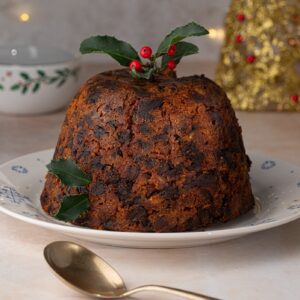
This traditional Christmas Pudding is the recipe that my Mum has used for decades and has now passed on to me and my boys. Packed full of dried fruit and warming spices, and straightforward to make – with most of the cooking time spent gently steaming. Make it ahead, then simply reheat on Christmas Day and serve warm with custard, cream or brandy butter.

Christmas Pudding Recipe Snapshot
- Recipe Type: Traditional British steamed Christmas pudding.
- Key Flavours: Dried fruit, warming spices, apple and orange.
- Prep Time: Around 30 minutes, plus optional overnight fruit soaking.
- Cooking Time: Around 5½ hours of gentle steaming, plus approximately 2 hours to reheat before serving.
- Servings: 8 portions.
- Pudding Bowl/Basin: 1.2-litre (2-pint) pudding bowl or basin.
- Make Ahead: Prepare in advance, then reheat on Christmas Day.
- Alcohol: Optional – use brandy or Grand Marnier to soak the fruit, or skip soaking for an alcohol-free pudding.
Summarise & Save this Recipe on:
What is Christmas Pudding?
Christmas Pudding is a traditional British steamed dessert, also known as plum pudding. Made with dried fruit, suet, breadcrumbs and warming spices, it has a rich flavour and a dense, moist texture. It’s slowly cooked in a covered pudding bowl or basin, the same as you would with a Spotted Dick pudding, then it is turned out and served warm as a dessert on Christmas Day.
Like Christmas Cake, it’s traditionally made ahead of Christmas to give the flavours time to mature. It also shares similarities with Scottish Clootie Dumpling, a fruit pudding cooked in a cloth – or “cloot” – rather than a pudding basin.
Granny’s Christmas Pudding
I first shared this Christmas Pudding recipe here on Baking with Granny back in 2017, but my Mum has been making it for decades even before that. It’s a recipe passed down through our family, and now sharing it with my own sons means another generation gets to carry it on!
When we first shared the recipe, we also filmed the boys making Christmas pudding with Granny. You can still watch that original video below, and honestly, I can’t get over how little they both were! They’re much bigger now – teenagers, in fact – but I’m so glad we have that wee bit of (very cute) family history to look back on.
Christmas Pudding and Stir-up Sunday
Christmas Pudding even has its own traditional day for making it: Stir-up Sunday! It falls on the last Sunday before Advent, which in 2026 is Sunday 22 November.
The idea is that everyone in the family takes a turn stirring the pudding mixture, making a wish as they go. And with a recipe that’s been passed through our family, it seems particularly fitting to get the next generation involved too.
The name actually comes from a church prayer beginning “Stir up, we beseech thee, O Lord”, which became associated with stirring the Christmas pudding. Making it a great reminder to get your festive baking started, with several weeks for the pudding to mature before Christmas Day.
And if you’re planning to make a day of it, a batch of homemade Mince Pies would be a lovely festive accompaniment to your afternoon cuppa, too.

Key Ingredients
See the recipe card for a full ingredients list, required quantities and cup conversions.
Need cups, a different batch size or an ingredient swap?
Head to the recipe card for US measurements and adjustable ingredient quantities. For advice on ingredients and suitable substitutions, check the key ingredients and substitutions sections.
Substitutions & Additions
Optional Boozy Soak: If you like a boozy pudding, my Mum recommends soaking the dried fruit overnight in Grand Marnier or brandy for extra flavour. If you prefer your pudding without alcohol, simply leave it out and skip the overnight soaking.
Dried Fruits: You can mix and match the dried fruit to suit your tastes. Not keen on dates? Use more raisins or sultanas. Prefer less mixed peel? Replace it with another dried fruit. Cranberries can also make a nice modern addition! Whatever fruit you choose, just keep the total weight at 550g, and finely chop any larger pieces.
Different Nuts: Although almonds are traditional, walnuts or hazelnuts can also be used in place of them, if you prefer. Just be sure to chop the nuts so you continue to get small pieces throughout the pudding.
Lemon or Orange: You can easily swap the orange zest and juice for lemon. I like orange because it feels particularly festive, but either works well.
Butter instead of Suet: If you can’t get your hands on shredded suet, you can use grated butter. It won’t give quite the same traditional texture as suet, but it still makes a good pudding. Top tip – freeze the butter first to make it easier to grate.
Looking for dairy-free, gluten-free or vegan adaptations? See the Free-from & Vegan section below.
Free-from & Vegan
Amy recommends: If you regularly need to adapt baking recipes for gluten-free, dairy-free, egg-free or vegan diets, I highly recommend The Elements of Baking by Katarina Cermelj, creator of The Loopy Whisk. It’s a brilliant resource for understanding how substitutions work, rather than simply swapping ingredients and hoping for the best.
Gluten-free Options:
Use gluten-free self-raising flour, gluten-free shredded suet and fresh gluten-free breadcrumbs in place of the standard ingredients. Gluten-free flour and breadcrumbs can sometimes give a slightly drier result, so I recommend soaking the fruit the night before, or using freshly bought dried fruit that hasn’t been sitting in the cupboard drying out further.
Nut-free Adjustments:
Simply leave out the chopped almonds. There’s no need to replace them with anything, but you can add some pine nuts for texture, if you wish. And always check the other ingredients for allergens when making the pudding for someone with a nut allergy.
Dairy-free Swaps:
This Christmas Pudding recipe is naturally dairy-free – hooray!
Egg-Free Adaptations:
I haven’t tested this Christmas Pudding without eggs yet, but I would imagine an egg replacer such as Oggs or Bob’s Red Mill Egg Replacer would work just fine. Alternatively, you could try my Scottish Clootie Dumpling recipe, which is naturally egg-free.
Vegan Substitutions:
As above, I haven’t tested an egg-free version of this recipe. An egg replacer such as Oggs or Bob’s Red Mill Egg Replacer will likely work fine. Alternatively, I recommend an intentionally vegan Christmas pudding recipe, like Domestic Gothess’s Vegan Christmas Pudding.
Allergy Disclaimer & Resources:
Any advice or suggestions to make recipes “free-from” or vegan are purely suggestions. Please double-check all packaged ingredients individually, taking extra caution when baking for those with allergies or intolerances.
For official guidance on food allergies, please see Food Standards Agency (food.gov.uk) | For more info on coeliac disease, please see Coeliac UK (coeliac.org.uk) | For more info on a vegan diet, please see The Vegan Society (vegansociety.com)
How to Make Christmas Pudding
- Soak the fruit (if using alcohol). Pour the alcohol over the dried fruit and leave to soak overnight. If you’re making your pudding without alcohol, skip this step.
- Mix the ingredients. In a large bowl, add the ingredients in the order listed in the recipe card, stirring as you go, so the ingredients are evenly combined.
- Fill the pudding basin. Grease a 1.2 litre (2-pint) pudding bowl or basin with a little margarine/butter. Spoon in the mixture, pressing it down with the back of a spoon.
- Cover the basin. Take a piece of greaseproof paper large enough to cover the bowl/basin and fold a pleat across the middle. Place it over the basin, followed by a piece of foil folded the same way. Secure both tightly with string around the rim, and trim away the excess paper and foil.
- Steam the pudding. Place the bowl/basin in a large saucepan with about 5-10cm of water around it. Cover the saucepan with its lid and steam gently for around 5½ hours. Check the water, topping up with boiling water as needed so the pan never runs dry.
- Cool and wrap. Leave the pudding to cool completely before removing it from the bowl/basin. Wrap in greaseproof paper followed by foil, then store somewhere cool and dark until needed.
Top Tips for Christmas Pudding
- A Big Enough Pot: Make sure the pudding bowl/basin fits comfortably inside the saucepan before you begin, with enough room for the saucepan lid to close properly once the basin is covered with paper and foil. There’s nothing worse than having your pudding all ready to steam and realising you don’t have a pot big enough to actually finish it!
- Secure the Top: Tie the paper and foil tightly beneath the bowl/basin’s rim to keep water out of the pudding mixture as it steams. And keep the pleats in place as you tie, so there is still room for the pudding to expand as it cooks.
- Check the Water: Don’t let the water in the saucepan run dry! With such a long steaming time, it’s easy to get distracted, so I recommend setting yourself a timer to check the pan and top up with boiling water; around every 30 minutes is ideal and will help prevent the water from running completely dry.
- Don’t Rush It: Choose a day when you’ll be at home for the 5½-hour cook time. Keep the water gently simmering throughout, with the saucepan lid on between checks.
Make Ahead, Storing & Freezing
- Make Ahead: Christmas Pudding is a great one to get ticked off your Christmas baking list nice and early. You can make it several weeks in advance, giving the flavours time to mature before reheating it on Christmas Day.
- Storage: After the first steaming, leave the pudding to cool completely before removing it from the bowl/basin. Wrap it well in fresh greaseproof paper, then foil, and store it somewhere cool and dark until needed. The same storage advice applies whether you’ve used the optional alcohol or made your pudding without it.
- Freezing: Once completely cool, wrap the pudding tightly in greaseproof paper and foil and freeze for up to 3 months. Allow it to thaw fully before returning it to the bowl/basin and steaming to reheat.
- Leftovers: Wrap any leftover Christmas Pudding and keep it in the fridge. Reheat portions in the microwave until hot all the way through before serving.
Reheating Christmas Pudding
- Steaming: For the best results, I recommend steaming your Christmas Pudding again on Christmas Day. Return it to the pudding bowl/basin, cover with pleated greaseproof paper and foil, and secure with a piece of string. Steam gently for about 2 hours, until heated through, checking the water and topping up with boiling water as needed.
- Microwave: Remove all foil and use a microwave-safe bowl/basin or dish. As a guide, microwave on full power for 3 minutes, then stand for 1 minute. Heat for a further 2 minutes, then stand for another 1 minute before serving. Microwave powers do vary, so check that the pudding is hot all the way through, including the centre, and heat further if needed.
How to Serve Christmas Pudding
Serve your Christmas Pudding warm, with a generous helping of custard – my favourite! 😋 Pouring cream, brandy butter or a scoop of vanilla ice cream are lovely options too, so go with whatever your family enjoys.
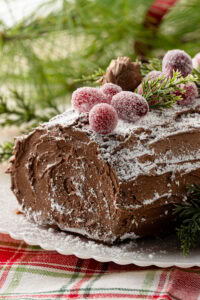
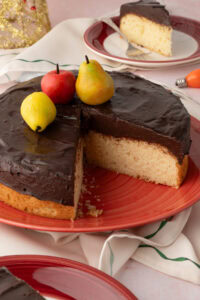
If you’re offering a second dessert on Christmas Day, my Chocolate Yule Log or old-fashioned Tunis Cake would sit nicely alongside a Christmas Pudding, giving everyone a choice of something festive and delicious.

With thanks to Naomi Seiler for creating these photos.
Christmas Pudding FAQs
For this recipe in a 1.2-litre (2 pint) pudding bowl/basin, use the full 5½-hour steaming time as your guide. Keep the water gently simmering and topped up throughout that time. There’s no need to keep unwrapping the pudding to check it as it cooks – just trust the time and process!
Yes! Stir-up Sunday is a tradition, rather than a deadline. You can make your pudding closer to Christmas, although making it ahead does give the flavours a little more time to mature. Just allow enough time for the full steaming process – this isn’t one to start making at 5pm on Christmas Day 😅
There’s no regular feeding step in this recipe. The optional brandy or Grand Marnier is used to flavour the dried fruit before mixing the pudding. Once cooked and completely cooled, simply wrap and store it as described in the recipe.
Yes, you can divide the mixture between smaller pudding bowls/basins, or even halve the recipe if you don’t need to serve quite so many people. Smaller puddings will need a shorter steaming time, but I haven’t tested specific sizes and timings, so I can’t give an exact time. Instead, keep an eye on them as they cook, and remember that the 5½-hour steaming time is for the full pudding in a 1.2-litre basin.
More Christmas Desserts
If you loved this traditional Christmas Pudding, here are some more of my favourite Christmas dessert recipes for you to try next:


Save this recipe!
Want to save this recipe for later? Pop your email below and come back to it when you’re ready to bake.
Traditional Christmas Pudding
INGREDIENTS
- 15 ml Grand Marnier or Brandy
(optional; for soaking the fruit) - 250 g Raisins
- 100 g Currants
- 100 g Sultanas
- 50 g Dried Mixed Peel
- 50 g Dried Pitted Dates (finely chopped)
- 90 g Self-raising Flour (see Self-raising Flour note below)
- 125 g Shredded Suet (vegetable or beef)
- 1 tsp Mixed Spice
- ¼ tsp Ground Nutmeg
- 90 g Dark Muscovado Sugar
- 30 g Blanched Almonds (chopped)
- 125 g Fresh Breadcrumbs (fresh)
- 1 Apple (peeled and grated)
- 1 Orange (zested and juiced)
- 2 Free-range Eggs (beaten; at room temperature; see Egg Size note below)
- Block Margarine or Butter (for greasing the pudding bowl/basin)
EQUIPMENT
- 1.2 Litre (2-pint) Pudding Basin or Bowl
- String
INSTRUCTIONS
Soak the Fruit (optional)
- If you are using alcohol, pour your chosen alcohol over your dried fruits and leave them to soak overnight. This step is optional.15 ml Grand Marnier or Brandy
Make the Pudding
- In a large bowl, add each ingredient in the order they are listed, stirring as you go to ensure everything is well combined.250 g Raisins; 100 g Currants; 100 g Sultanas; 50 g Dried Mixed Peel; 50 g Dried Pitted Dates; 90 g Self-raising Flour; 125 g Shredded Suet; 1 tsp Mixed Spice; ¼ tsp Ground Nutmeg; 90 g Dark Muscovado Sugar; 30 g Blanched Almonds; 125 g Fresh Breadcrumbs; 1 Apple; 1 Orange; 2 Free-range Eggs
- Generously grease a 1.2-litre (2-pint) pudding basin with margarine/butter before spooning the mixture in and pressing it down with the back of a spoon.Block Margarine or Butter
- With a piece of
greaseproof paper large enough to cover the pudding bowl/basin, fold a pleat in the middle before placing it over the top of your pudding bowl/basin. Repeat with a piece oftin foil and place on top of thegreaseproof paper before tightly tying in place – around the top of the bowl/basin – with a piece of string. Trim away the excessgreaseproof paper andtin foil before steaming.
Steaming the Pudding
- Place the basin in a large saucepan with about 5-10cm of water around it. Cover the saucepan with its lid and steam gently for around 5½ hours. Check the water and top up with boiling water as needed so the pan never runs dry.
- Remove the pudding from the saucepan once cooked. Allow it to cool completely in the bowl/basin, then remove the pudding from the bowl, wrap it in
greaseproof paper , followed bytin foil , and store it in a cool and dry place until required.
Reheating the Pudding
- Steaming: For the best results, steam your pudding again before serving. Return it to the pudding bowl/basin, cover again with pleated greaseproof paper and foil, and secure with a piece of string. Steam gently for about 2 hours, until heated through – again, checking the water and topping up with boiling water as needed.
- Microwave: Remove all foil and use a microwave-safe bowl/basin or dish. As a guide, microwave on full power for 3 minutes, then stand for 1 minute. Heat for a further 2 minutes, then stand for another 1 minute before serving. Microwave powers can vary, so check that the pudding is hot all the way through, including the centre, and heat further if needed.
VIDEO
IMPORTANT NOTE:
All my recipes are developed using a digital scale and the metric system (grams and millilitres). Cup measurements are available as a conversion, but these, unfortunately, won’t always be as accurate. For best results, I always recommend baking with a digital scale.
RECIPE NOTES:
LIKE THIS RECIPE?
Leave a comment and rating below!Originally published in November 2017.












ABOUT THE AUTHOR
Amy Beth Reid
Amy Beth Reid is an award-winning food blogger, mother, wife and cookbook author. Inspired by her childhood in the kitchen with her Mum – a professional baker and her children’s Granny – Amy now shares her tried-and-tested traditional home baking recipes with bakers of all abilities around the world. She lives in Scotland with her husband, two sons and her small pack of Siberian huskies.