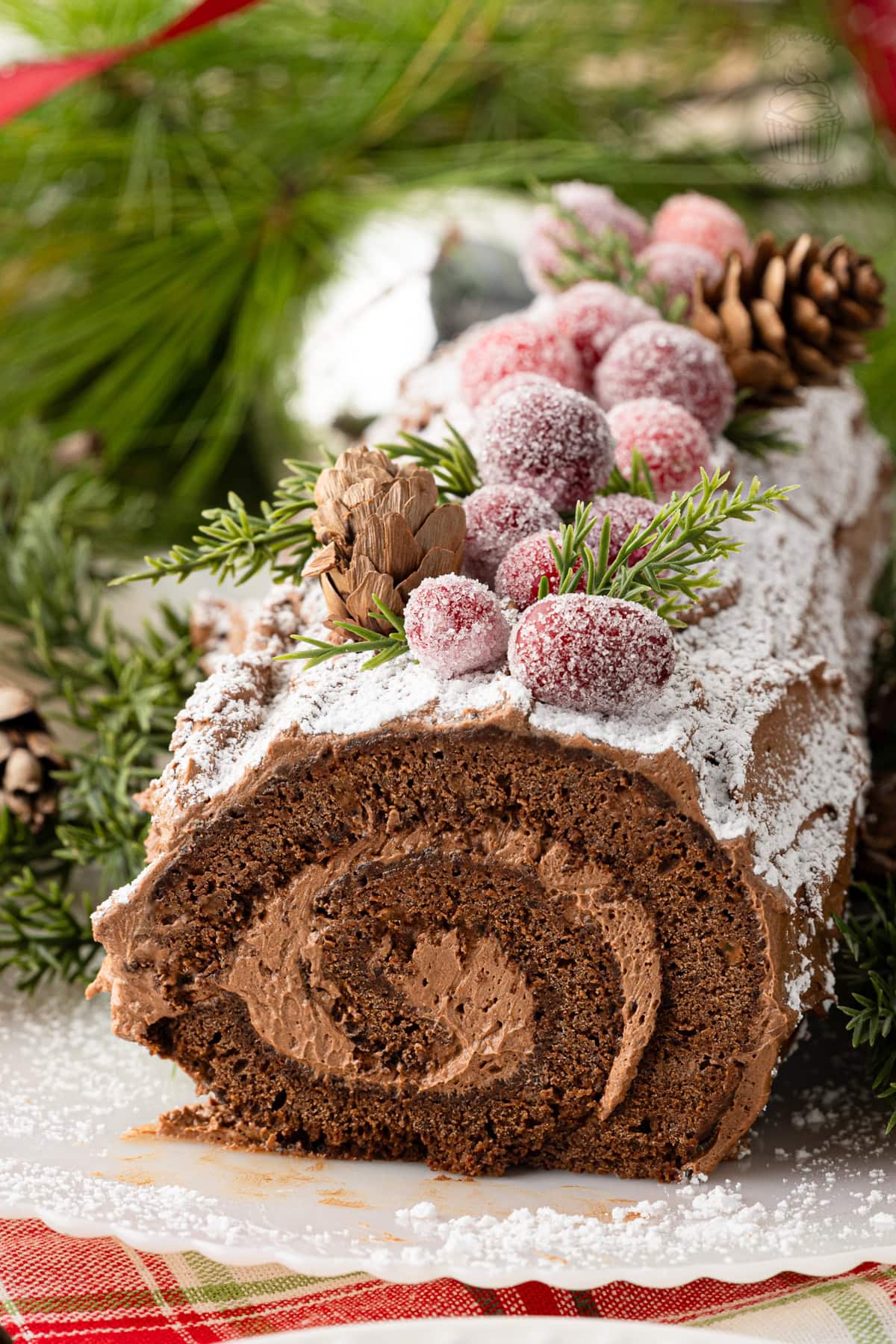
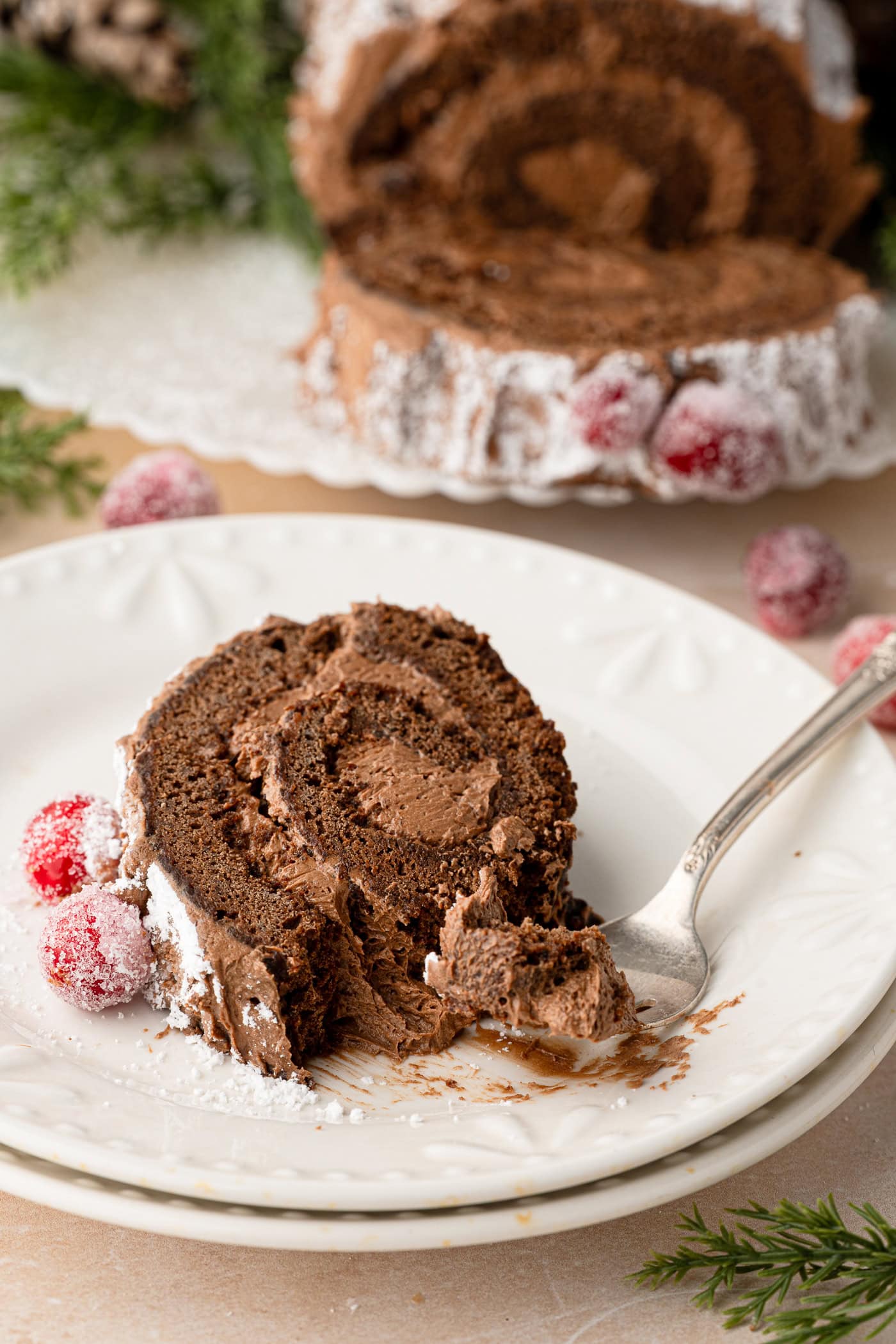
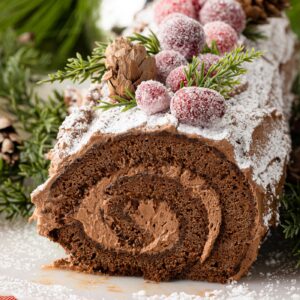
Traditional Chocolate Yule Log, made with a light cocoa sponge, filled and covered with chocolate buttercream, then decorated with a simple bark effect and festive decorations. It might look a wee bit intimidating, but it’s easier if you roll the sponge while it’s warm, and you can easily hide any little cracks beneath the buttercream.
Yule Log Recipe Snapshot
- Recipe: Yule Log – a traditional chocolate sponge roll filled and covered with chocolate buttercream.
- Makes: 8 portions.
- Prep Time: Around 1 hour.
- Baking Time: 8-10 minutes.
- Cooling & Decorating: Roll the sponge while warm, then allow it to cool completely before filling and decorating.
- Filling & Topping: Chocolate buttercream.
- Texture: Light, soft chocolate sponge with sweet, creamy buttercream.
- Decoration: A fork-textured bark effect, dusted with icing sugar and finished with festive decorations.
- Difficulty: Straightforward, although rolling the warm sponge takes a little care.
- The Trick: Roll the sponge while it is still warm and flexible. If it does crack a little, don’t panic – the buttercream will cover it.
Summarise & Save this Recipe on:
What is a Yule Log?
A Yule Log is a traditional Christmas cake made from a light chocolate sponge, rolled up with chocolate buttercream and decorated to look like a log. It is also known by its French name, Bûche de Noël, with the cake taking inspiration from the older Christmas tradition of burning a Yule log.
In a lot of ways, a Yule Log is like a festive version of a Swiss Roll. The sponge is baked in a shallow tin, rolled while it is still warm, then filled and covered with buttercream. The main difference is in the finishing – rather than simply being dusted with icing sugar, the roll is covered in chocolate buttercream and given a bark-like effect, so it looks like a log.
Although a Yule Log is often served as an alternative to a traditional Christmas Pudding, its light sponge and chocolate buttercream make it a particularly popular choice with anyone who prefers a chocolate dessert at Christmas time.
Yule Log Has Always Been My Favourite
My Mum first gave me this recipe to share here on Baking with Granny back in 2018. As a kid, I always preferred a Yule Log to Christmas Cake – partly because of the chocolate (of course!), but also because I loved the creative, nature-inspired side of it. Unlike an ordinary chocolate cake, it was made to look like a little woodland log, complete with bark-like icing and festive decorations.
That log shape isn’t just for decoration, either. The cake version of a Yule Log, also known as Bûche de Noël, takes its inspiration from the older Christmas tradition of burning a real Yule log in the hearth. A connection to the natural world, which is part of what makes it such a lovely Christmas bake 🎄
And unlike a Christmas Pudding, Christmas Cake or Scottish Black Bun, this Yule Log doesn’t need time to mature. You can bake it, fill it and decorate it much closer to Christmas, making it a lovely option for a last-minute show-stopping dessert.
And now my own kids love Yule Log just as much as I did, too – although, in all fairness, the chocolate probably still has something to do with that!
Key Ingredients
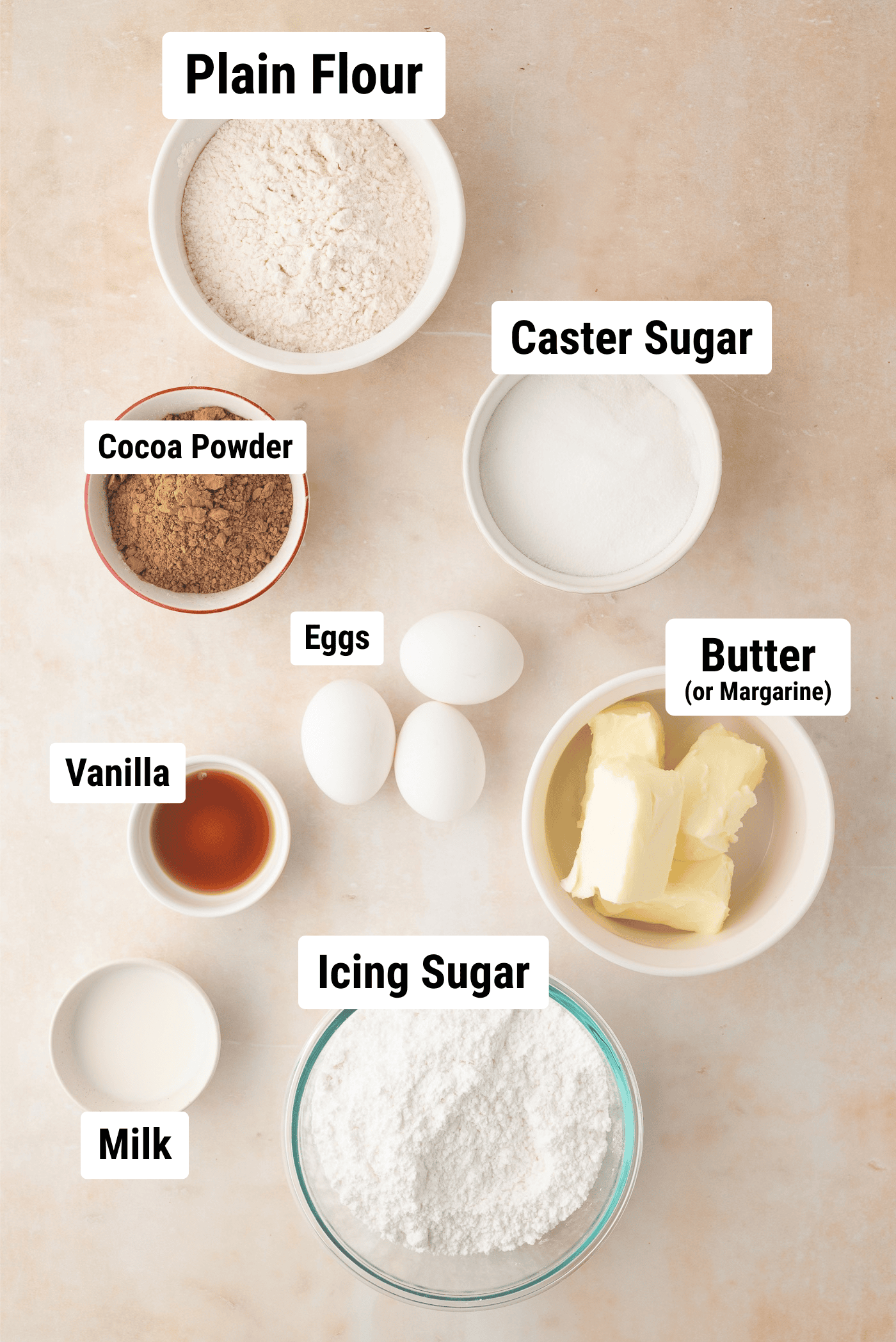
See the recipe card for a full ingredients list, required quantities and cup conversions.
Substitutions & Additions
Golden Caster Sugar: You can use golden caster sugar instead of a standard white caster sugar in the cake roll. It gives the sponge a slightly deeper colour and a subtle caramel flavour, which can also make the finished Yule Log taste a little less sweet.
Vanilla Extract: Vanilla extract complements the chocolate flavour in the buttercream beautifully, so I recommend using it if you have some. You can also replace it with orange extract if you would prefer a chocolate-orange flavour.
Fresh Cream Filling: If you prefer, you can use fresh cream instead of the buttercream filling. Once the sponge has cooled completely, whip double cream (heavy cream) until thick enough to spread and able to hold its shape. Unroll the sponge, spread the whipped cream over the inside, then gently reroll. Continue with the outer buttercream and decorations as usual. If using fresh cream, see the storage advice below.
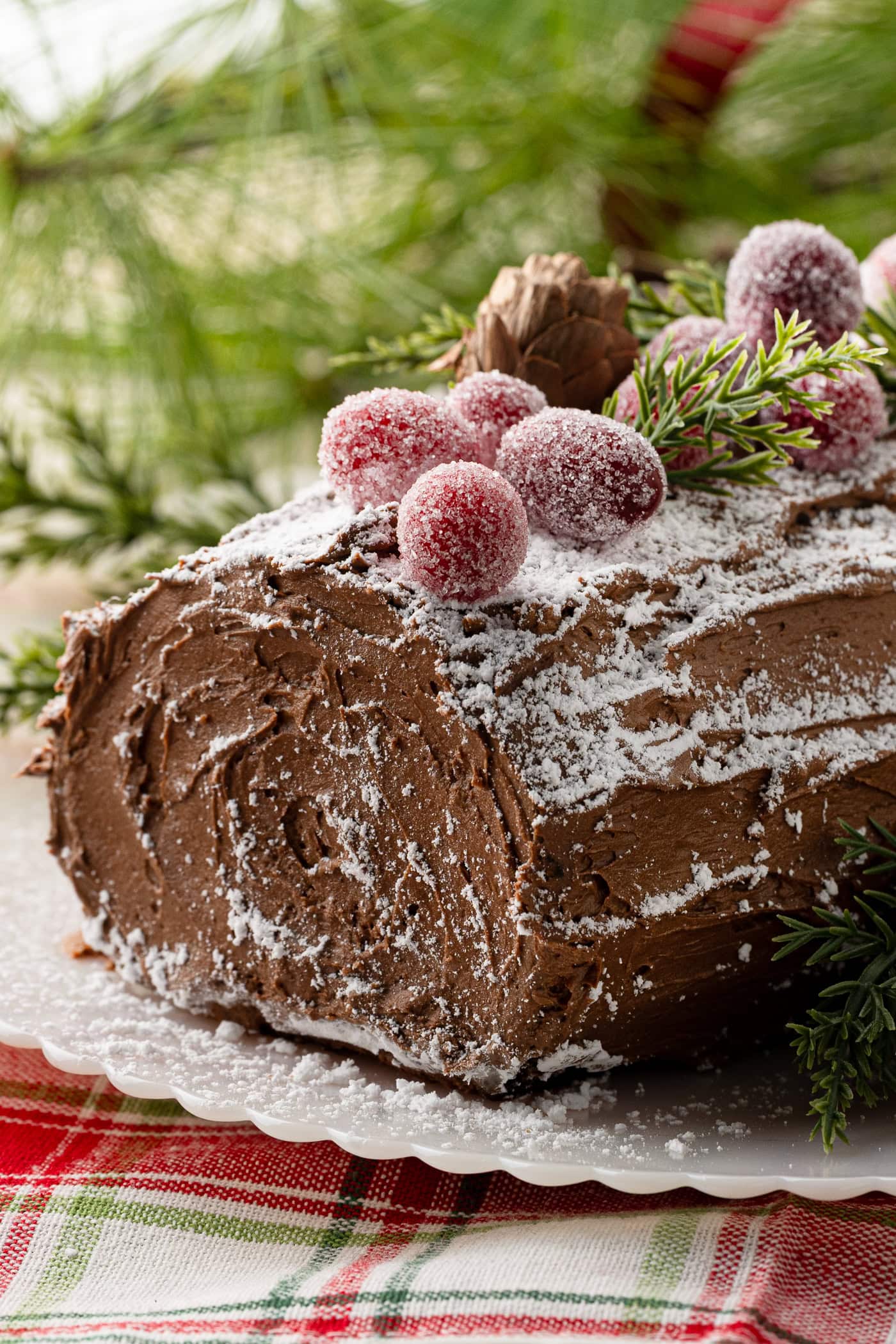
Festive Decorations: There are lots of ways to decorate your Yule Log – adding holly leaves, sugared berries, a little pinecone decoration, or a robin to create your own festive woodland scene. Just make sure that any decorations you use are suitable for placing on food!
Looking for dairy-free, gluten-free or vegan adaptations? See the Free-from & Vegan section below.
Free-from & Vegan
Amy recommends: If you regularly need to adapt baking recipes for gluten-free, dairy-free, egg-free or vegan diets, I highly recommend The Elements of Baking by Katarina Cermelj, creator of The Loopy Whisk. It’s a brilliant resource for understanding how substitutions work, rather than simply swapping ingredients and hoping for the best.
Gluten-free Options:
To make this a gluten-free Yule Log, swap the plain flour for gluten-free plain flour. Some gluten-free flours can be a little drier, so you may need a little extra milk in the cake batter (as well as the buttercream) if it feels too stiff. And be sure to check all your individual ingredients, including the cocoa powder and decorations, for allergens when serving to those with coeliac disease.
Nut-free Adjustments:
This recipe contains no nuts, but as always, be sure to double-check the allergen lists for your individual ingredients and decorations.
Dairy-free Swaps:
To make this a dairy-free Yule Log, use a dairy-free block margarine instead of the margarine/butter and a suitable dairy-free milk alternative in the buttercream. Be sure to check the labels of any decorations you use too.
Egg-Free Adaptations:
I wouldn’t recommend replacing the eggs in this recipe with an egg replacer, due to them being an important part of the overall structure of the cake roll. Instead, I would recommend using an intentionally egg-free Yule Log recipe like The Veg Space’s Vegan Chocolate Yule Log.
Vegan Substitutions:
For a vegan Yule Log, I recommend using an intentionally vegan recipe rather than trying to adapt this one. The Veg Space’s Vegan Chocolate Yule Log is made without eggs or dairy from the start.
Allergy Disclaimer & Resources:
Any advice or suggestions to make recipes “free-from” or vegan are purely suggestions. Please double-check all packaged ingredients individually, taking extra caution when baking for those with allergies or intolerances.
For official guidance on food allergies, please see Food Standards Agency (food.gov.uk) | For more info on coeliac disease, please see Coeliac UK (coeliac.org.uk) | For more info on a vegan diet, please see The Vegan Society (vegansociety.com)
How to Make Yule Log
This Yule Log recipe is really simple to make, but the sponge needs to be rolled while it is still warm. Then, once cooled, it’s filled and covered with chocolate buttercream. Follow the step-by-step below, or head to the recipe card at the bottom for the full printable recipe.
- Preheat the oven and prepare the tin: Preheat your oven to 190°C (170°C fan-assisted, Gas Mark 5 or 375°F). Grease and line a 27×21cm (approx. 10½×8 inch) Swiss Roll tray with greaseproof paper. Set aside.
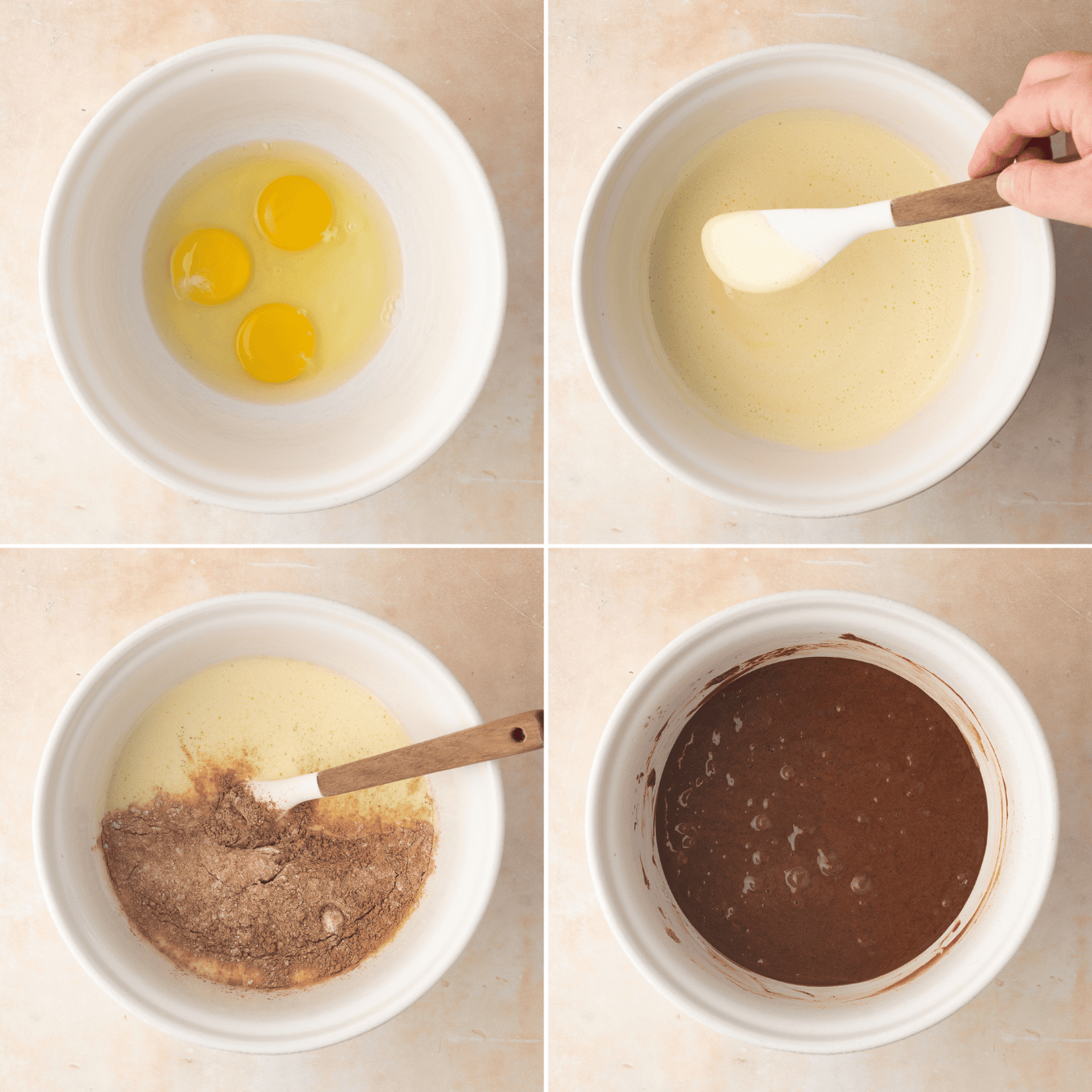
- Make the cake roll: Whisk the eggs and caster sugar together until light-coloured, creamy and thick. Add the water, then gently fold through the sifted flour and cocoa powder.
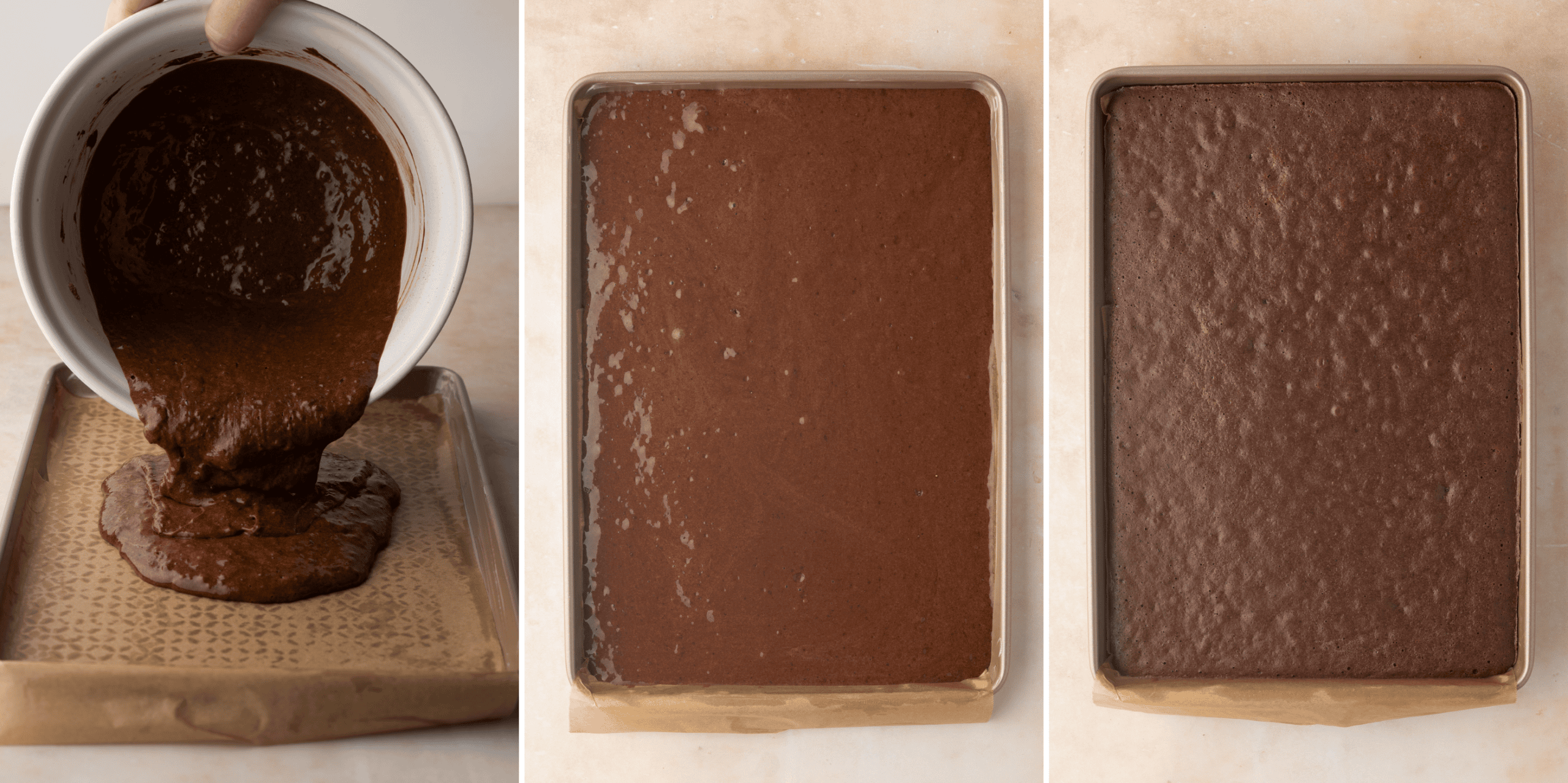
- Bake the cake roll: Spread the batter evenly into the prepared tin and bake for 8-10 minutes, until the top looks dry and the sponge feels slightly spongy.
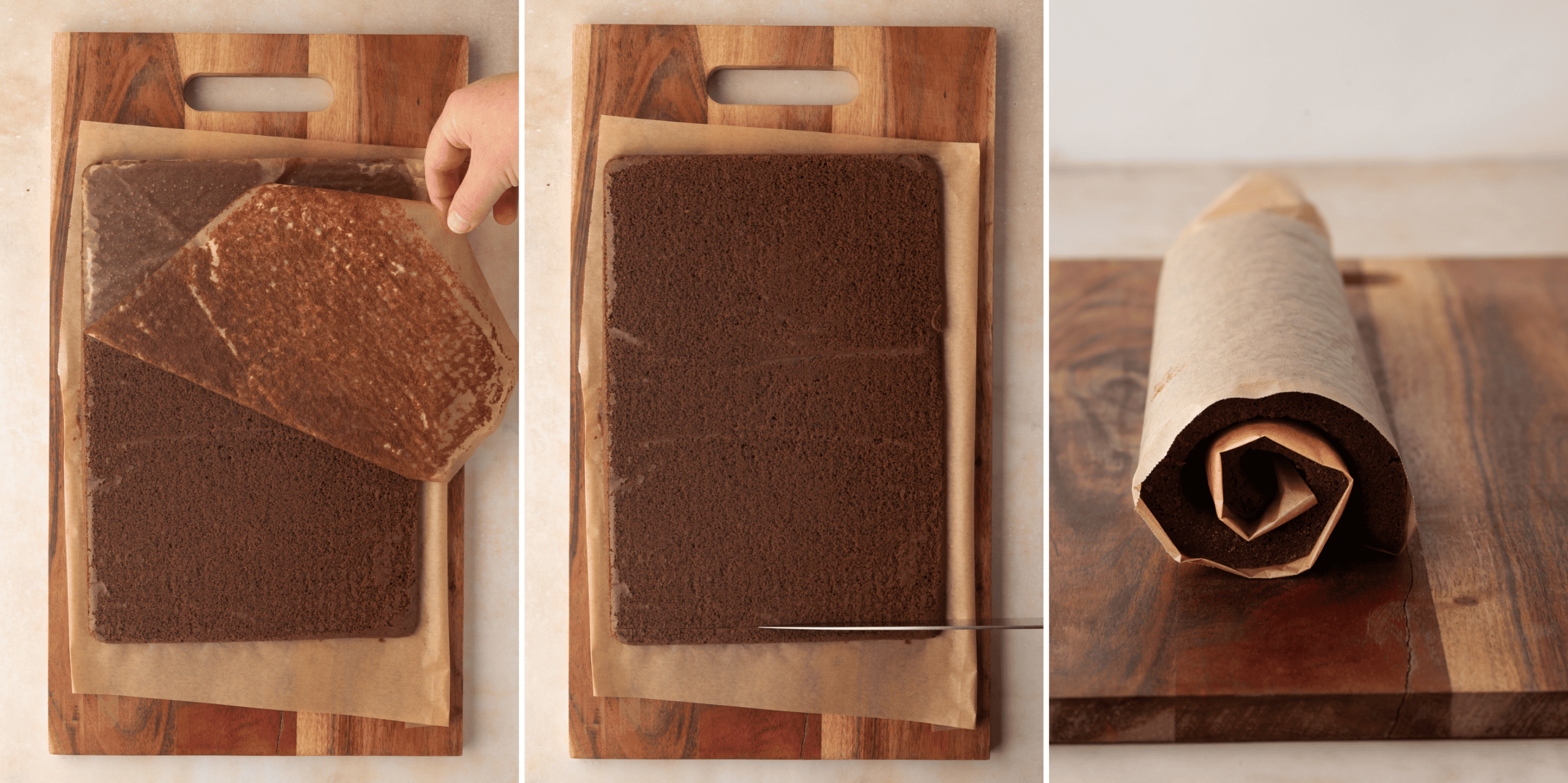
- Roll the sponge while warm: Turn the sponge out onto a fresh piece of greaseproof paper, trim the edges and remove the baked-on paper. Score one narrow end, then use the paper to gently roll the sponge over itself. Keep it wrapped and rolled until completely cool.
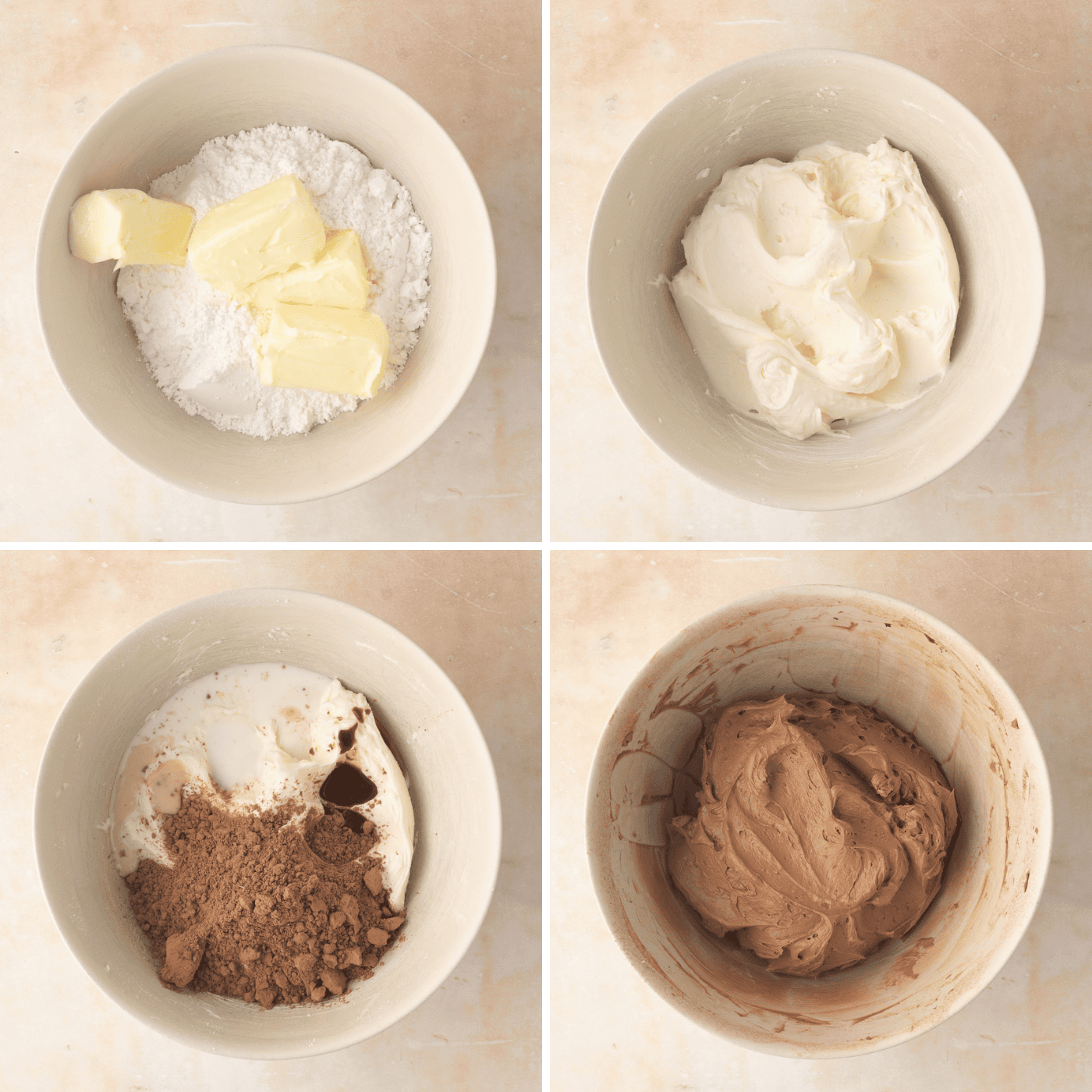
- Make the chocolate buttercream: Cream the margarine/butter and icing sugar together until light and fluffy. Add the cocoa powder, vanilla extract and milk, then mix until smooth and chocolaty.
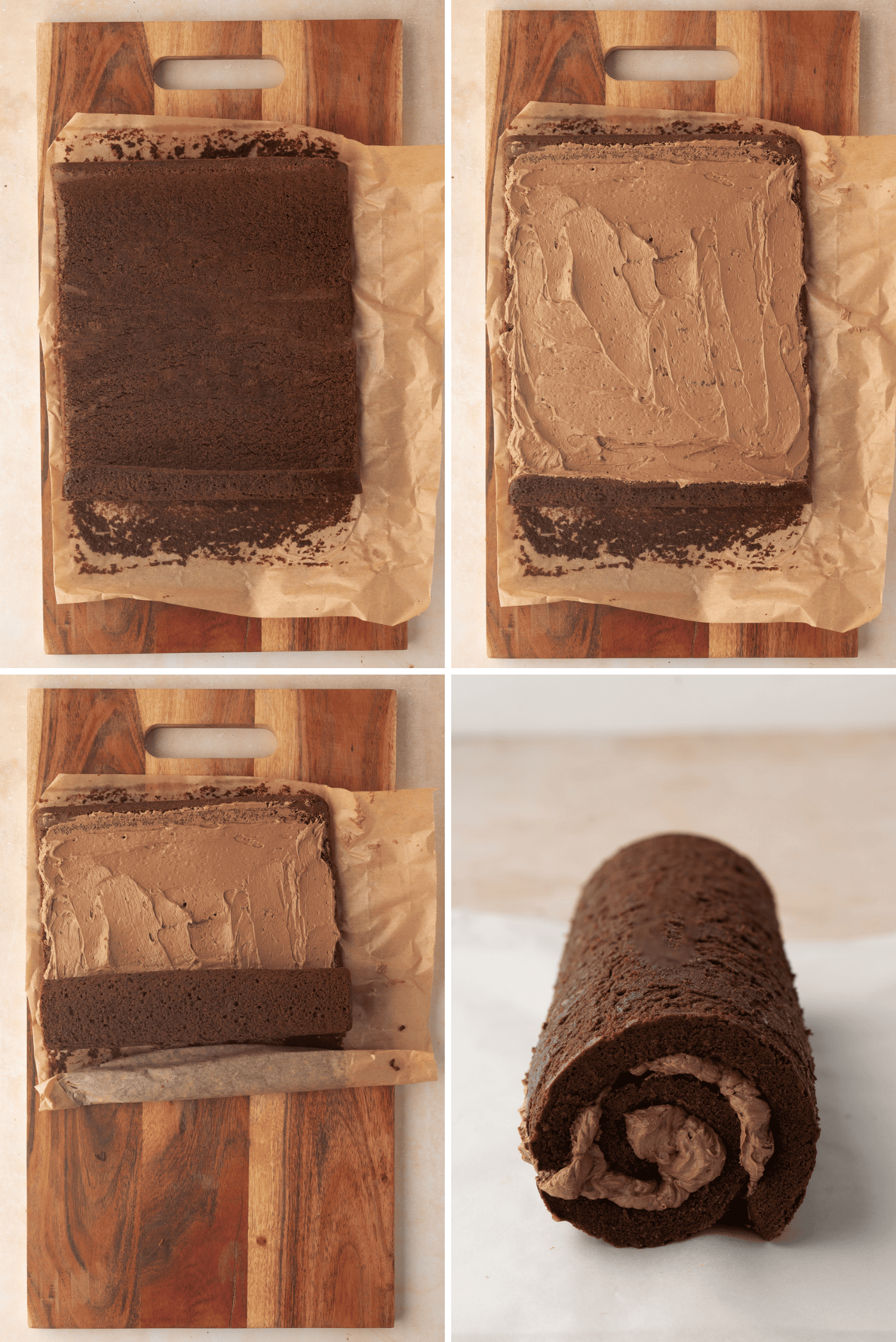
- Fill and re-roll the cake: Carefully unroll the cooled sponge and spread the inside with around one-third of the buttercream. Re-roll the sponge without the paper, then place it seam-side down.
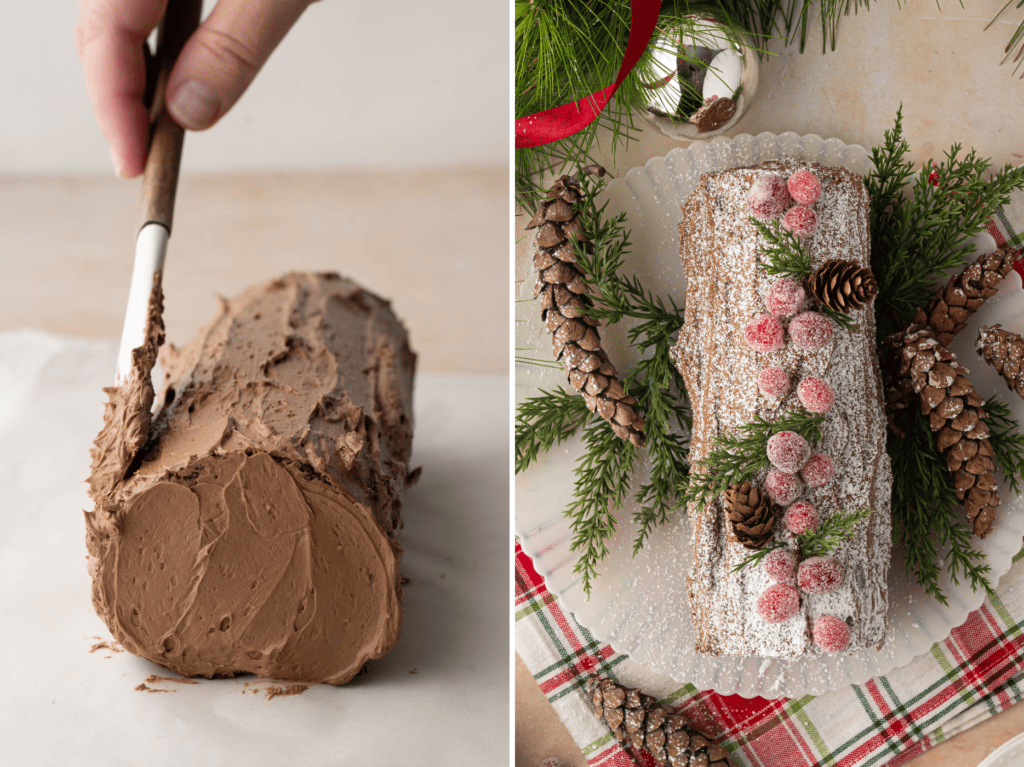
- Cover and decorate: Cover the cake roll with the remaining buttercream, then run a fork through it to create a bark-like effect. Add your festive decorations, then finish with a dusting of icing sugar.
Top Tips for Yule Log
- Use a Grease-free Bowl: Any grease can make it harder to whisk the eggs and sugar properly, so make sure your bowl and beaters are clean and completely grease-free.
- Use an Electric Mixer if You Can: You can whisk the eggs and sugar by hand, but it takes considerably longer. An electric mixer makes it much easier to achieve the thick, pale mixture needed for a light sponge.
- Fold in the Flour Gently: Once the flour and cocoa are added, fold them through carefully rather than beating the mixture. You’ve worked hard to whisk the air into the eggs and sugar, and you don’t want to knock it all back out again.
- Don’t Overbake the Sponge: The cake roll only needs 8-10 minutes. It should look dry on top and feel slightly spongy. Overbaking can make the sponge drier and more likely to crack.
- Turn Out and Roll While Warm: As soon as the sponge comes out of the oven, turn it onto your fresh greaseproof paper and remove the baked-on paper while it is still warm. Score one narrow end, then roll the sponge straight away. Once it cools, it becomes less flexible and is more likely to crack.
- Start the Roll Tightly: Begin rolling from the scored narrow end and keep the first turn fairly snug. Once that first section is rolled neatly, the rest should follow more easily. This also helps prevent large gaps inside the finished cake and gives you that lovely swirl in the slices once cut.
- Don’t Panic if it Does Crack: A few cracks or rough edges won’t matter with this recipe. The buttercream covers most imperfections, while the forked bark effect helps disguise any little mishaps.
- Cool Completely Before Filling: Make sure the rolled sponge is completely cool before unrolling and adding the buttercream; otherwise, the buttercream may soften or melt.
- Avoid Overfilling the Sponge: Use around one-third of the buttercream inside the cake roll. Too much filling can make it harder to re-roll neatly and may cause it to squeeze out.
Storage, Make Ahead & Freezing
- Storage: Once decorated, store your Yule Log in an airtight container at room temperature. If your kitchen is particularly warm, you can store it in the fridge instead. Enjoy within 3-5 days max. And if you are using fresh cream as the filling, store the Yule Log in an airtight container in the fridge and eat within 3 days.
- Make Ahead: You can bake and decorate your Yule Log a few days before serving, as the buttercream will keep the chocolate cake roll nice and moist, making a great option for serving on Christmas Day.
- Freezing: For best results, freeze the Yule Log before adding the outer layer of buttercream. You can freeze it with the buttercream filling inside, although it may be more difficult to thaw without disturbing the finished decoration. Freeze for up to 3 months, then thaw at room temperature before adding the outer buttercream and decorations.
Yule Log FAQs
The sponge can crack if it is overbaked or allowed to cool before rolling, as it becomes less flexible. My top tips for making Yule Log will help you avoid this, particularly turning the sponge out and rolling it while it is still warm.
That said, don’t panic if your sponge does crack. A few cracks really don’t matter because the filling and outer chocolate buttercream will cover them, and the forked bark effect also helps disguise any remaining marks.
Technically, no! You can, of course, whisk the eggs and sugar by hand, but an electric mixer is preferable to save your arms. The eggs and sugar need to be whisked until the mixture is pale, thick and creamy, and this takes considerably longer by hand.
An electric hand mixer or stand mixer makes this part much easier, but if you are whisking by hand, just keep going until the mixture has thickened properly before adding the flour and cocoa powder.
It can certainly be tricky to judge when a chocolate cake is fully baked! But the top should look dry, and the sponge should feel slightly spongy when gently touched. It doesn’t need to look dark or feel overly firm. Just take care not to overbake it, as a dry sponge is more likely to crack when rolled.
To help prevent this, grease and line your tin carefully, then turn the sponge out as soon as it comes from the oven. Run a knife around the edges and gently remove the baked-on paper while the sponge is still warm.
If it does stick, peel the paper away slowly rather than pulling it off quickly. Gently loosen any stubborn patches with a knife. Small tears or damaged areas aren’t usually a problem, as the filling and buttercream will cover them.
More Christmas Bakes
If you loved this chocolate Yule Log, here are some more of my favourite Christmas baking recipes for you to try next:

Save this recipe!
Want to save this recipe for later? Pop your email below and come back to it when you’re ready to bake.
Yule Log
INGREDIENTS
For the Cake Roll:
- 3 Free-range Eggs (at room temperature; see Egg Size notes below)
- 125g Caster Sugar
- 100g Plain Flour
- 30g Cocoa Powder
- 1 tbsp Tepid Water
For the Buttercream:
- 160g Block Margarine or Butter (at room temperature; plus extra for greasing)
- 180g Icing Sugar (plus extra for dusting)
- 30g Cocoa Powder
- 1 tsp Vanilla Extract
- 2 tbsp Milk (dairy, soya, oat…)
EQUIPMENT
- Greaseproof Paper (Parchment Paper) (for lining the tray and rolling)
- Electric Hand Whisk (optional but recommended)
- Sharp Knife
INSTRUCTIONS
For the Cake Roll:
- Preheat your oven to 190°C (170°C for fan-assisted ovens, Gas Mark 5 or 375°F). Grease and line a 27×21cm (approx. 10½×8 inch) Swiss Roll tray with
greaseproof paper . Set aside. - In a bowl, sift the flour and cocoa together and then set aside while you prepare the rest of the cake roll ingredients.100g Plain Flour; 30g Cocoa Powder
- In a large, grease-free bowl, add the eggs and whisk lightly, then add the sugar. Whisk together until you have a light-coloured, creamy, thick batter. This can take a while by hand, so using an electric mixer is preferable. Add a tablespoon of tepid water and gently mix through.3 Free-range Eggs; 125g Caster Sugar; 1 tbsp Tepid Water
- Add the sifted flour and cocoa powder and gently fold to create a batter.
- Pour the batter into your prepared tin and evenly spread it to the sides and corners. Bake in your preheated oven for 8-10 minutes, until it looks dry on top and slightly spongy.
- Have an additional piece of
greaseproof paper ready on your work surface. Take the sponge from the oven, run a knife around the edges to loosen it from the tray and gently tip it onto the fresh piece ofgreaseproof paper . Trim the edges of the sponge and remove the baked-ongreaseproof paper . - On one narrow end, score the sponge about 1cm (⅓ inch) from the edge with a knife, being careful not to cut all the way through. Starting on this edge, use the
greaseproof paper to roll the sponge over itself, using gentle pressure to make sure there are no big gaps. Keep the cake rolled and wrapped in thegreaseproof paper , and let it cool completely.
For the Buttercream and Decorating:
- Once your cake is completely cool, prepare your buttercream. In a large bowl, cream the margarine/butter and
icing sugar until light and fluffy in both colour and texture. Add the cocoa powder, vanilla and milk and mix until you have a smooth, chocolaty buttercream.160g Block Margarine or Butter; 180g Icing Sugar; 30g Cocoa Powder; 1 tsp Vanilla Extract; 2 tbsp Milk - Unroll your cake and spread the inside with about ⅓ of the buttercream. Re-roll the sponge, this time discarding the
greaseproof paper , then place the cake seam-side down. - Cover the cake roll with the remaining buttercream, finishing with a fork for a bark-like effect. Decorate as desired with things like fondant holly leaves, pinecones or even a robin. Dust with some extra icing sugar before serving.
IMPORTANT NOTE:
All my recipes are developed using a digital scale and the metric system (grams and millilitres). Cup measurements are available as a conversion, but these, unfortunately, won’t always be as accurate. For best results, I always recommend baking with a digital scale.
RECIPE NOTES:
LIKE THIS RECIPE?
Leave a comment and rating below!Originally published in December 2018.