Summarise & Save this Recipe on:
Summarise & Save this Recipe on:
Is it Donuts or Doughnuts?
A very fair question!
Both spellings are somewhat correct. “Doughnut” is the traditional spelling commonly used in the UK, while “donut” has become increasingly popular thanks to American bakeries and brands. For this recipe, I’ll use both terms interchangeably because they refer to exactly the same delicious thing!
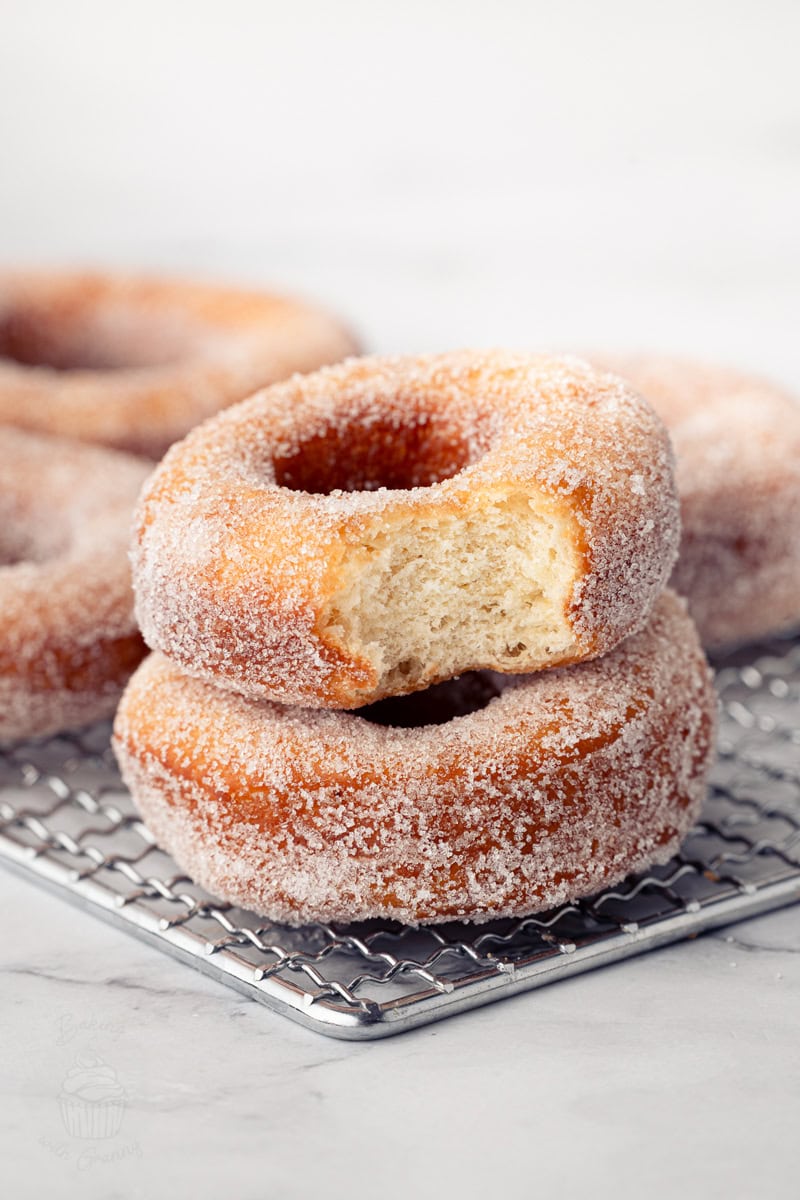
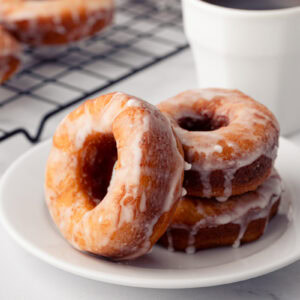
Who doesn’t love a fresh donut? Perfectly golden, coated in crunchy sugar, or drizzled with a sweet sticky glaze – the options are endless.
One of the best things about making homemade doughnuts (aside from them tasting infinitely better than shop-bought ones) is just how simple the process actually is. While the yeast dough does take a little time to rise, the hands-on prep and cooking are surprisingly easy.
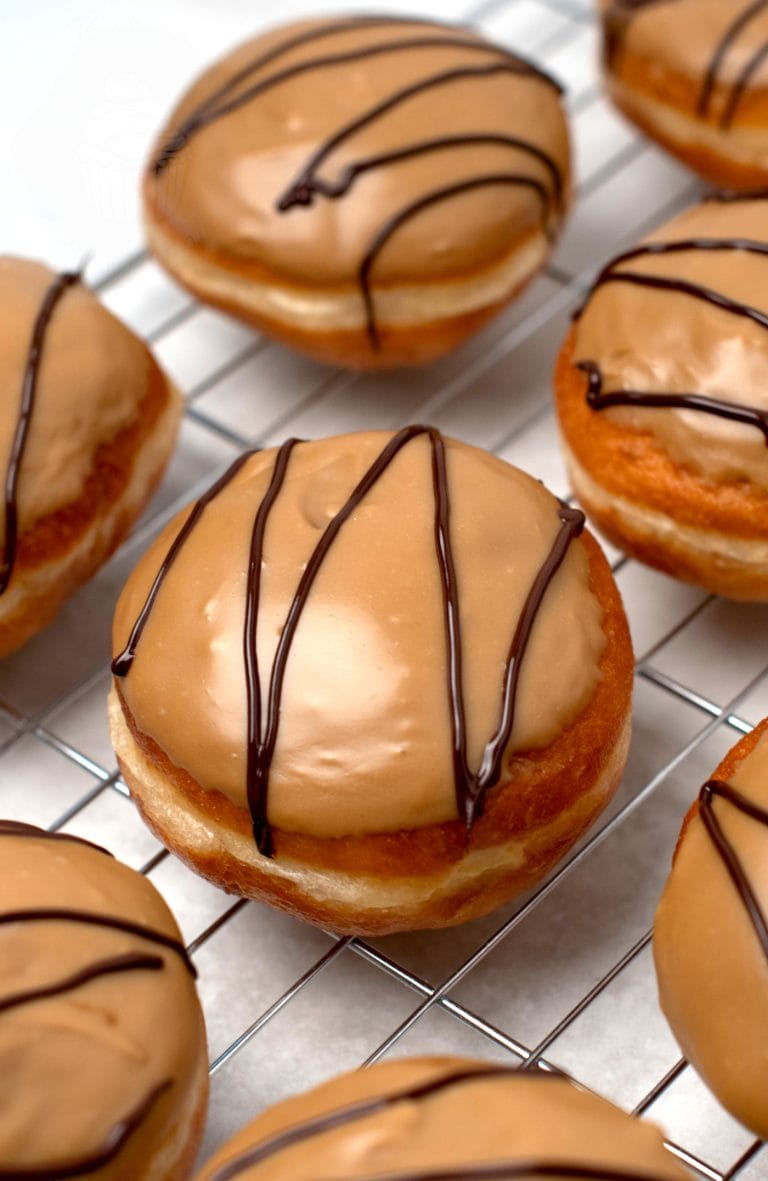
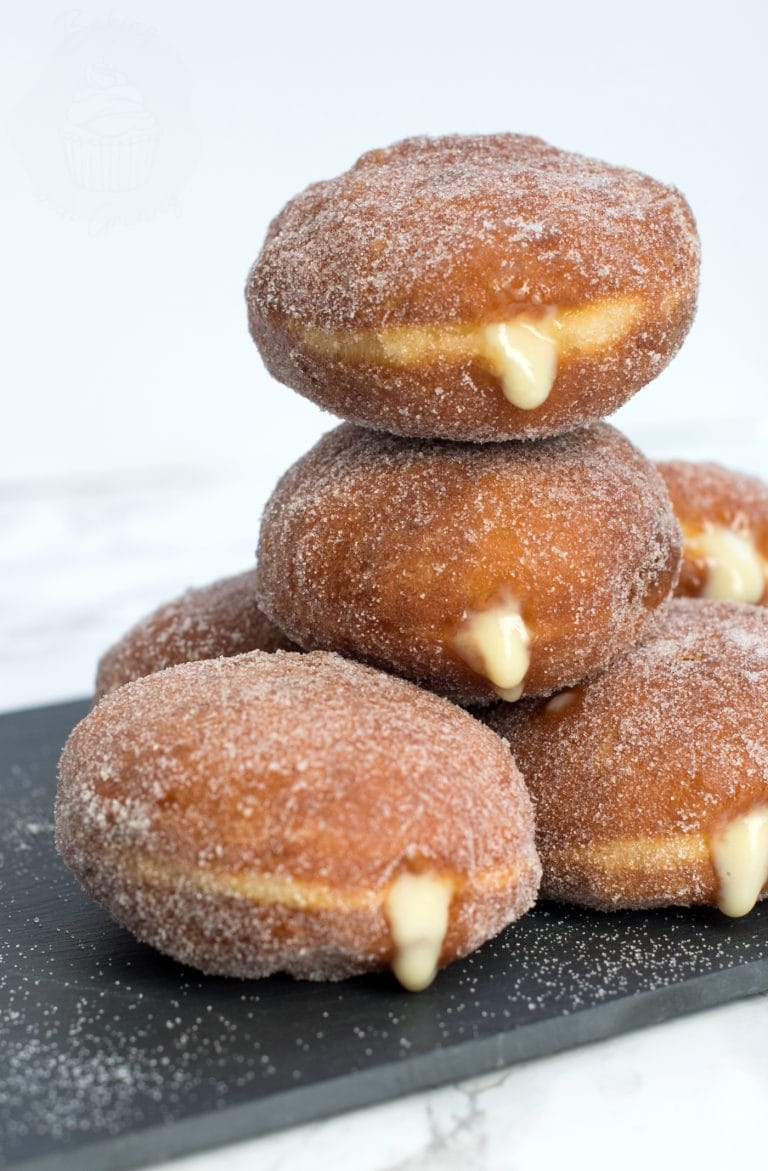
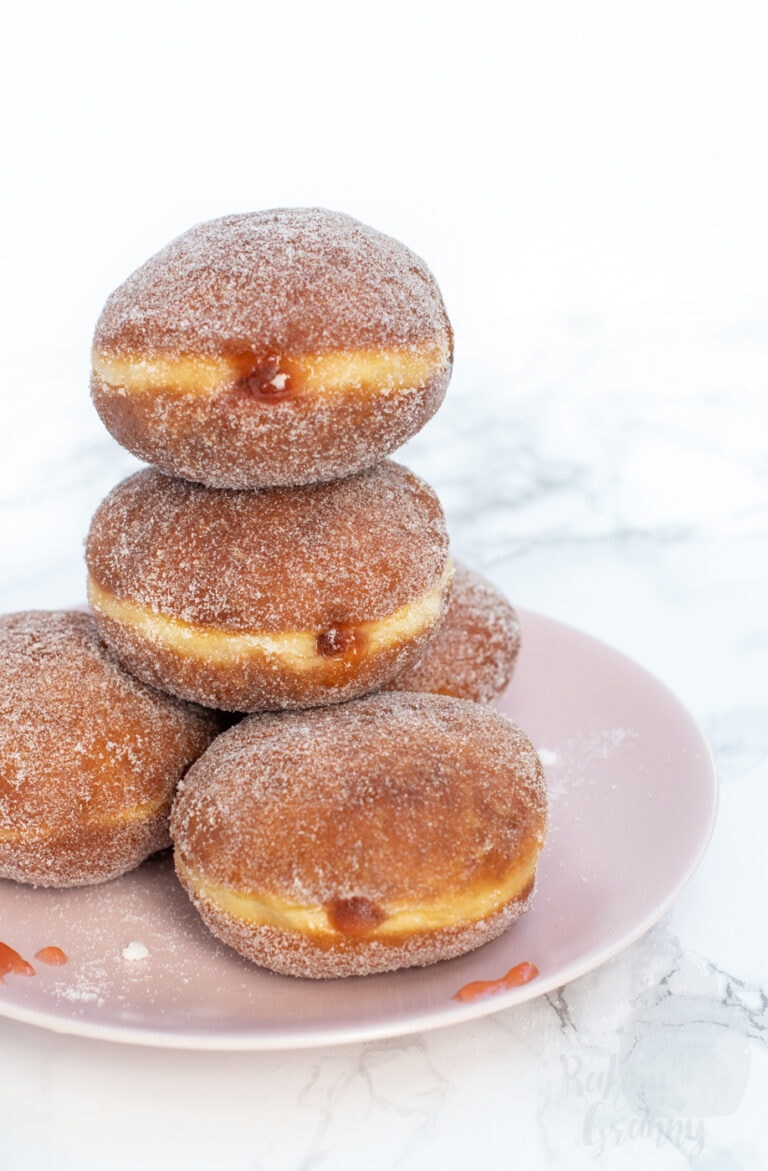
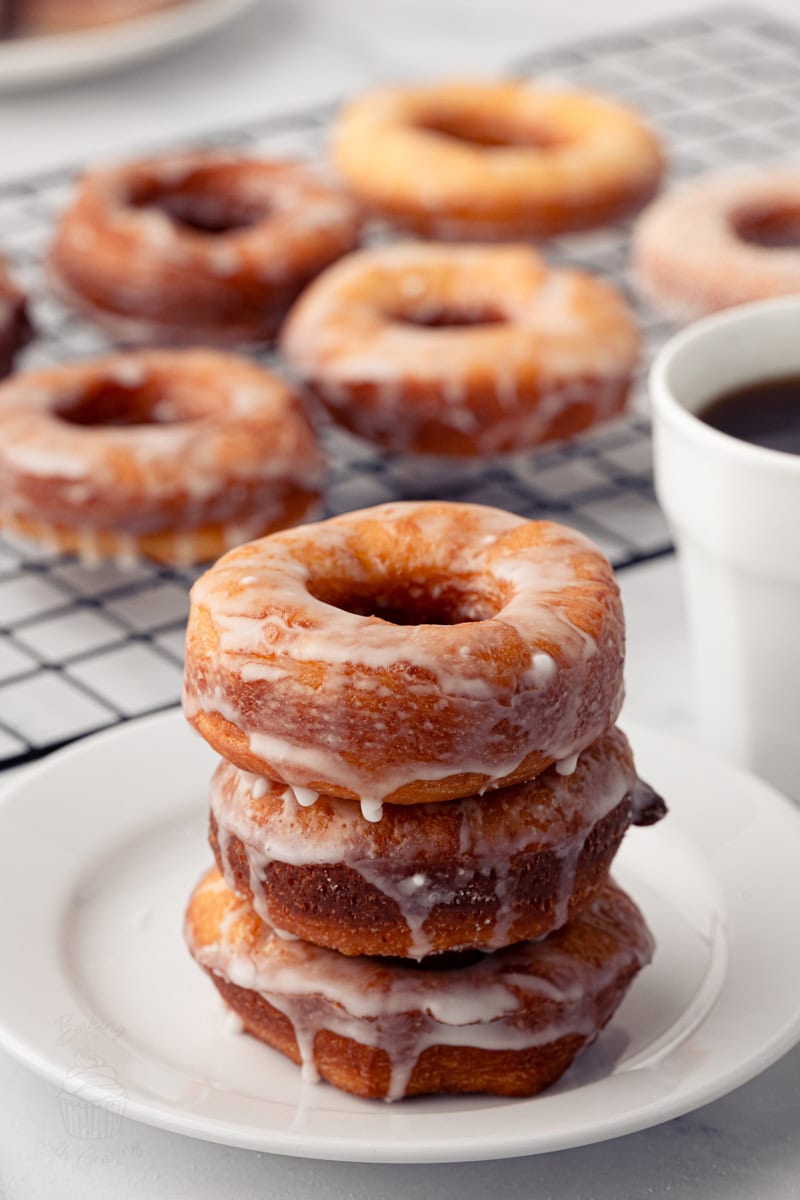
I use this exact recipe to make the sugared and glazed doughnuts in the photos, but you can also use this versatile dough for any style of doughnuts you fancy, including:
- Classic Sugared Ring Donuts (large or mini)
- Glossy Glazed Donuts or Iced-Ring Donuts
- Filled Doughnuts (packed with jam, custard or Nutella!)
Whatever your favourite may be, this foolproof recipe will work for them all.
Mmm… doughnuts!
How to Make Homemade Ring Doughnuts (Ring Donuts):
The secret to successful donuts is all in the preparation. Because this is such a versatile, rich yeast dough, it serves as the ultimate base dough for almost any kind of donut you want to create.
You can easily use this exact same recipe to make my classic Jam Donuts, creamy Custard Donuts or super-sweet Fudge Donuts. But for now, we are focusing on arguably the best and most crowd-pleasing favourite: the perfect ring doughnut!
To help you nail the perfect ring, I’ve broken down the process into some easy to follow photos:
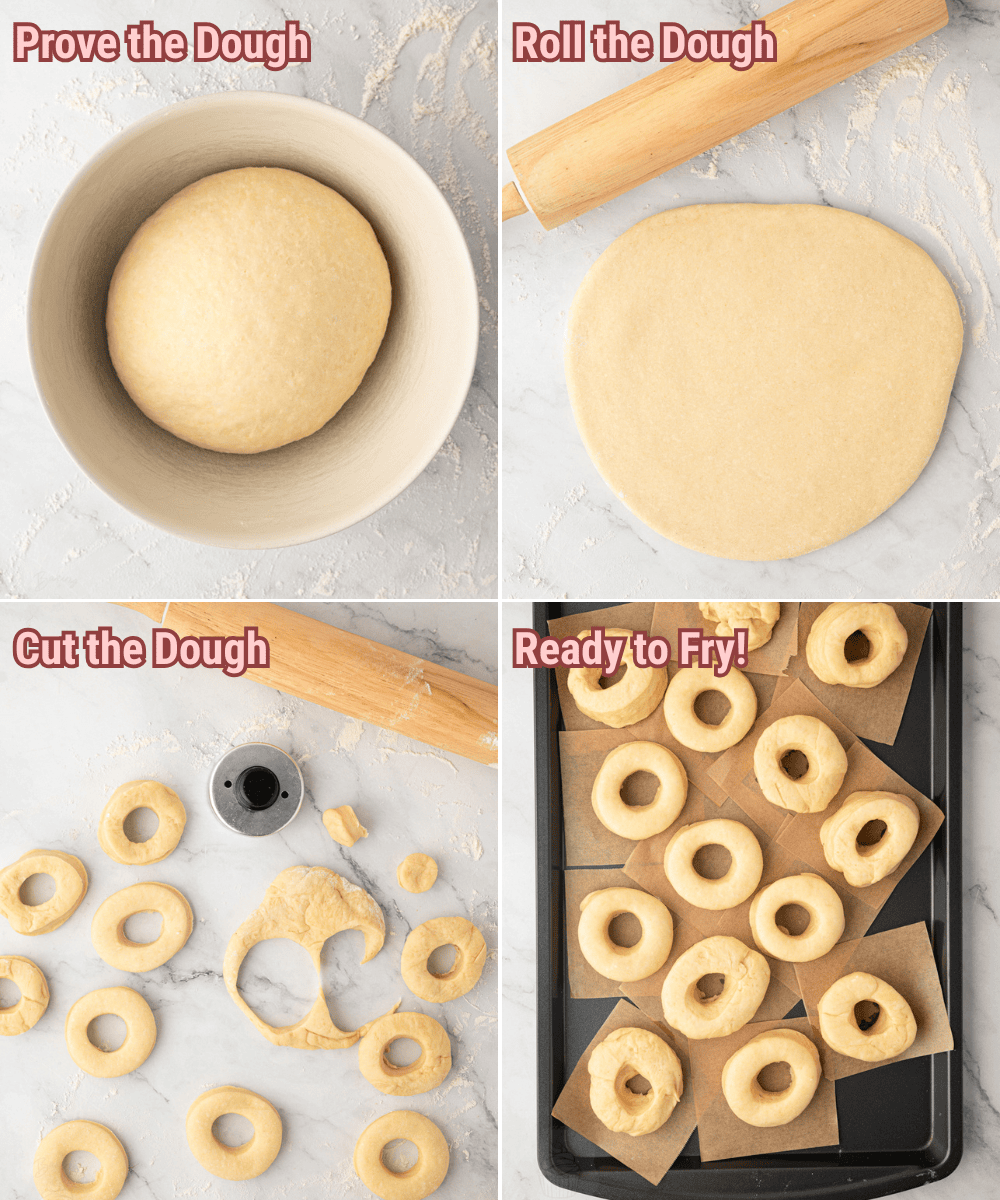
As you’ll see in the step-by-step photos above, getting your dough ready to fry takes only a few steps:
- Step 1: The First Prove. After kneading, let your dough rise in a draught-free place for about an hour, or until it has doubled in size.
- Step 2: Roll it Out. Gently tip the proved dough onto a lightly floured surface and roll it out evenly to a thickness aroud 1cm (½-inch).
- Step 3: Cut the Doughnut Shapes. Using either a traditional metal donut cutter – or two round cookie cutters (one smaller and one larger) – cut out your rings.
- Step 4: The Second Rise. Place your cut doughnut rings onto individual squares of greaseproof paper and onto a baking tray. Leave them for their final rise for around another hour, until they have puffed up and doubled in size again.
Once your rings are looking big & puffy, it’s time to start warming up your oil to fry them!
Free-from & Vegan
Gluten-free Options:
When it comes to yeast doughs, it can be tricky to adapt recipes and get good results. Instead, if you need a gluten-free doughnut recipe, I recommend using one that has been developed specifically to be gluten-free, like The Ultimate Gluten-free Doughnuts recipe from The Loopy Whisk.
Nut-free Adjustments:
This recipe contains no nuts, but as always, be sure to double-check the allergen lists for your individual ingredients.
Dairy-free Swaps:
To make this a dairy-free recipe, simply use your favourite dairy-free milk and adairy-free block margarine.
Egg-Free Adaptations:
I haven’t yet tested this recipe egg-free, but with most sponge cake recipes, it should work just fine with a vegan egg replacer, such as Oggs or Bob’s Red Mill Egg Replacer.
Vegan Substitutions:
To make this a vegan donuts recipe, you can follow the dairy-free and egg-free tips above. Again, I haven’t yet tested these myself, but if you do, please let me know how it turns out!
Allergy Disclaimer & Resources:
Any advice or suggestions to make recipes “free-from” or vegan are purely suggestions. Please double-check all packaged ingredients individually, taking extra caution when baking for those with allergies or intolerances.
For official guidance on food allergies, please see Food Standards Agency (food.gov.uk) | For more info on coeliac disease, please see Coeliac UK (coeliac.org.uk) | For more info on a vegan diet, please see The Vegan Society (vegansociety.com)
Top Tips for homemade Doughnuts:
- Use Strong (Bread) Flour for the Best Texture: Strong white flour (bread flour) helps create the soft, fluffy texture that makes homemade donuts so good. The higher gluten concentration creates a strong dough – regular plain flour can work in a pinch, but you will have to knead it significantly longer to build up the same strength.
- Check Your Yeast: Always check the date on your yeast before you begin. Out-of-date yeast is the number one culprit for unsuccessful yeast doughs. Check the date and only use yeast that is well within date, to avoid wasting ingredients.
- Don’t Rush the Rising: Yeast dough needs time to rise properly, preferably in a warm, draught-free place. If your kitchen is on the chilly side, the dough may take a little longer than stated in the recipe. Wait until it has roughly doubled in size rather than watching the clock.
- No Cutter, No Problem: For ease, you can use a doughtnut cutter to get perfectly uniform ring donuts. But if you don’t have one, don’t worry – just use two round cutters (one larger and then one smaller for the hole).
- The Greaseproof Paper Square Trick: Instead of placing your stamped-out donut rings directly onto a baking sheet, place each individual ring onto its own small square of greaseproof (parchment) paper. Then, when it’s time to fry, you can easily pick up the paper square and gently slide the donut into the oil without touching the dough (or the oil!).
- Use a Thermometer for Frying: Keeping the oil at around 180°C (350°F) will give you the best results. Too cool and the donuts will absorb oil and become greasy. Too hot and they’ll brown too quickly before cooking right through.
- Avoid Overcrowding the Pan: Fry only a few donuts at a time. Adding too many at once can lower the oil temperature and affect how evenly they cook.
- Drain Before Coating: After frying, let the donuts drain briefly on some kitchen roll before rolling them in sugar. This removes any excess oil while still leaving enough warmth for the sugar to stick.
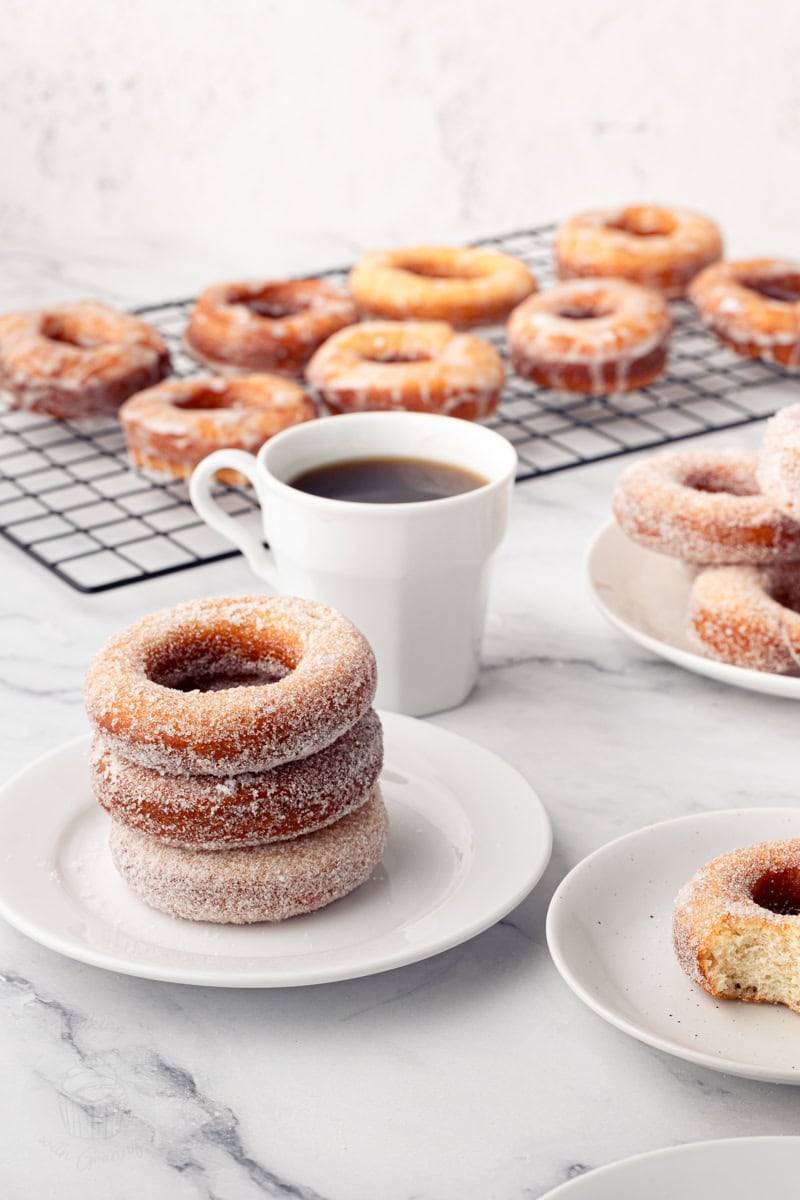
With thanks to Naomi Seiler for creating these photos.
Donuts FAQs
Nothing at all! Both spellings refer to the same treat. “Doughnut” is the traditional spelling commonly used in the UK, while “donut” is a shortened version that has become popular thanks to American bakeries and brands.
Homemade donuts are made by mixing a simple yeast dough with flour, milk, butter, sugar and egg. The dough is then left to rise, rolled out and cut into rounds before being left to rise again. Once puffed up, the donuts are fried in hot oil until golden brown and coated in sugar, or covered in a sweet glaze.
This recipe was developed for frying, which gives donuts their classic soft texture and golden exterior. While they can be baked, the finished texture will be more like a bread roll than a traditional donut.
The easiest way is to use a kitchen thermometer and aim for 180°c (350°F). If the oil is too cool, the donuts will absorb oil and become greasy. If it’s too hot, they’ll brown too quickly before cooking through.
Dense donuts are usually caused by under-proofed dough or expired yeast. Make sure your yeast is in date and give the dough enough time to rise until roughly doubled in size before shaping.
Absolutely! Once cooled, you can fill the donuts with jam, custard, chocolate spread, lemon curd or other sweet fillings. In fact, this is same dough I use in my Jam Donuts recipe and my Custard Donuts recipe.
Save this recipe!
Want to save this recipe for later? Pop your email below and come back to it when you’re ready to bake.
Donuts
INGREDIENTS
- 120 ml Milk
- 60 g Block Margarine or Butter
- 275 g Strong White Flour
- 40 g Caster Sugar
- 7 g Easy Bake Instant Yeast (usually 1 sachet)
- 1 Free-range Egg (see Egg Size note below)
- Oil for Frying (vegetable, rapeseed, sunflower…)
EQUIPMENT
INSTRUCTIONS
- In a small saucepan, add the milk and butter/margarine. Warm over a low heat until the butter/margarine starts to melt. Remove from the heat and allow it to cool a little – you don't want it to be too hot before adding it to the other ingredients.
- In a large bowl, sift in the flour and sugar. Add the yeast and gently mix to combine. Make a well in the middle of the dry ingredients, then add the milk mixture and egg. Mix together to create a soft, slightly sticky dough – you may need to use your hands!
- Once the dough has come together, tip it onto a well-floured surface and begin to knead with floured hands, adding more flour as/when needed. Knead for around 10 minutes, until you have a smooth, stretchy dough.
- Place the dough into an oiled bowl (to prevent it from sticking) and cover with an oiled piece of
cling film , or a damp tea towel. Leave to rise in a draught-free location for about an hour, or until it has doubled in size.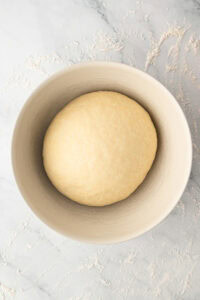
- Once the dough has risen, knock it back and knead it lightly on a floured surface. Roll the dough to about 1cm (⅓ inch) thick before cutting to your desired size, either with a doughnut cutter or two round cutters (one smaller and one larger). Place your doughnuts onto individual squares of
greaseproof paper with a bit of space between them – preferably on a tray or board – and cover again with a piece of oiled cling film or a damp tea towel. Leave in a draught-free place for about an hour, until they have puffed up to about double their size.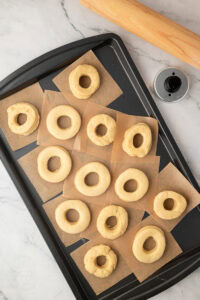
- In a large saucepan, heat your oil to 180°C (350°F) – use a food thermometer for accuracy. You want your oil to be deep enough for your doughnuts to fry comfortably, without sticking to the bottom. Depending on your pan size, you may need to use more/less oil.
- Using the
greaseproof paper square, lift your doughnut to the oil and gently drop it in, exercising extreme caution. Allow the doughnut to fry for about 90 seconds before flipping it over, allowing the underside to fry for about 90 seconds too. Depending on the size of your pan, you should be able to fry the doughnuts in small batches; just be careful not to overcrowd your pan, or you risk the doughnuts sticking together and the oil dropping in temperature too quickly. - When your doughnuts are golden brown on both sides, use a slotted spoon to remove them, holding them above the oil for about 10 seconds (to allow the oil to drip off) before transferring them to a wire rack to cool. Continue until all your doughnuts are cooked, whilst continuing to monitor your oil temperature and adjusting the heat as needed.
- If you want sugar-coated doughnuts, flip them in some sugar while still warm – alternatively, if you plan to glaze them, you can also do this while warm, or allow them to cool completely if you plan to add an icing topping.
IMPORTANT NOTE:
All my recipes are developed using a digital scale and the metric system (grams and millilitres). Cup measurements are available as a conversion, but these, unfortunately, won’t always be as accurate. For best results, I always recommend baking with a digital scale.
RECIPE NOTES:
Substitutions:
- Strong White Flour (Bread Flour): I recommend using strong white flour for the softest, fluffiest donuts. Plain flour can be used in a pinch, but the finished donuts may be slightly less light and airy.
- Milk: You can use whatever milk you prefer – full-fat, semi-skimmed, soya, oat milk… All work well when it comes to donuts.