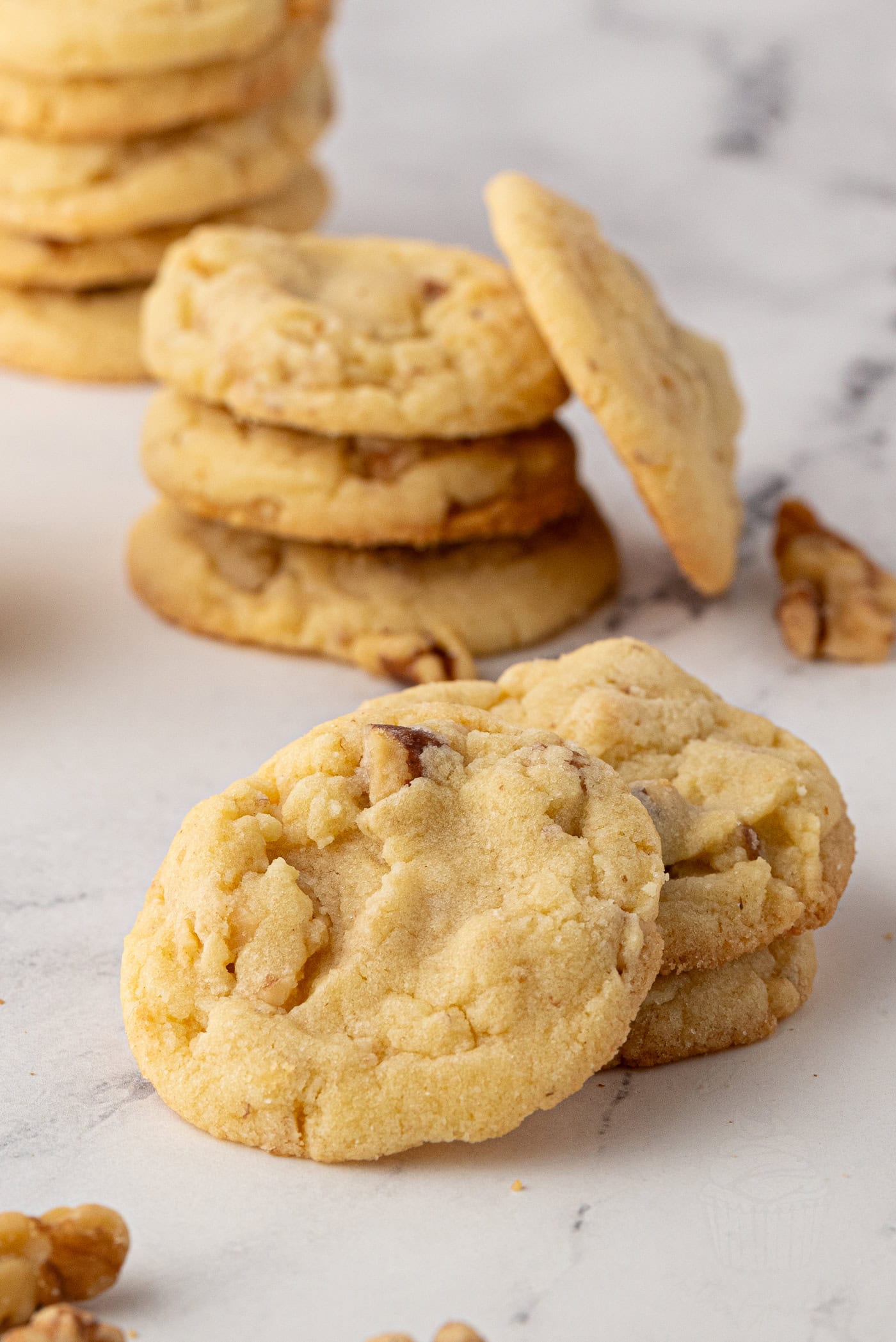
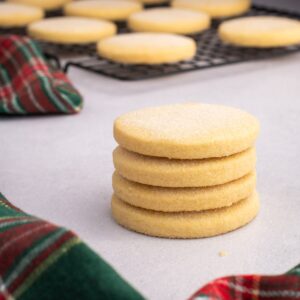
This traditional Scottish Shortbread recipe is the one my Mum has made for as long as I can remember, and the recipe I grew up helping her make. It follows the classic 1:2:3 Shortbread ratio of one part sugar, two parts butter and three parts flour (by weight), with a little cornflour in place of some of the plain flour for Mum’s lovely, crumbly texture and bite.
I first shared it here in 2016, but it had already been a family favourite for decades before. I’ve continued making it ever since, with years of baker questions and feedback helping me add all the tips you need to get that lovely buttery, crumbly Shortbread every single time.
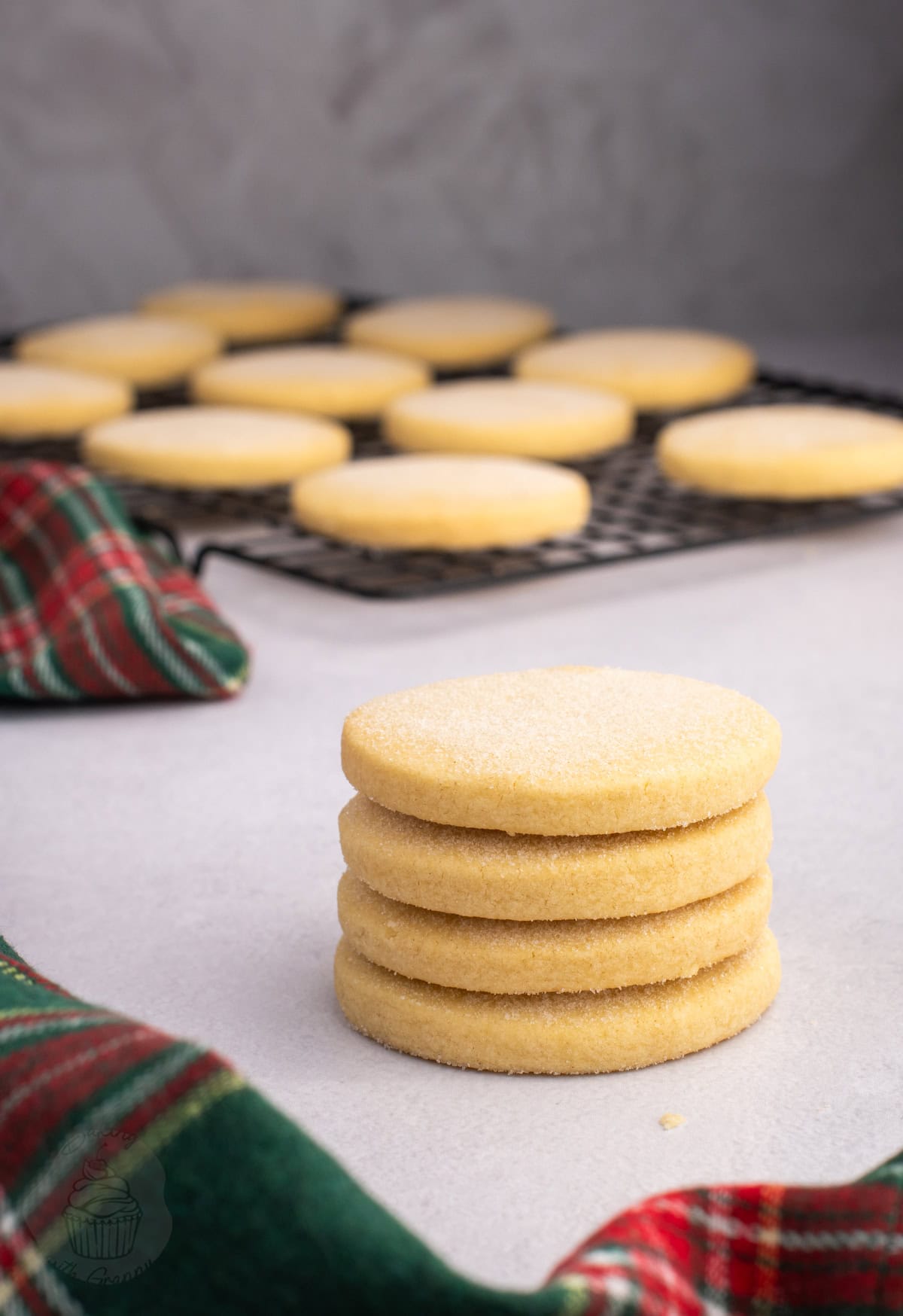
Scottish Shortbread Recipe Snapshot
- Difficulty: Easy.
- Prep Time: 20 minutes.
- Bake Time: 15-20 minutes.
- Total Time: 40 minutes.
- Serves: 12 biscuits.
- Ingredients: Just 4 – butter (or margarine), caster sugar, plain flour and cornflour.
- Dietary Info: Nut-free and egg-free, with substitutions for gluten-free, dairy-free and vegan included below.
- Texture: Buttery, crisp and beautifully crumbly.
- Traditional Formula: 1 part sugar, 2 parts butter, 3 parts flour (by weight).
- My Mum’s Twist: A little cornflour for a finer, more delicate bite.
Summarise & Save this Recipe on:
What is Traditional Scottish Shortbread?
Scottish Shortbread is a traditional Scottish biscuit made from sugar, butter and flour, without eggs or raising agents. Classic recipes often follow a 1:2:3 ratio by weight – one part sugar, two parts butter and three parts flour. My Mum’s family recipe follows that same ratio but replaces a little of the plain flour (all-purpose flour) with cornflour (cornstarch) for an especially delicate, crumbly texture.
Here in the UK, we’d usually call them shortbread biscuits, while in the US you’re more likely to see them described as shortbread cookies.
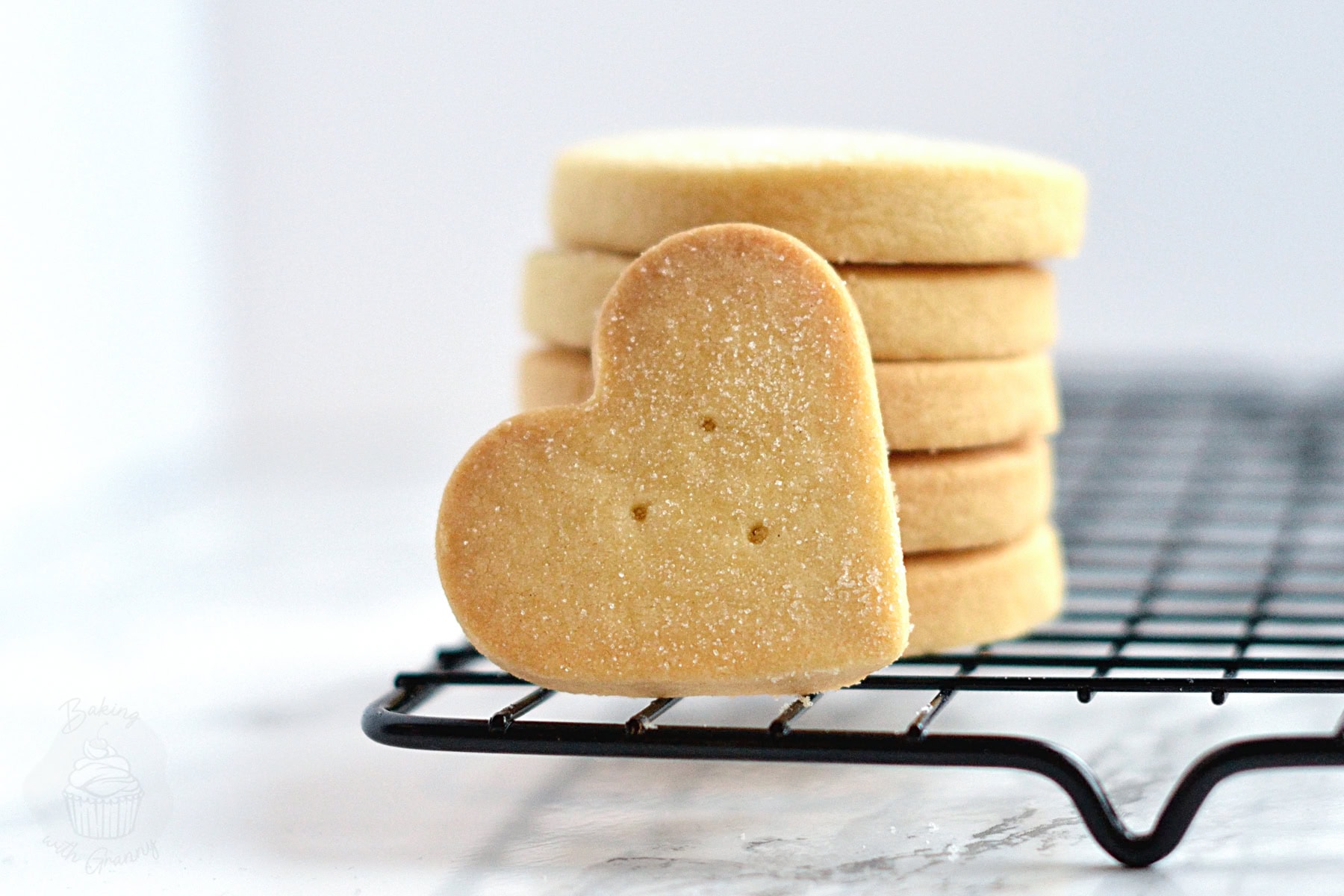
And did you know the “short” in Shortbread refers to its crumbly texture? The high proportion of butter (or margarine) coats the flour and limits the gluten development, giving traditional Shortbread that distinctive crisp, crumbly bite rather than a chewy biscuit texture.
Our Family Scottish Shortbread Recipe
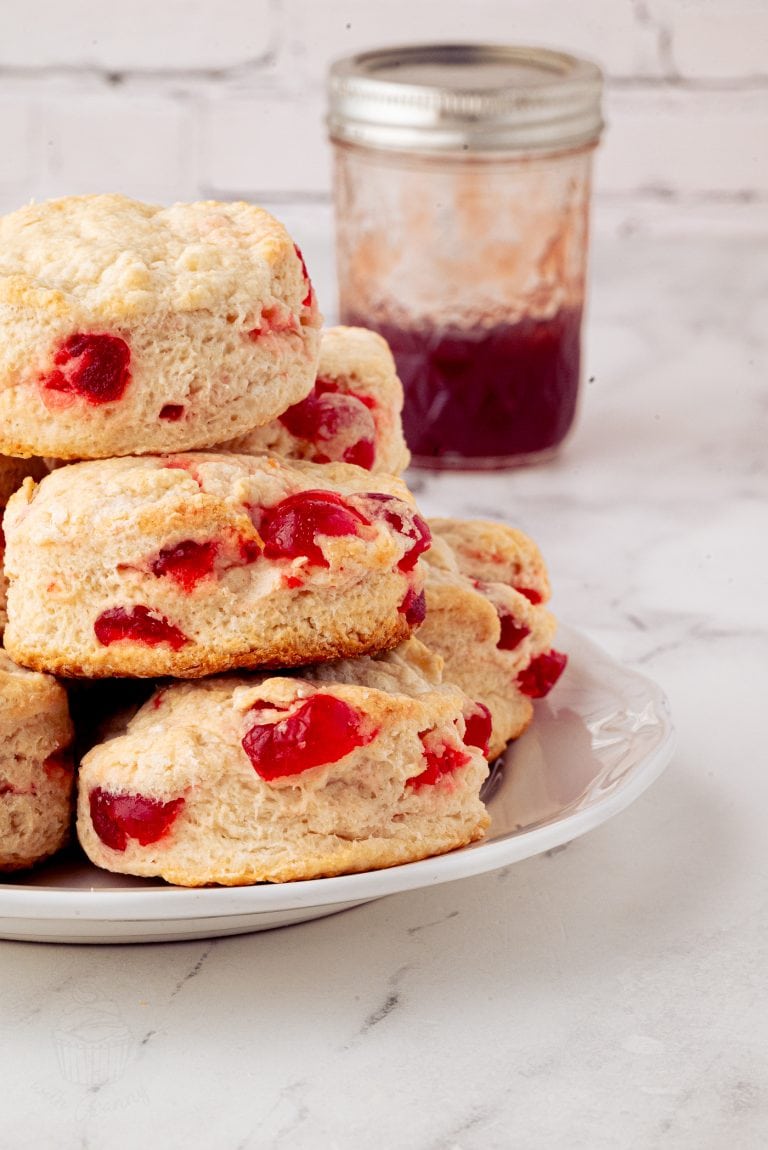
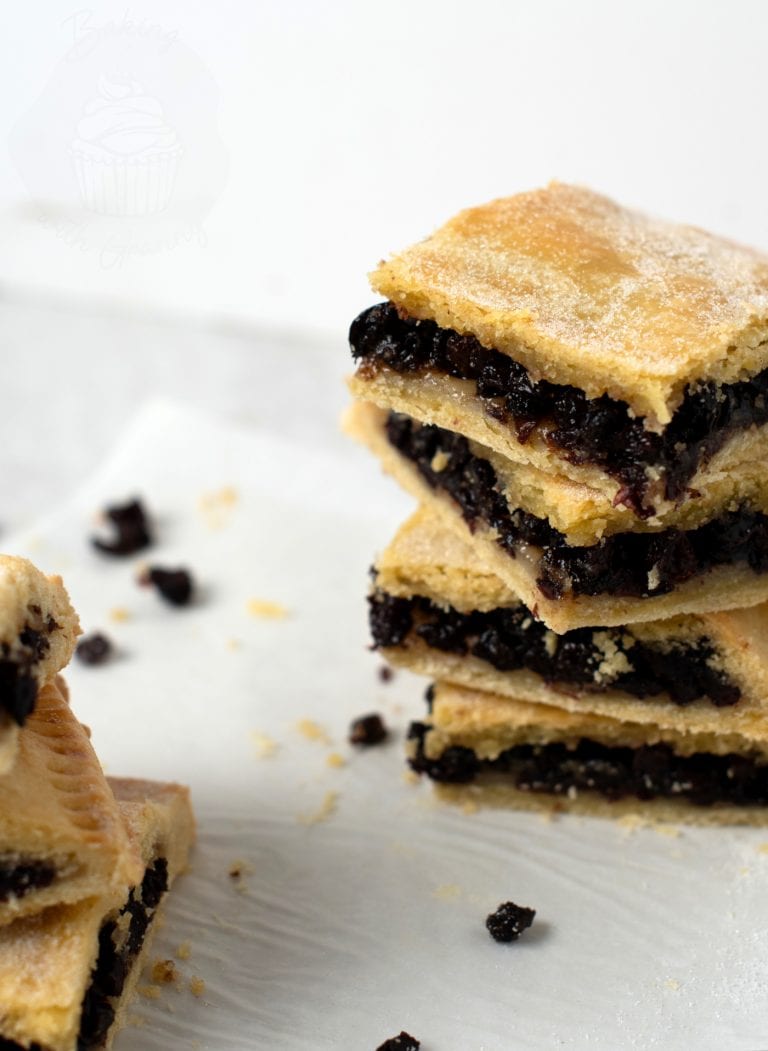
If there’s one recipe that instantly takes me back to growing up around my Mum’s baking, it’s her traditional Scottish Shortbread. Alongside her famous Scottish Empire Biscuits and easy Fruit Scones, it’s one of the recipes she’s best known for and one she’s been making (and perfecting!) for literal decades. These buttery Scottish biscuits have the iconic crumbly texture you’d expect from any good Shortbread recipe and are actually surprisingly easy to bake at home.
While every Scottish family seems to have their own version of shortbread, this is ours.
It’s the same recipe I’ve both watched Mum make and made myself more times than I can count. It always makes an appearance at Christmas, weddings, St Andrew’s Day celebrations, Hogmanay… and has been enjoyed with countless cups of tea over the years. And it, of course, features in my debut cookbook, Scottish Bakes, alongside my other shortbread recipes, Highlander Shortbread and Shortbread Petticoat Tails. In fact, the smell of shortbread baking in the oven is enough to transport me straight back to my childhood!
Key Ingredients
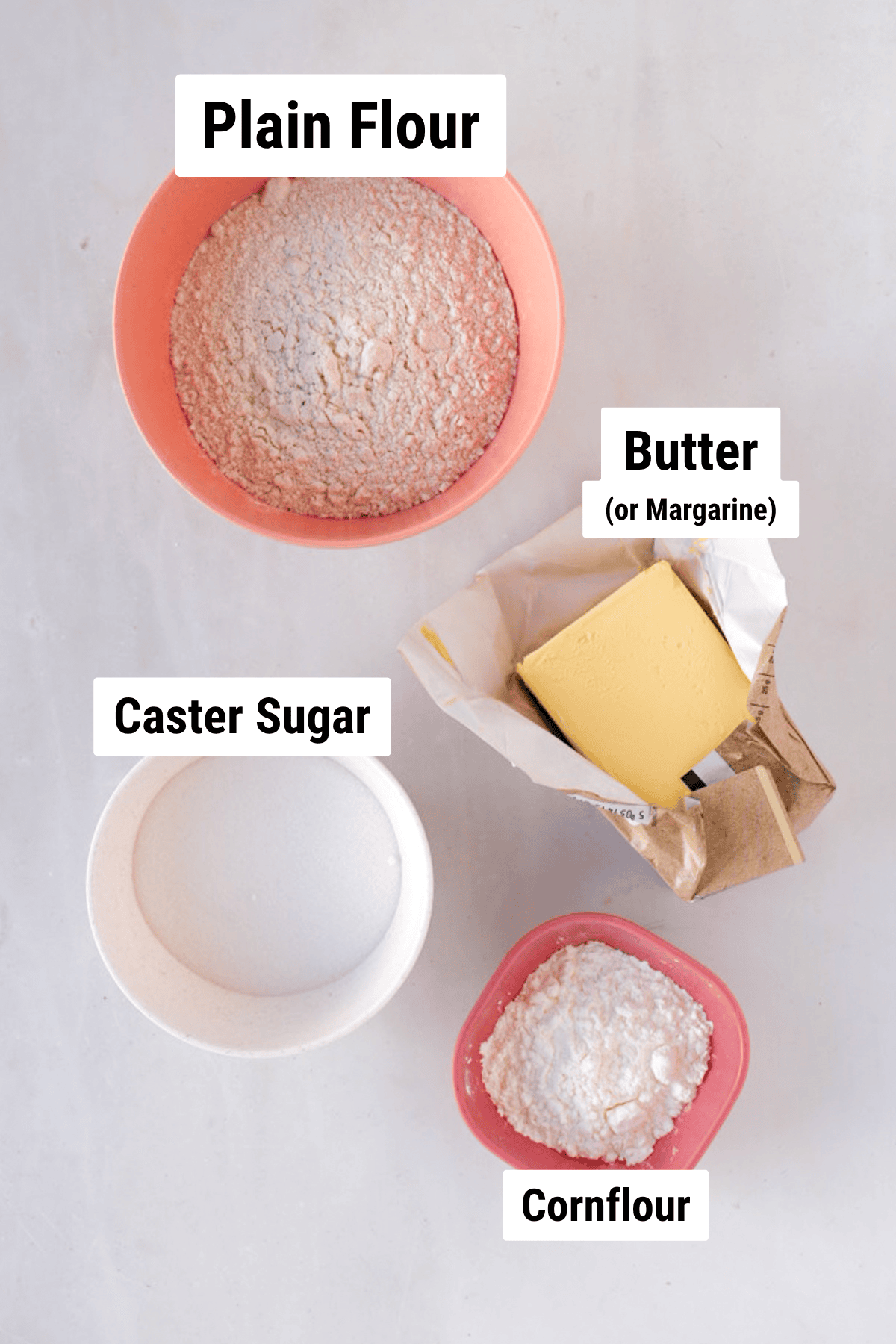
See the recipe card for a full ingredients list, required quantities and cup conversions.
Substitutions & Additions
Sugar: Caster sugar (superfine sugar in the US) is my first choice for Shortbread, as the finer crystals blend easily into the dough and give a lovely delicate texture. Golden caster sugar can be used instead and will give a slightly deeper, more caramel-like flavour. Granulated sugar will work in a pinch, although its larger crystals can give the finished Shortbread a little more crunch.
Cornflour: Cornflour (cornstarch in the US) is what Mum has always used in this recipe and gives the Shortbread its particularly fine, crumbly texture. Some Scottish Shortbread recipes use rice flour instead, but this recipe has been developed and tested using cornflour.
Additions: Traditional Scottish Shortbread really doesn’t need anything added to it, but the basic dough is a lovely starting point for other flavours too. A little citrus zest, chocolate or nuts can all work well, depending on what you’re making.
For something a bit different, you might like my Chocolate & Orange Shortbread cookies, which add dark chocolate and orange to the classic Shortbread base. Or try my traditional Tantallon Cakes, an old-fashioned Scottish Shortbread-style bake with its own traditional twist.
And if you’re looking to make Shortbread as a traditional round and cut it into wedges rather than individual biscuits, try my Shortbread Petticoat Tails recipe.
Butter vs Margarine in Shortbread
If you look at traditional Scottish Shortbread recipes, you’ll often find butter listed as the fat of choice. Historically, that was undoubtedly the case. But like many traditional recipes, shortbread has evolved over the years depending on what ingredients were available and affordable.
Generally, my Mum would try to use butter when making shortbread if money allowed. But over the years, I’ve made it with both butter and block margarine, and I can honestly say that both produce delicious results. Modern block margarines are also much closer to butter than they used to be, making them an excellent choice for baking (and my preference in many recipes). They also tend to be a little more budget-friendly, without too much compromise on texture or flavour, especially when there’s a good amount of sugar, like in Scottish Shortbread.
It’s also worth remembering that many cheaper shop-bought shortbreads use vegetable fats or butter blends, while products that are actually made entirely with butter are generally labelled “all-butter shortbread”.
So whether you choose butter or block margarine, you’ll end up with a delicious homemade Scottish Shortbread. If you love the richness of butter, go for it. If you’re looking for a more economical option that’s been tried and tested, block margarine works well too.
Free-from & Vegan
Amy recommends: If you regularly need to adapt baking recipes for gluten-free, dairy-free, egg-free or vegan diets, I highly recommend The Elements of Baking by Katarina Cermelj, creator of The Loopy Whisk. It’s a brilliant resource for understanding how substitutions work, rather than simply swapping ingredients and hoping for the best.
Gluten-free Options:
To make this a gluten-free Shortbread recipe, use a gluten-free plain flour in place of wheat flour. Gluten-free flours can be slightly drier, so add it to the butter/sugar mix gradually, or hold back on the cornflour and only add it if/when you feel the dough needs a little more flour to come together.
Nut-free Adjustments:
This recipe contains no nuts, but as always, be sure to double-check the allergen lists for your individual ingredients.
Dairy-free Swaps:
To make this Shortbread recipe dairy-free, simply use your favourite dairy-free block margarine in place of the butter. Be sure to avoid spreadable varieties, as they contain too much water and can affect the finished texture.
Egg-Free Adaptations:
This recipe contains no eggs, but as always, be sure to double-check the allergen lists for your individual ingredients.
Vegan Substitutions:
As above, to make this Shortbread recipe vegan, simply use your favourite dairy-free block margarine in place of the butter. Be sure to avoid spreadable varieties, as they contain too much water and can affect the finished texture.
Allergy Disclaimer & Resources:
Any advice or suggestions to make recipes “free-from” or vegan are purely suggestions. Please double-check all packaged ingredients individually, taking extra caution when baking for those with allergies or intolerances.
For official guidance on food allergies, please see Food Standards Agency (food.gov.uk) | For more info on coeliac disease, please see Coeliac UK (coeliac.org.uk) | For more info on a vegan diet, please see The Vegan Society (vegansociety.com)
How to Make Scottish Shortbread (Step-by-Step)
Scottish Shortbread is really simple to make, but taking the time to cream the margarine/butter and sugar properly, then handling the dough lightly, is what gives you that lovely melt-in-the-mouth texture. Follow the step-by-step below, or head to the recipe card at the bottom for the full printable recipe.
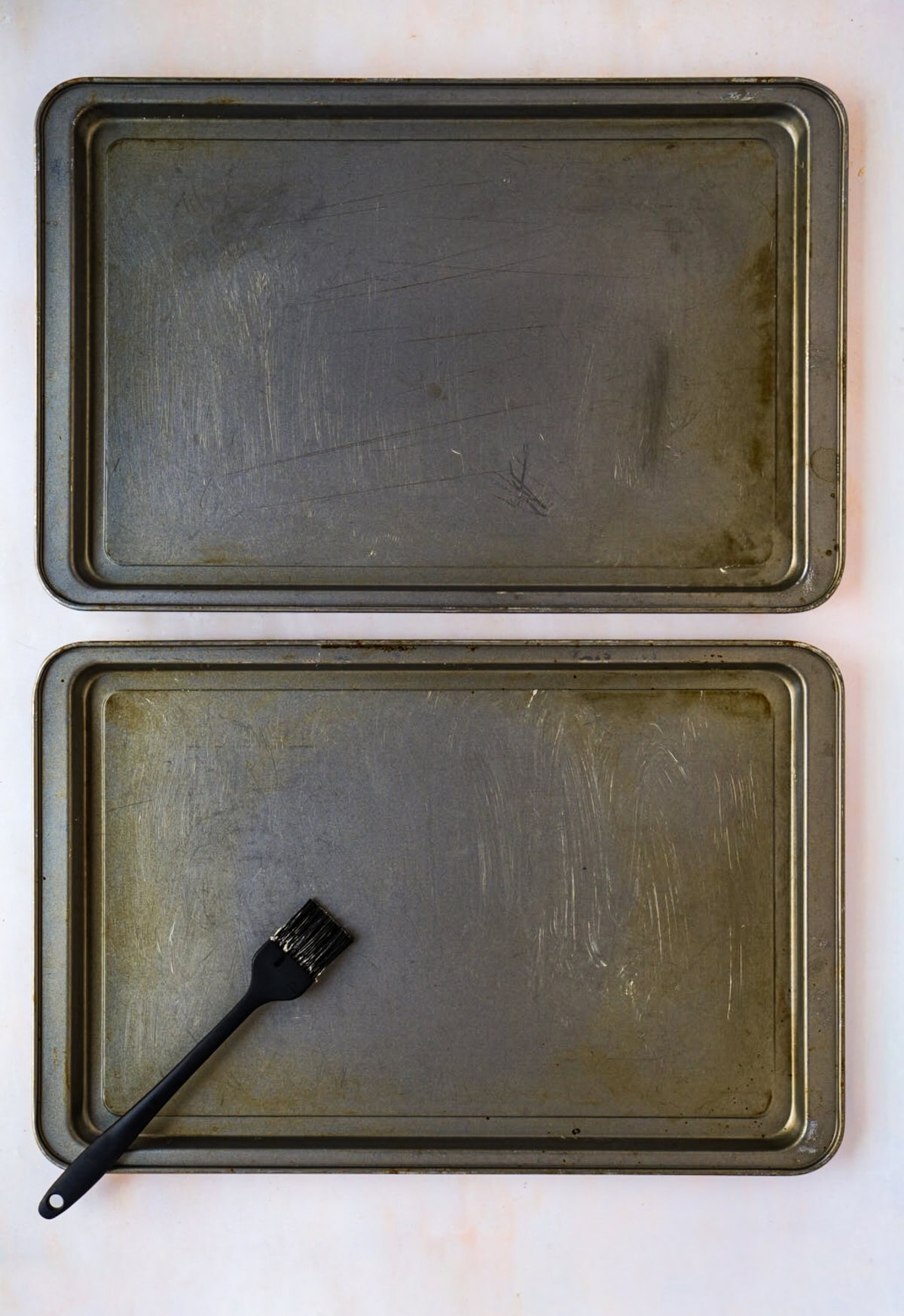
- Prepare the trays. Preheat your oven to 180°C (160°C fan-assisted ovens, Gas Mark 4 or 350°F). Lightly grease a couple of baking trays with a little extra butter/margarine.
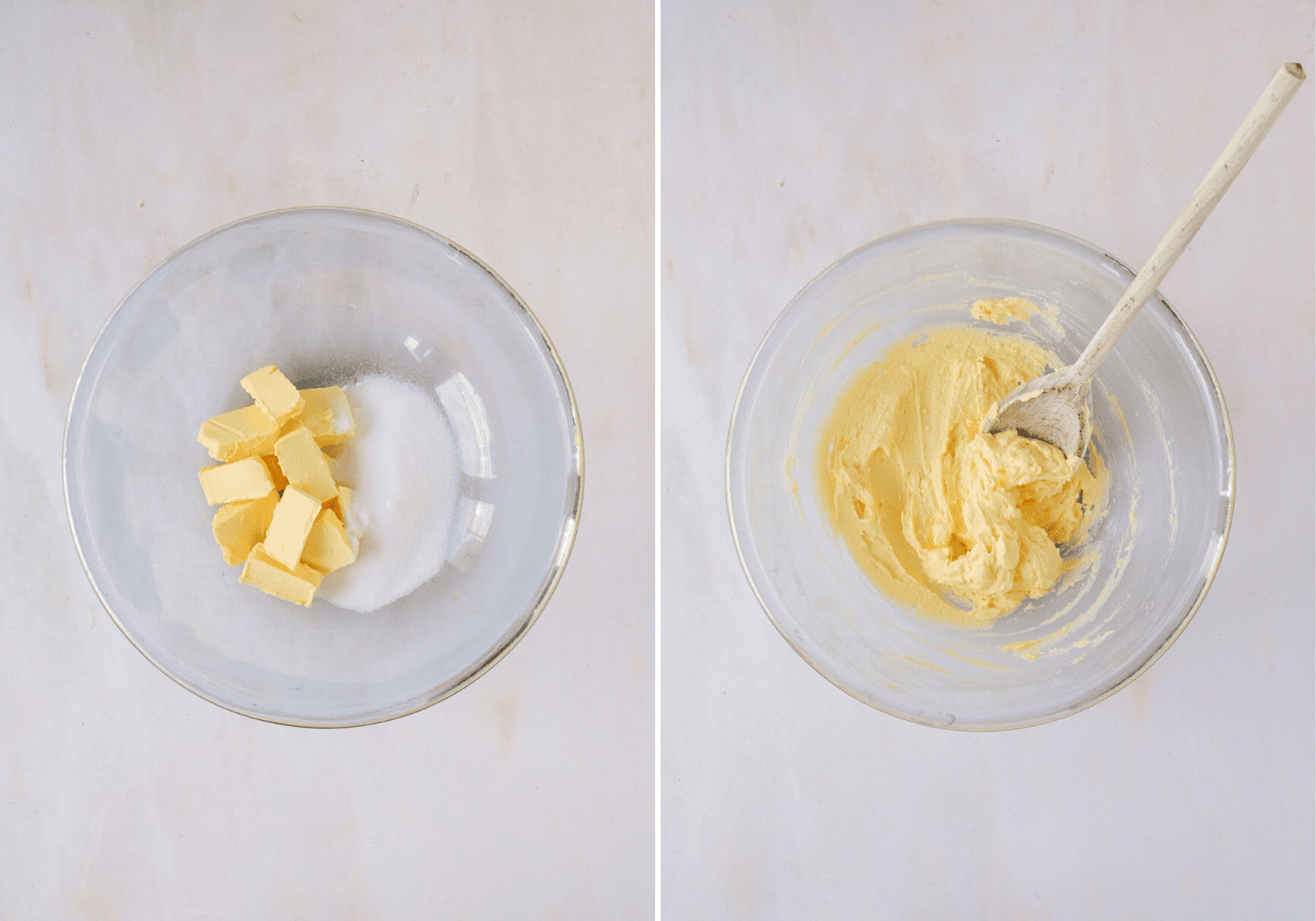
- Cream the butter and sugar. Beat the butter/margarine and caster sugar together until light and fluffy, both in colour and texture.
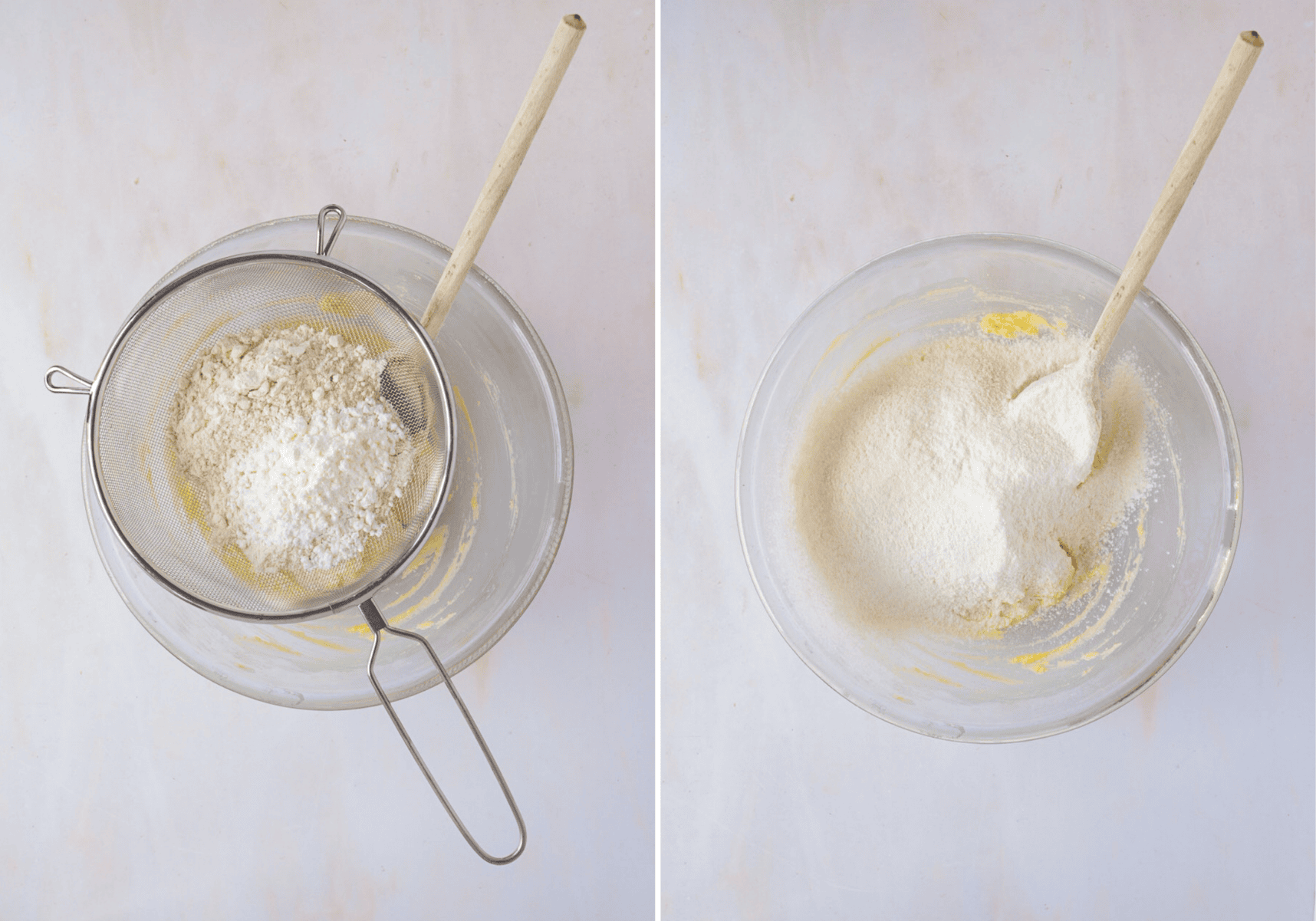
- Add the flour. Sift in the plain flour and cornflour, then gently mix until the mixture starts to form a dough.
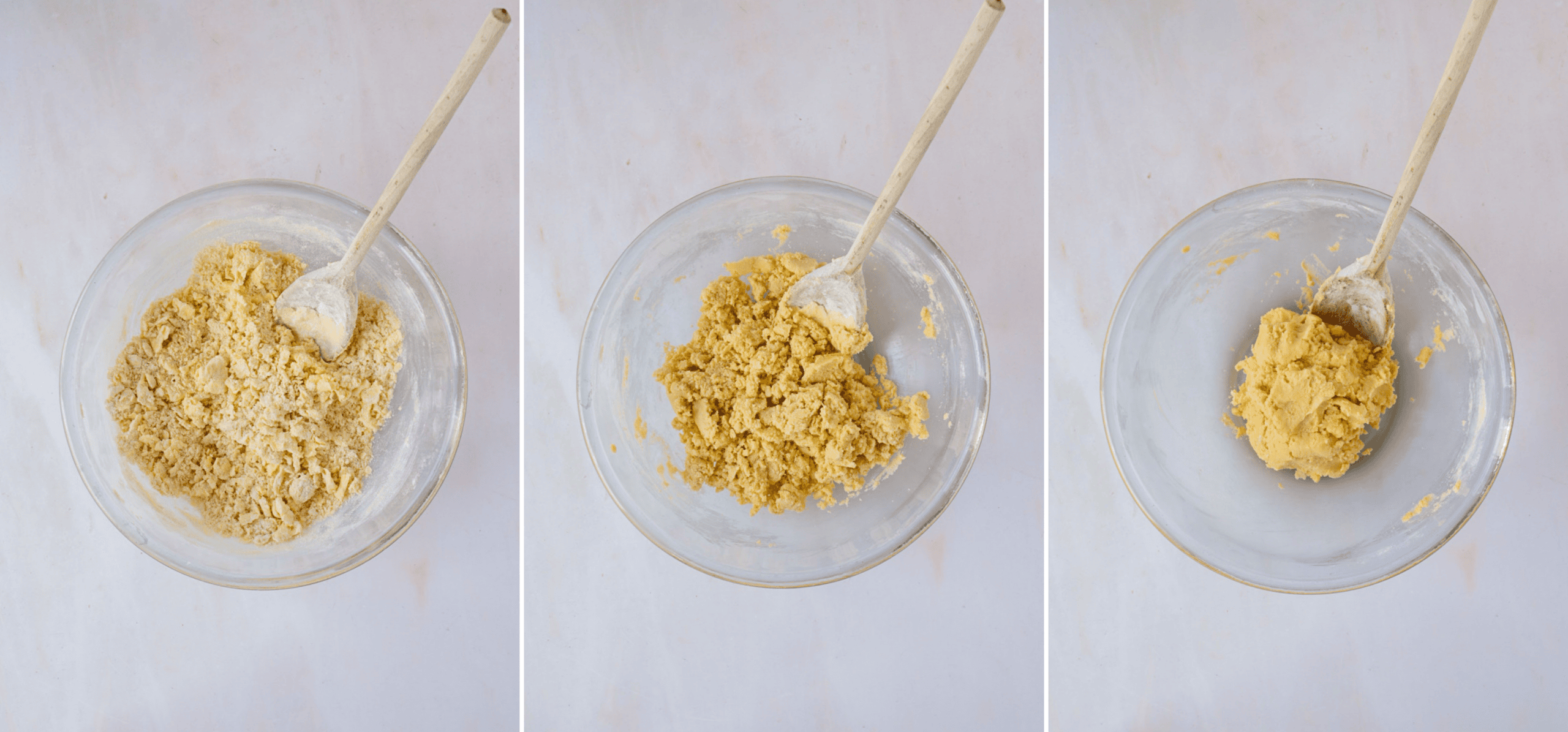
- Bring the dough together. Don’t worry if it looks quite dry and crumbly at first. Use your hands to gently bring everything together into a smooth dough, handling it as little as possible and resisting the temptation to add any liquid.
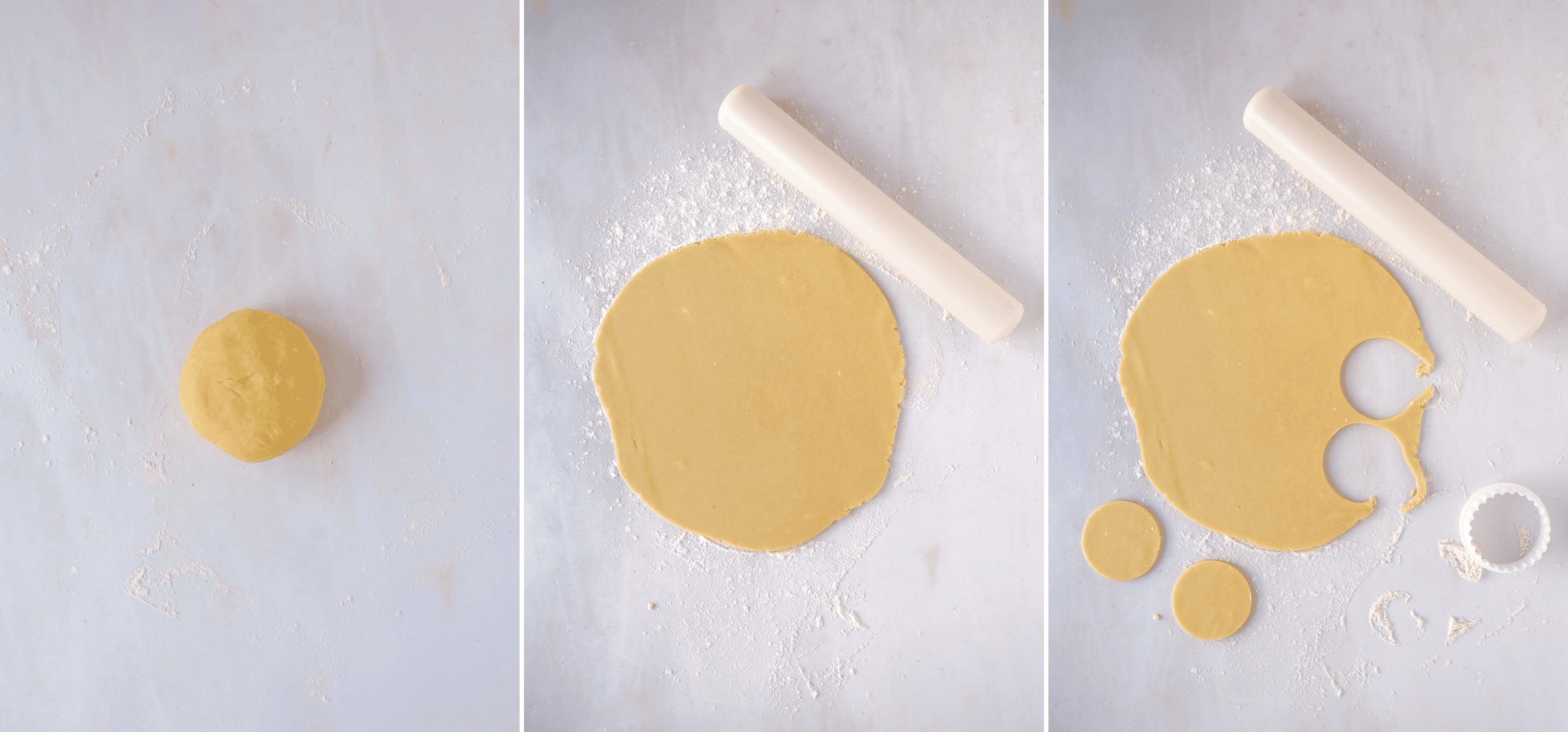
- Roll and cut. On a lightly floured surface, roll the dough to around 5mm–1cm (¼-½ inch) thick, depending on how thick you like your Shortbread. Cut into rounds or your preferred shape.
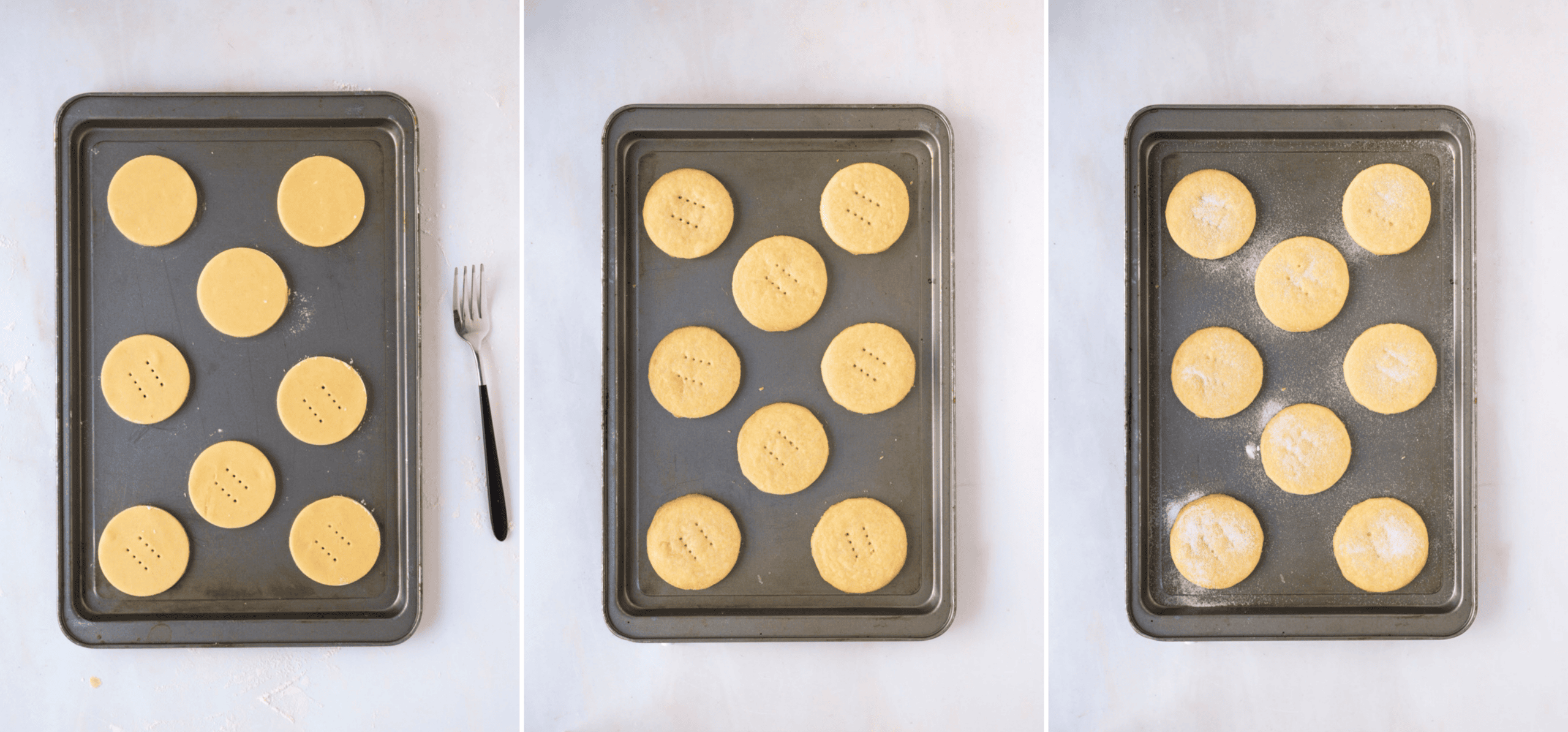
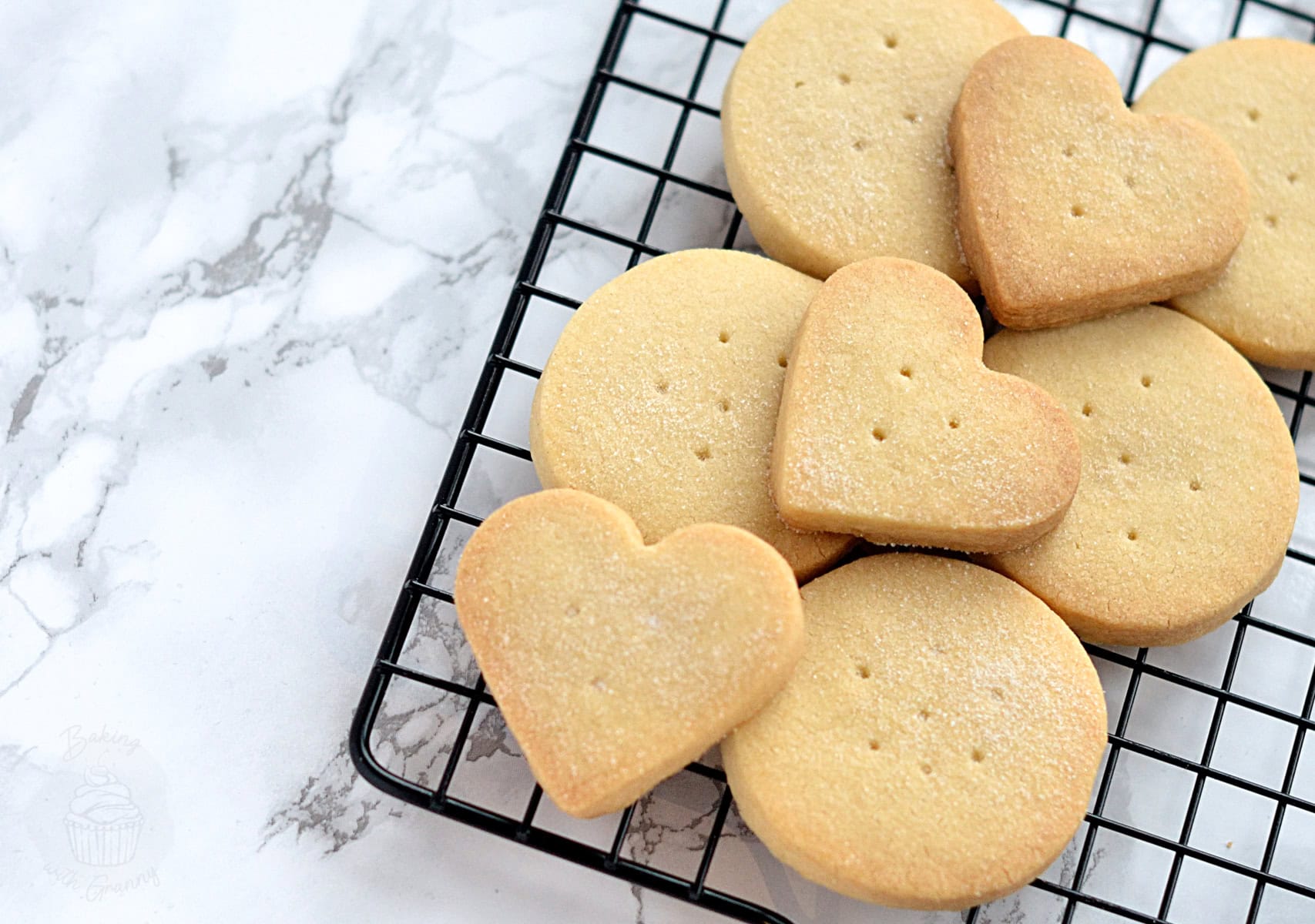
- Prick and bake. Place the biscuits onto your prepared trays and prick the tops with a fork. Bake for around 15-20 minutes, until the tops look dry and the edges are only just beginning to turn lightly golden. Sprinkle the warm Shortbread with a little caster sugar, then leave on the baking trays until cool enough to touch, before transferring to a wire cooling rack to cool completely.
How to Make Scottish Shortbread (Video)
Top Tips for homemade Shortbread
- Cream Until Light and Fluffy: My Mum has always creamed the butter and caster sugar together until light and fluffy for this Shortbread recipe, and that’s the method I use too. Some Shortbread recipes use a less-aerated method, but this family recipe has been made this way for decades and gives us the delicate, crumbly texture that you’re looking for.
- Don’t Overwork the Dough After the Flour: Once the flour has been added, handle the dough as little as possible. Use your hands to gently bring everything together, rather than kneading it a lot like a bread dough. Too much handling can make your Shortbread tougher rather than beautifully crumbly.
- Don’t Panic if It Looks Crumbly: Shortbread contains no egg or other added liquid, so the mixture can look quite dry and crumbly before it comes together. Resist the temptation to add milk or water – gently bring it together with your hands, and the butter will do the rest.
- Chill the Dough if It Feels Too Soft: If your kitchen is warm or the dough has become particularly soft while you’re working with it, pop it into the fridge for a short while before rolling and cutting. You want it firm enough to hold its shape without becoming rock hard.
- Prick Before Baking: Don’t forget the traditional little fork holes before your Shortbread goes into the oven. As well as giving it that familiar Shortbread appearance, pricking helps it bake more evenly.
- Keep an Eye on the Colour: Shortbread should stay relatively pale, with just the faintest hint of golden colour around the edges. Don’t wait for it to become golden-brown all over – by that point it is likely to be overbaked and will lose that lovely delicate texture.
- Let It Cool Before Moving: Shortbread can be quite fragile when it first comes out of the oven. Leave it on the baking tray until it has firmed up enough to move, before transferring it to a wire cooling rack to cool completely.
Storage & Freezing
- Storage: Store your baked Scottish Shortbread in an airtight container at room temperature for up to a week. It actually tastes even better after a day or two, once the flavours have had a chance to develop (hard to believe it is even possible, I know!).
- Freezing: For the best results, I would recommend freezing your shortbread dough, as opposed to the baked biscuits. Simply wrap the dough in cling film, then tin foil and keep it in your freezer for up to 3 months. When ready to bake, simply remove the dough from the freezer and allow it to defrost at room temperature before using as normal.
Scottish Shortbread FAQs
Traditional Shortbread doesn’t actually need either cornflour or rice flour – different Scottish families have their own versions. Mum has always replaced a little of the plain flour with cornflour (cornstarch in the US), which gives her Shortbread a particularly fine crumb. Some recipes use rice flour for a slightly sandier texture, but this recipe has been developed and tested using cornflour.
There are different methods for making Shortbread, but in our family, yes. My Mum has always creamed the butter and sugar together until light and fluffy, and it’s the method I now use for this recipe too. It’s how this Shortbread has been made in our family for decades and how the recipe is written in my cookbook, Scottish Bakes. The result is a beautifully delicate, crumbly Shortbread.
Don’t panic if the mixture looks quite dry and crumbly at first. Shortbread contains no egg or added liquid, so it won’t come together like many other biscuit doughs. Gently bring it together with your hands and resist the temptation to add milk or water. If you’ve weighed the ingredients accurately, the butter should be enough to bind everything together.
Scottish Shortbread should still be quite pale when it is ready. Look for the edges just beginning to turn very lightly golden while the middle remains pale and the tops look dry. It may still feel a little soft when it first comes out of the oven, but it will firm up as it cools. Don’t wait for the biscuits to become golden-brown all over, or they will end up overbaked.
If your Shortbread spreads or loses its shape, the dough may have become too warm before baking, or you may have possibly used a spreadable margarine rather than butter or block margarine. If your kitchen is warm or the dough feels particularly soft, chill it for 20-30 minutes before rolling and cutting, or chill the shaped biscuits before baking.
More Traditional Scottish Bakes
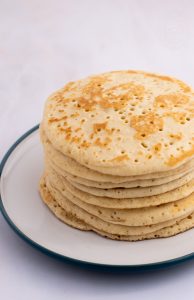
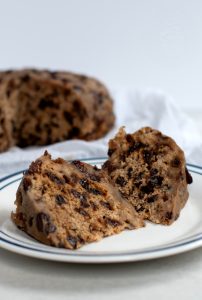
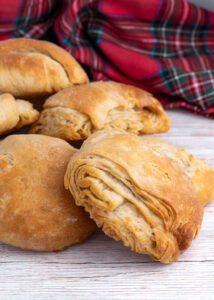
If you loved this traditional Shortbread, here are some more of my favourite Scottish baking recipes for you to try next:
Save this recipe!
Want to save this recipe for later? Pop your email below and come back to it when you’re ready to bake.
Scottish Shortbread
INGREDIENTS
- 150 g Block Margarine or Butter (at room temperature; plus extra for greasing)
- 75 g Caster Sugar (plus extra for topping)
- 200 g Plain Flour (plus extra for dusting)
- 25 g Cornflour
EQUIPMENT
- Fork
INSTRUCTIONS
- Preheat your oven to 180°C (160°C for a fan-assisted oven, Gas Mark 4 or 350°F). Grease a couple of
baking trays with a little extra butter/margarine and set aside. - In a large bowl, cream together the butter/margarine and sugar until light and fluffy, in both colour and texture.75 g Caster Sugar; 150 g Block Margarine or Butter
- Sift in your flour and
cornflour , mixing until a stiff dough starts to form. Use your hands if needed. Turn the dough onto a floured worktop and gently bring it together into a smooth dough, handling it as little as possible.200 g Plain Flour; 25 g Cornflour - Roll your dough to between 5mm-1cm (¼-½ inch) thick, depending on how thick you want your shortbread biscuits to be. Cut into your desired shape and size. Transfer each biscuit to your prepared
baking trays and prick the tops with a fork. - Bake in your preheated oven for around 15-20 minutes, or until the edges are lightly golden and the tops appear dry.
- Remove from the oven and sprinkle a little extra sugar over each shortbread biscuit. Leave to cool on the
baking trays until cool enough to touch, then transfer to a wire cooling rack to cool completely.
VIDEO
IMPORTANT NOTE:
All my recipes are developed using a digital scale and the metric system (grams and millilitres). Cup measurements are available as a conversion, but these, unfortunately, won’t always be as accurate. For best results, I always recommend baking with a digital scale.
RECIPE NOTES:
LIKE THIS RECIPE?
Leave a comment and rating below!Originally published in January 2016.