
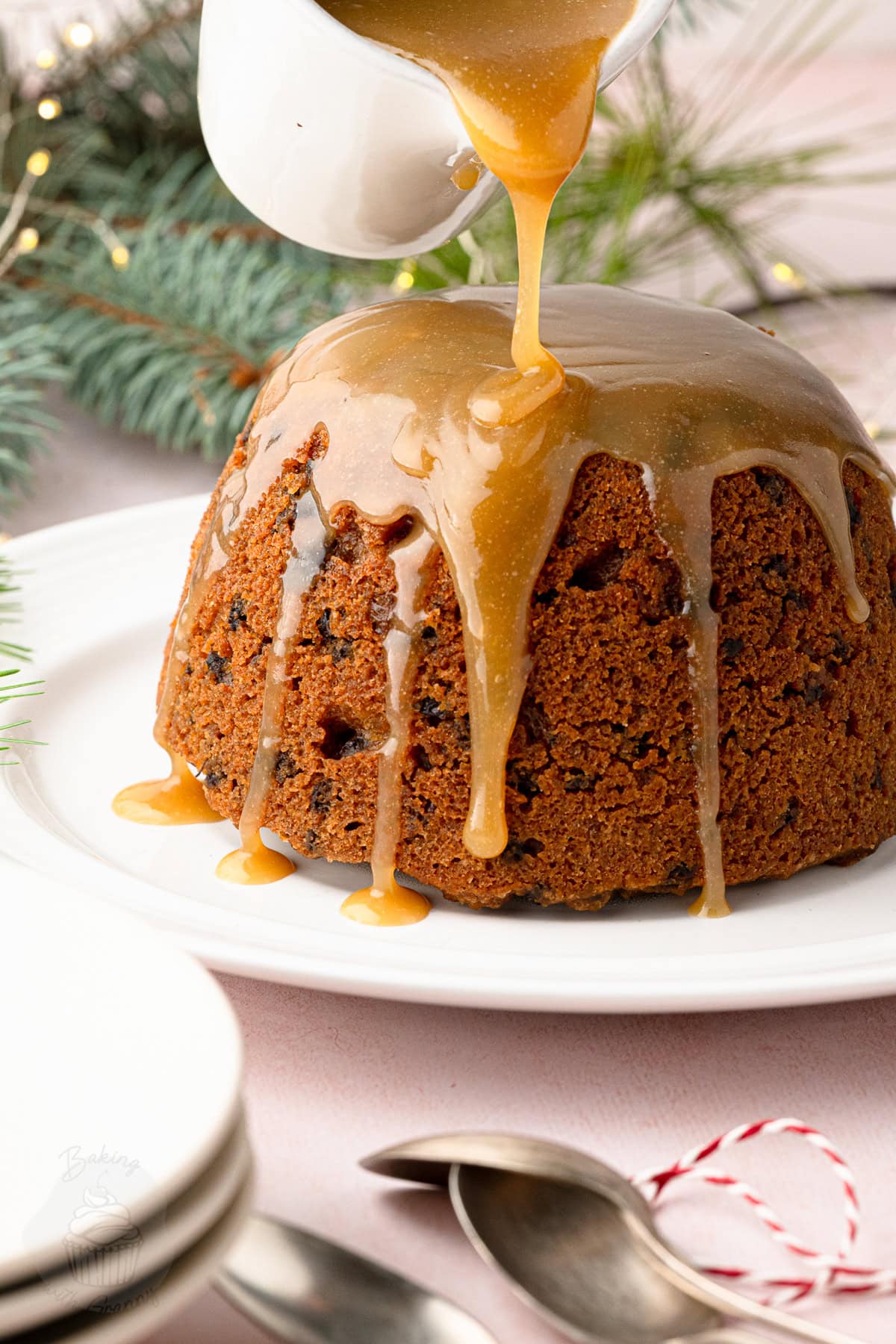
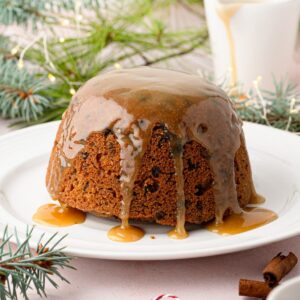
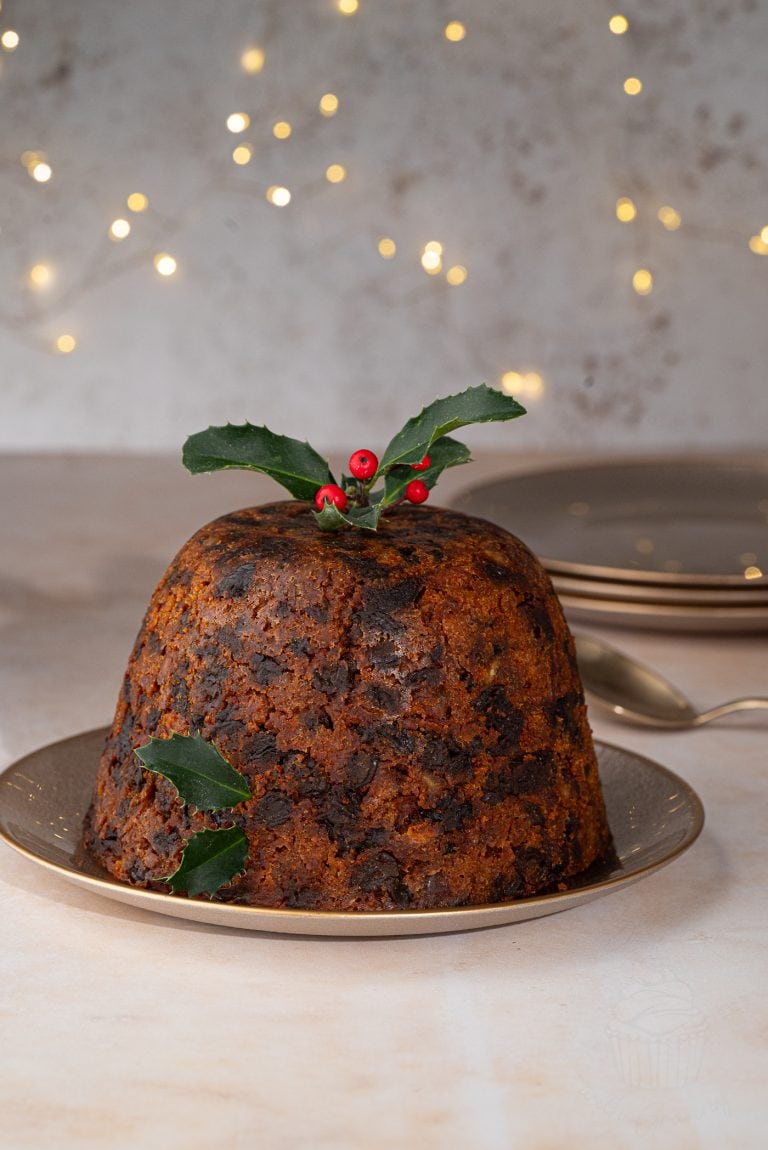
Seven Cup Pudding is a traditional steamed fruit pudding – somewhere between a Christmas Pudding and Spotted Dick! Made with raisins, sultanas and lovely warming spices, it’s straightforward to make before gently steaming. Best served warm with a generous helping of homemade butterscotch sauce for a proper old-fashioned pudding!
Seven Cup Pudding Recipe Snapshot
- Recipe: Seven Cup Pudding, also known as 7 Cup Pudding.
- Serves: 8 portions.
- Prep Time: Around 30 minutes.
- Cooking Time: 2½ hours of steaming, counted from when the water reaches a gentle simmer.
- Pudding Basin: A 1.2-litre pudding bowl or basin.
- Measurements: Seven teacup-sized measures of the main ingredients (¾ of a standard measuring cup each), with tested gram and millilitre quantities included.
- Difficulty: Easy to mix – allow time for steaming and keep an eye on the water level.
- To Serve: Warm, with the homemade butterscotch sauce included in the recipe.
Summarise & Save this Recipe on:
What is Seven Cup Pudding?
Seven Cup Pudding is a traditional steamed suet pudding named after the fact that it uses seven cupfuls of its main ingredients. In my version, those are suet, self-raising flour, brown sugar, fresh breadcrumbs, raisins, sultanas and milk. An egg and a little spice are used to complete the mixture, but the name refers to the seven equal measures rather than the overall number of ingredients 😅
Like traditional Christmas Pudding and my Spotted Dick recipe, Seven Cup Pudding is cooked by gently steaming in a covered pudding basin or bowl, inside a saucepan. It also belongs to the same comforting family of fruit puddings as Scottish Clootie Dumpling, although that is cooked in a “cloot” cloth rather than a bowl or basin.
You may sometimes see it called “Seven Cup Christmas Pudding”, but there’s no need to keep it saved for December – it makes a lovely pudding to share after Sunday dinner too!
My Seven Cup Pudding Recipe
I kept coming across the name “Seven Cup Pudding” while researching Christmas Pudding recipes. It sounded like exactly the kind of old-fashioned pudding I’d enjoy making, but finding a recipe that had much detail, beyond it using 7 cupfuls of ingredients, proved a little trickier!
There were a few that had short ingredient lists and somewhat brief instructions, but all seemed to leave the baker to work out the finer details around how much a cupful actually is, and how to actually cook, serve and store the finished pudding. So, I decided to develop my own version! Testing the measurements and put together exactly the kind of instructions I would have liked to have.
The exact origins of Seven Cup Pudding are quite tricky to pin down, but there is a documented Scottish connection, which I love. A 1913 Cookery Book from Huntly, Aberdeenshire features a Seven Cup Pudding and is contributed by Violet Davie of Banff. A recipe also called Seven Cup Pudding appears in a 1926 Cook Book from Newfoundland, Canada, although the ingredients do differ from the Scottish version. So it would seem it has been made on both sides of the Atlantic for at least a century, without telling us knowing exactly where it began.
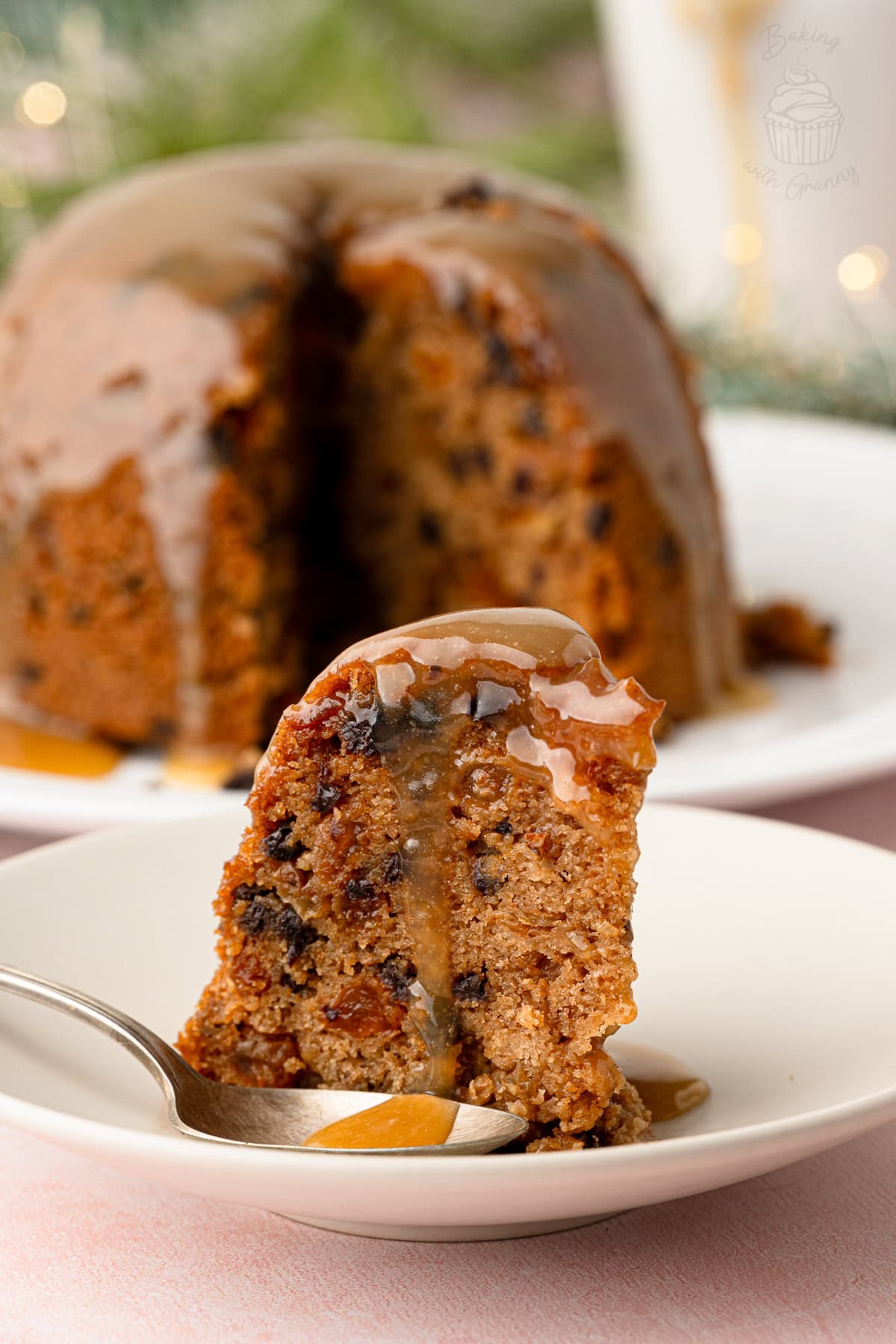
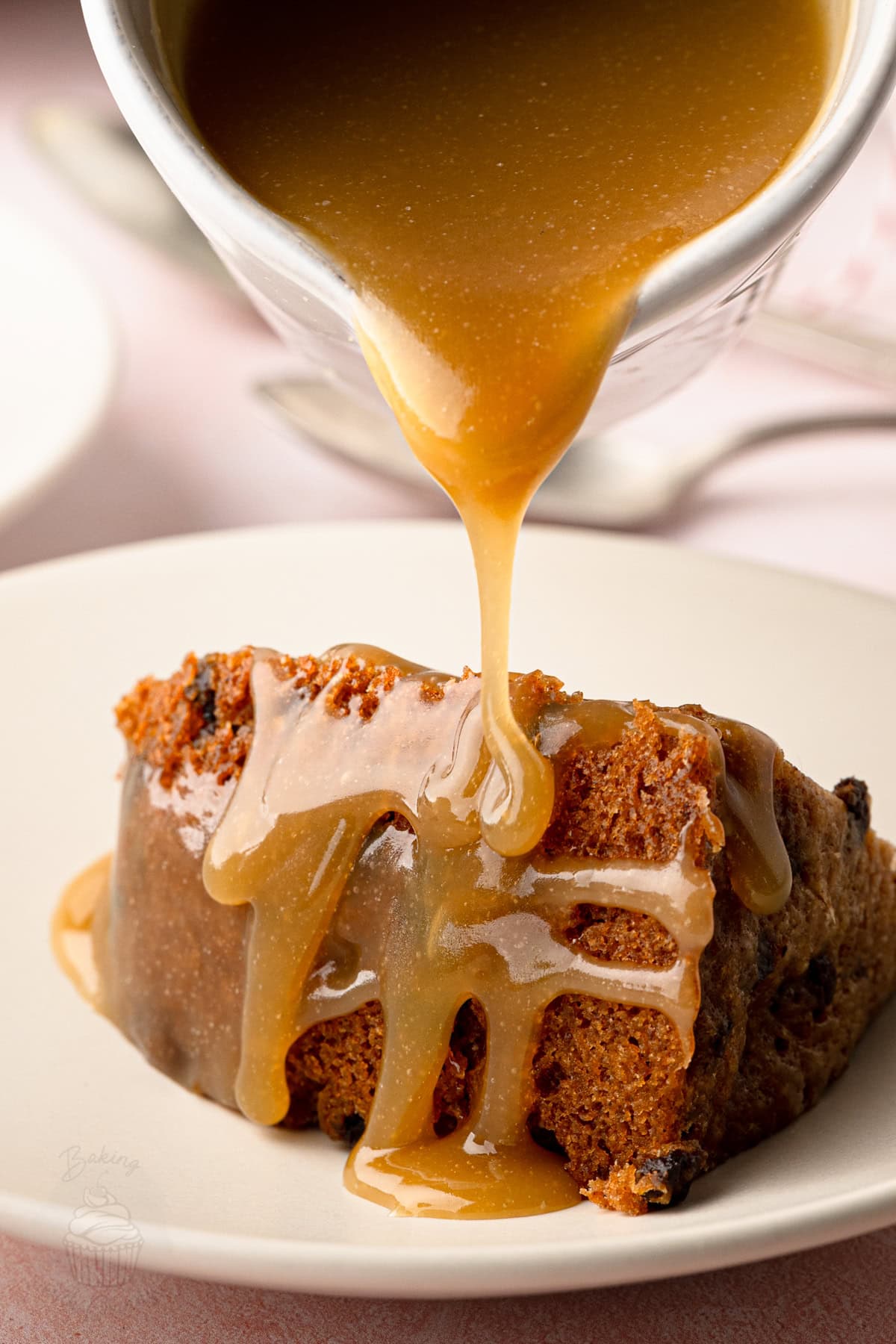
For serving, my choice is a traditional one, and what most of the Seven Cup Pudding recipes I found also recommend… A generous amount of warm butterscotch sauce. The same sauce I actually use in my Sticky Toffee Pudding recipe, with an added dash of vanilla. Trust me, it takes this fruited steamed pudding to a whole other level of deliciousness 😋
Which Cup Should You Use for Seven Cup Pudding?
For this recipe, use a ¾-cup measuring cup for each of the seven main ingredients, or follow the gram and millilitre quantities I’ve also included in the recipe card.
Some older versions specify using a teacup, which weren’t necessarily the same size as a modern measuring cup – or even the same as the cups in the house next door! For example, most Western teacups generally have a capacity of somewhere between 150-240ml, which is quite a discrepancy. And so there isn’t one historical cup size we can confidently apply to every Seven Cup Pudding recipe.
When testing mine, I found that seven full measuring cups (which usually have a 240ml capacity) produced a bit too much mixture for a 1.2-litre pudding basin. But using a ¾-cup measure, with a capacity of approximately 180ml, gave just the right quantities.
Of course, “Seven Three-Quarter Cups Pudding” doesn’t have quite the same ring to it!
If you prefer using scales, I’ve also tested the recipe with the rounded metric quantities listed. These differ from the exact cup measurements by only a few grams, keeping the amounts practical without affecting the end result. However, both sets of measurements work, so use whichever you find easiest.
Key Ingredients
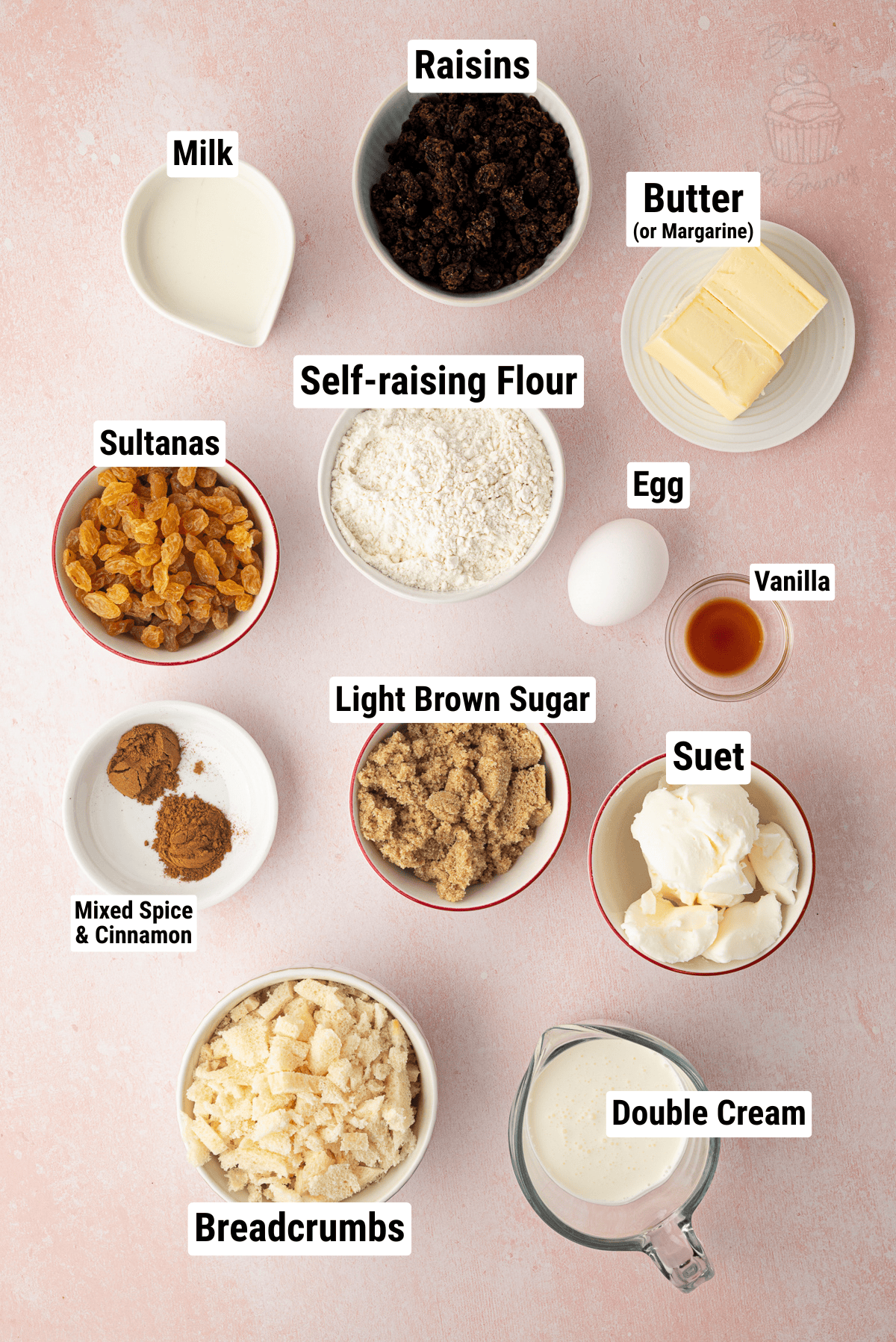
See the recipe card for a full ingredients list, required quantities and cup conversions.
Need cups, a different batch size or an ingredient swap?
Head to the recipe card for US measurements and adjustable ingredient quantities. For advice on ingredients and suitable substitutions, check the key ingredients and substitutions sections.
Substitutions & Additions
Brown Sugar: Dark brown sugar can be used in place of light brown sugar, in both the pudding and the sauce. I would advise against using white sugar – especially in the butterscotch sauce – as the more caramel flavour you get from brown sugars is part of what makes this recipe great.
Raisins & Sultanas: If you prefer one over the other, you can use all raisins or all sultanas. Keep the total quantity the same: 240g, or two ¾-cup measures, of your chosen fruit. Alternatively, you can even swap one or both of them out for different dried fruits, like currants or dried cranberries – this will change the overall flavour of the pudding but is a good option if you aren’t a fan of raisins or sultanas.
Breadcrumbs: I use fresh white breadcrumbs. Fresh brown breadcrumbs also work, as does sourdough. Whichever bread you choose, use fresh breadcrumbs rather than shop-bought dried ones, like golden breadcrumbs or panko breadcrumbs.
Butterscotch Sauce: Unsalted butter and block margarine both work well in the sauce.
Looking for dairy-free, gluten-free or vegan adaptations? See the Free-from & Vegan section below.
Free-from & Vegan
Amy recommends: If you regularly need to adapt baking recipes for gluten-free, dairy-free, egg-free or vegan diets, I highly recommend The Elements of Baking by Katarina Cermelj, creator of The Loopy Whisk. It’s a brilliant resource for understanding how substitutions work, rather than simply swapping ingredients and hoping for the best.
Gluten-free Options:
Use gluten-free self-raising flour, gluten-free shredded suet and fresh breadcrumbs made from gluten-free bread. Remember to check the suet as well as the flour and bread, as ordinary packaged suet can contain wheat flour. If the mixture feels a little dry, add a small splash of extra milk. Gluten-free flours can absorb liquid differently, so aim for the same lumpy, sticky mixture that you can spoon into the pudding basin.
Nut-free Adjustments:
There are no nuts in this pudding or the butterscotch sauce. As always, check the individual ingredient labels when baking for someone with an allergy.
Dairy-free Swaps:
Use dairy-free milk in the pudding (I like soya or oat milk) and dairy-free block margarine to grease the basin. For the butterscotch sauce, use dairy-free block margarine and a dairy-free alternative to double cream.
Egg-Free Adaptations:
I haven’t yet tested this recipe egg-free, but like with many cake recipes, it should work just fine with a vegan egg replacer, such as Oggs or Bob’s Red Mill Egg Replacer.
Vegan Substitutions:
Use vegetable suet, plant-based milk and a vegan egg replacer, such as Oggs or Bob’s Red Mill Egg Replacer. Grease the pudding basin with dairy-free block margarine, and use dairy-free block margarine and cream for the butterscotch sauce.
Allergy Disclaimer & Resources:
Any advice or suggestions to make recipes “free-from” or vegan are purely suggestions. Please double-check all packaged ingredients individually, taking extra caution when baking for those with allergies or intolerances.
For official guidance on food allergies, please see Food Standards Agency (food.gov.uk) | For more info on coeliac disease, please see Coeliac UK (coeliac.org.uk) | For more info on a vegan diet, please see The Vegan Society (vegansociety.com)
How to Make Seven Cup Pudding
Seven Cup Pudding is mixed by hand in one bowl, then gently steamed on the hob. There’s no fruit soaking or creaming to do, so once everything is measured, the mixture comes together very quickly. The main thing is to allow enough time for steaming and keep the saucepan topped up with water.
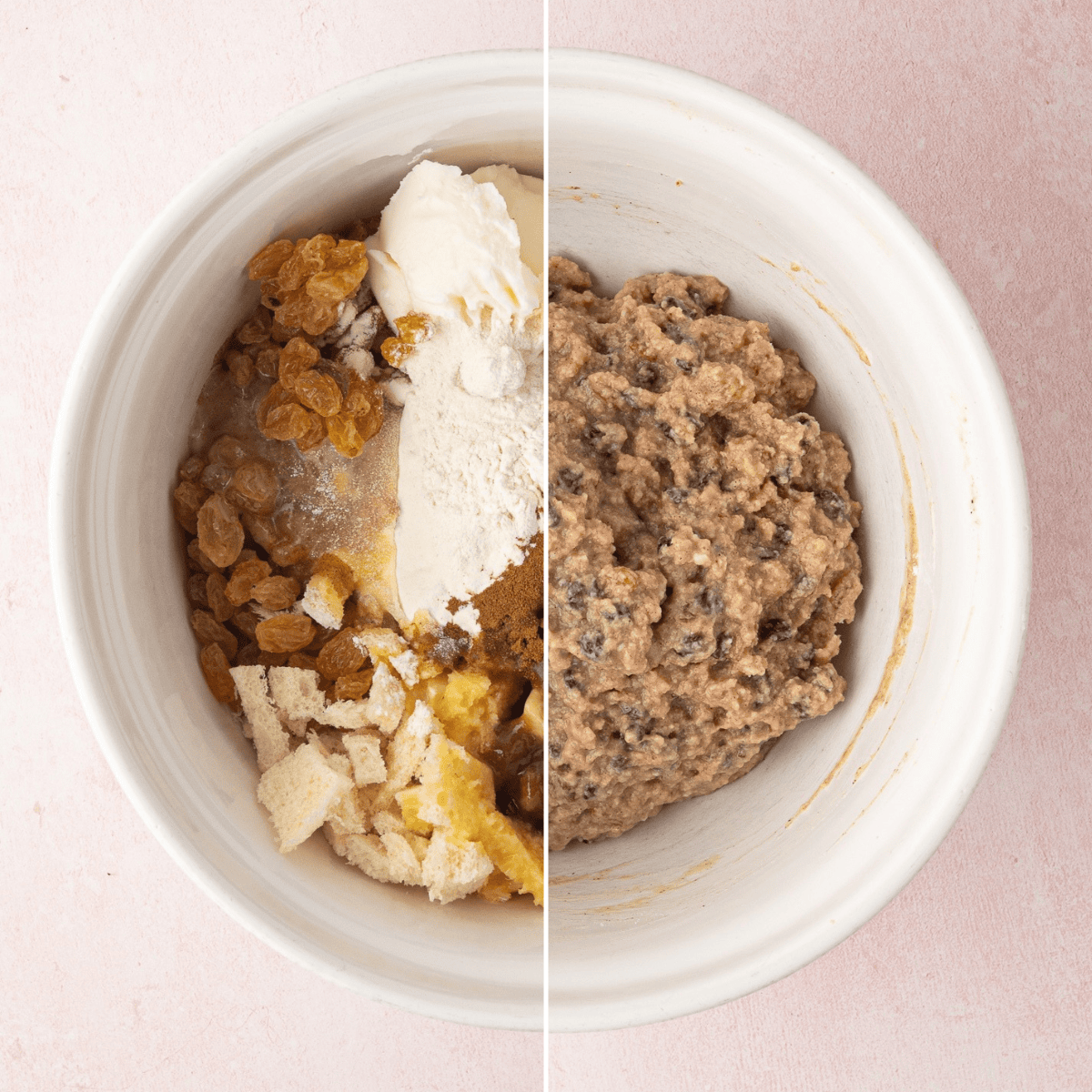
- Mix the pudding. Put all the pudding ingredients into a large bowl. Mix until well combined and you have a lumpy, sticky mixture.
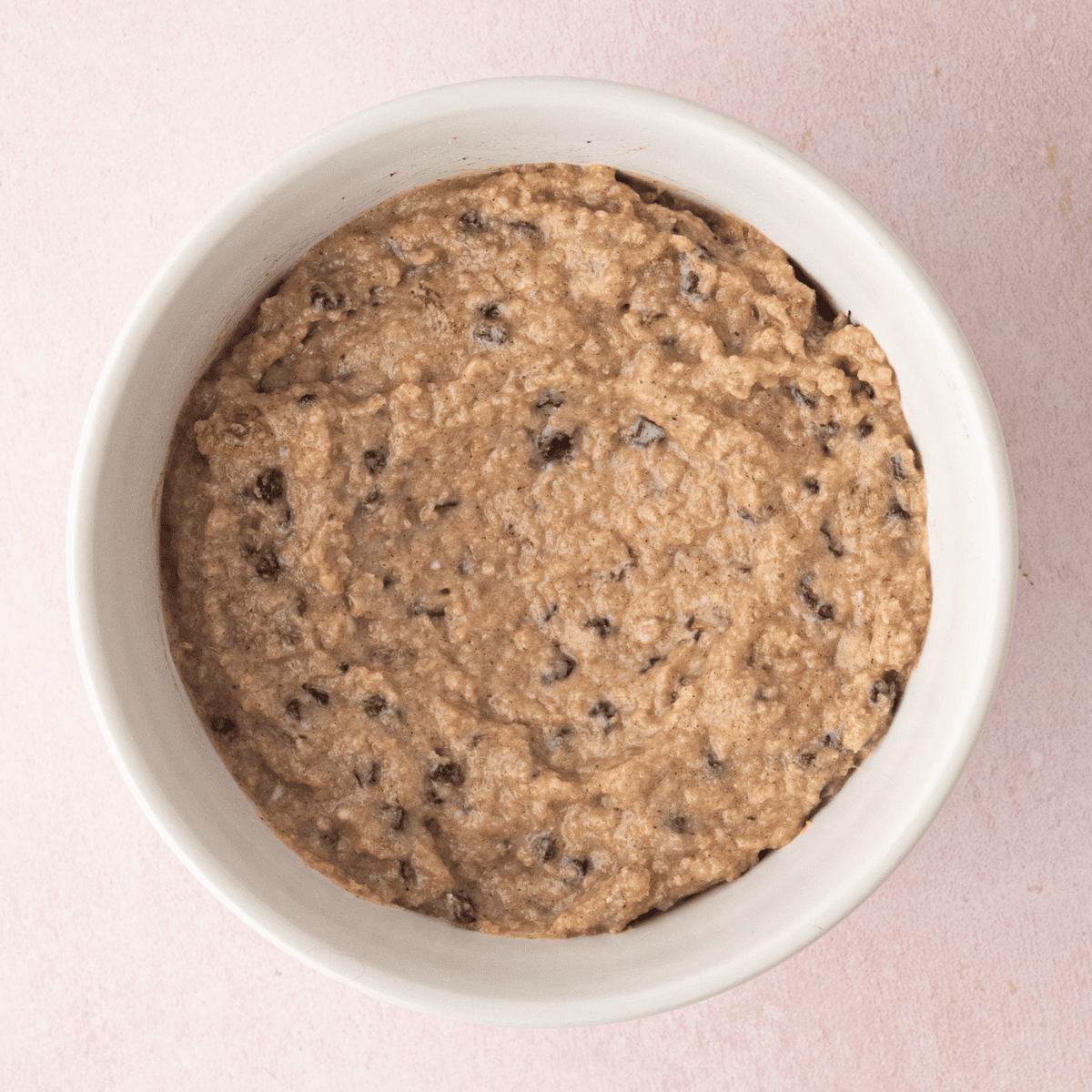
- Fill the pudding basin/bowl. Generously grease a 1.2-litre pudding bowl or basin. Spoon in the mixture, and make a slight dip in the centre for the pudding to rise as it cooks.
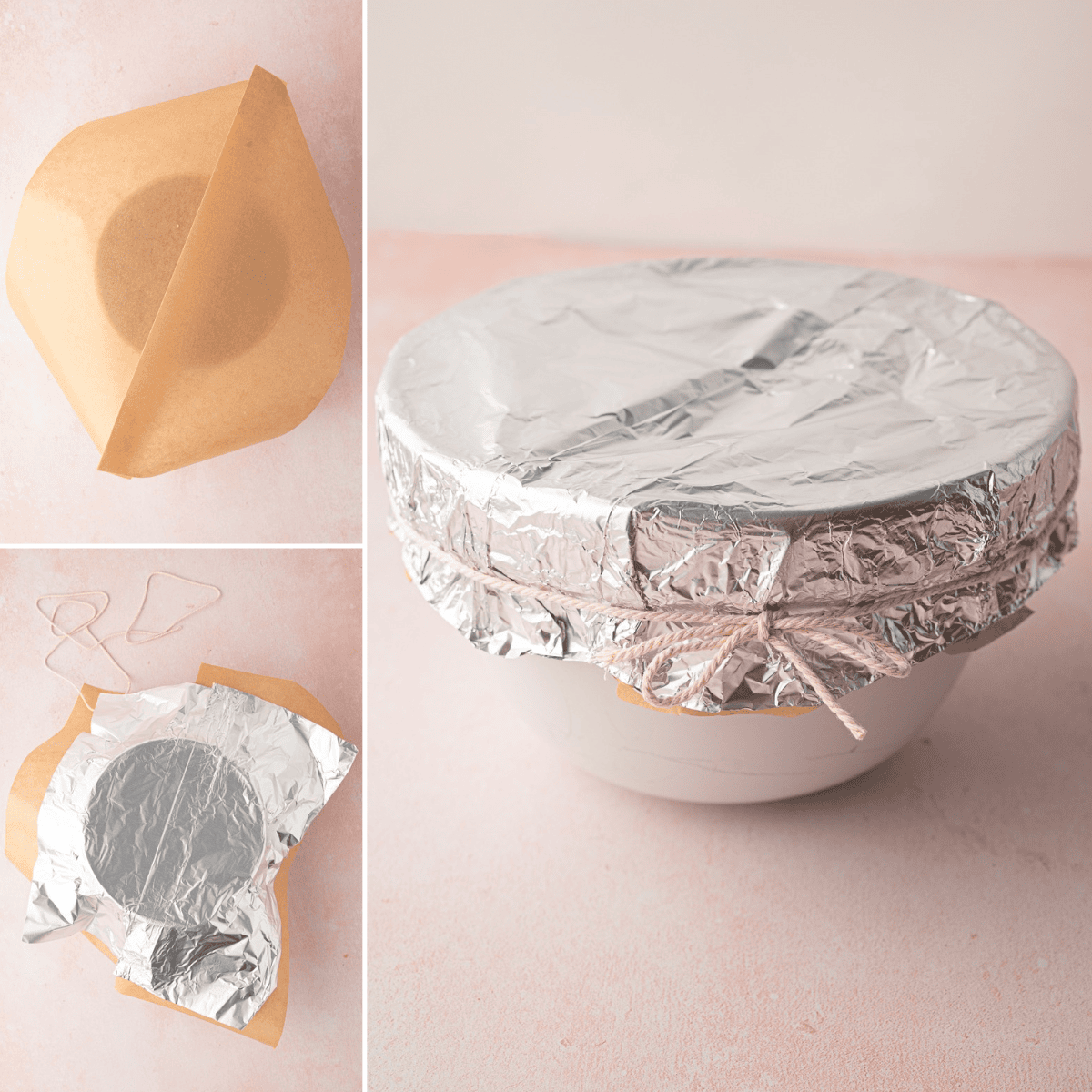
- Cover the basin. With greaseproof paper large enough to cover the basin, fold a pleat across the middle. Place it over the basin/bowl, followed by tin foil with a matching pleat. Tie securely in place with string, and trim the excess paper and foil. The pleats give the pudding room to expand.
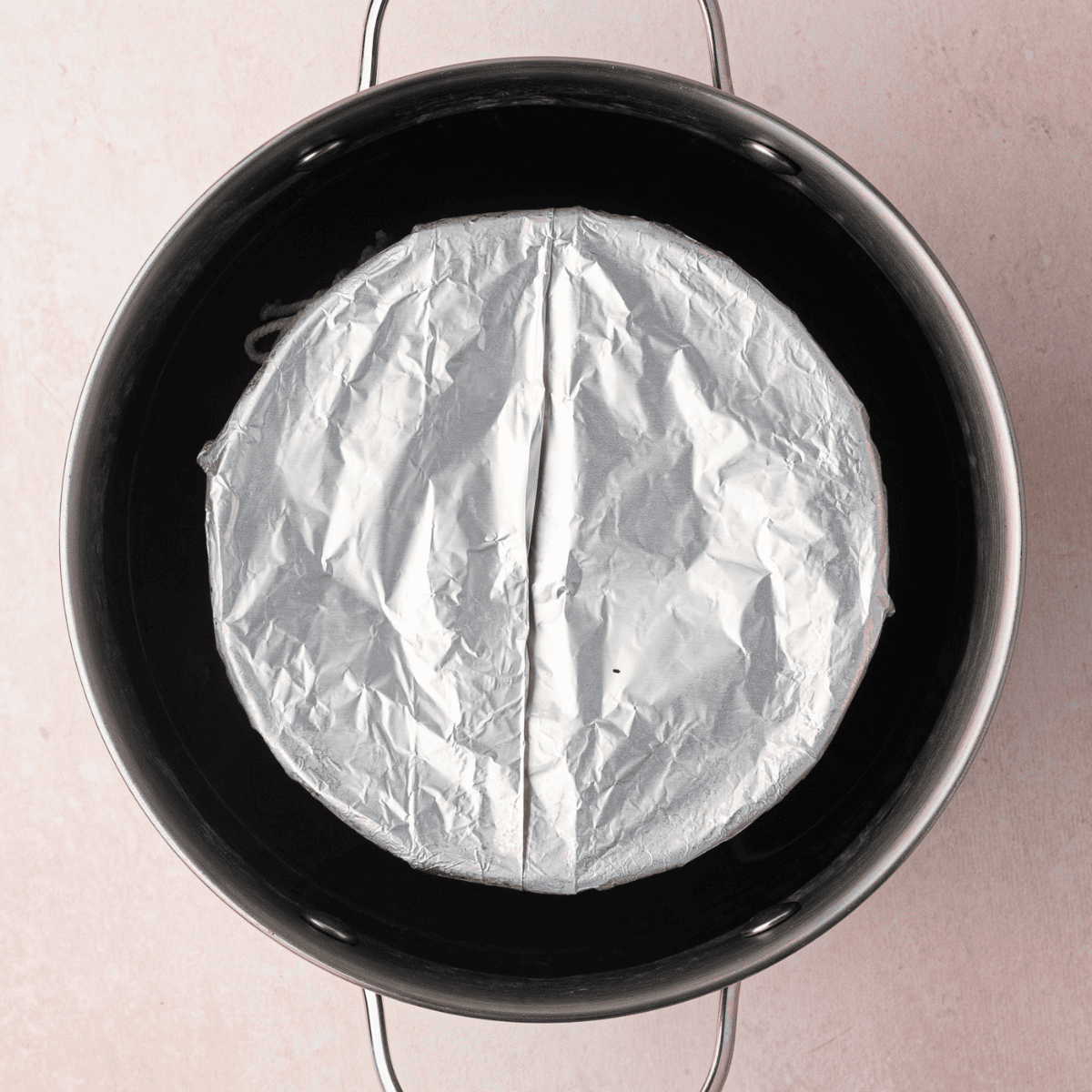
- Steam the pudding. Place the basin in a large saucepan, with 5-10cm (2-4 inches) of water. Put the lid on and bring to a gentle simmer. Steam for 2½ hours, checking the water and topping up with boiling water as needed. Don’t let the pan run dry! Once done, remove, set aside and make the butterscotch sauce.
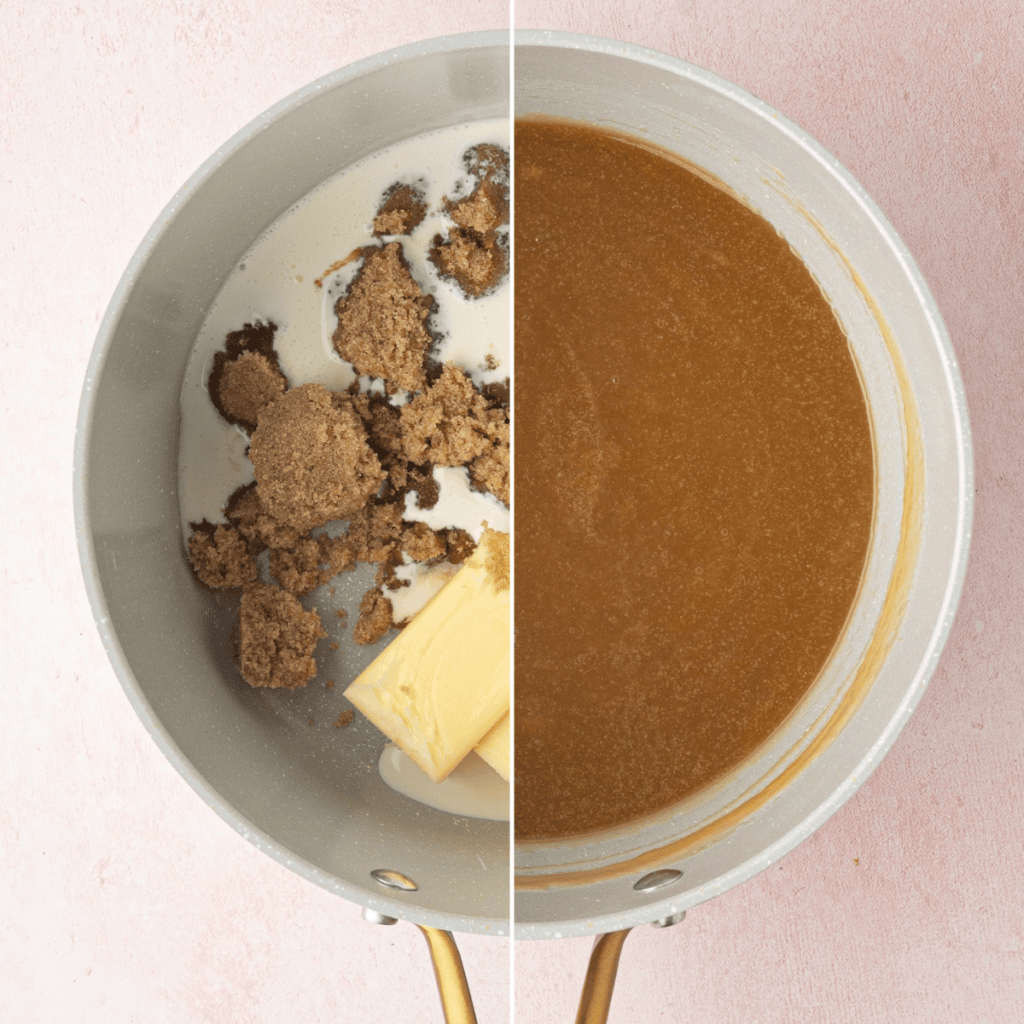
- Make the butterscotch sauce. Put the margarine/butter, brown sugar and cream into a small saucepan. Gently bring to a boil, reduce the heat and simmer for a few minutes – stir continuously. Remove from the heat, stir in the vanilla. The sauce will be quite runny while hot but thicken as it cools.
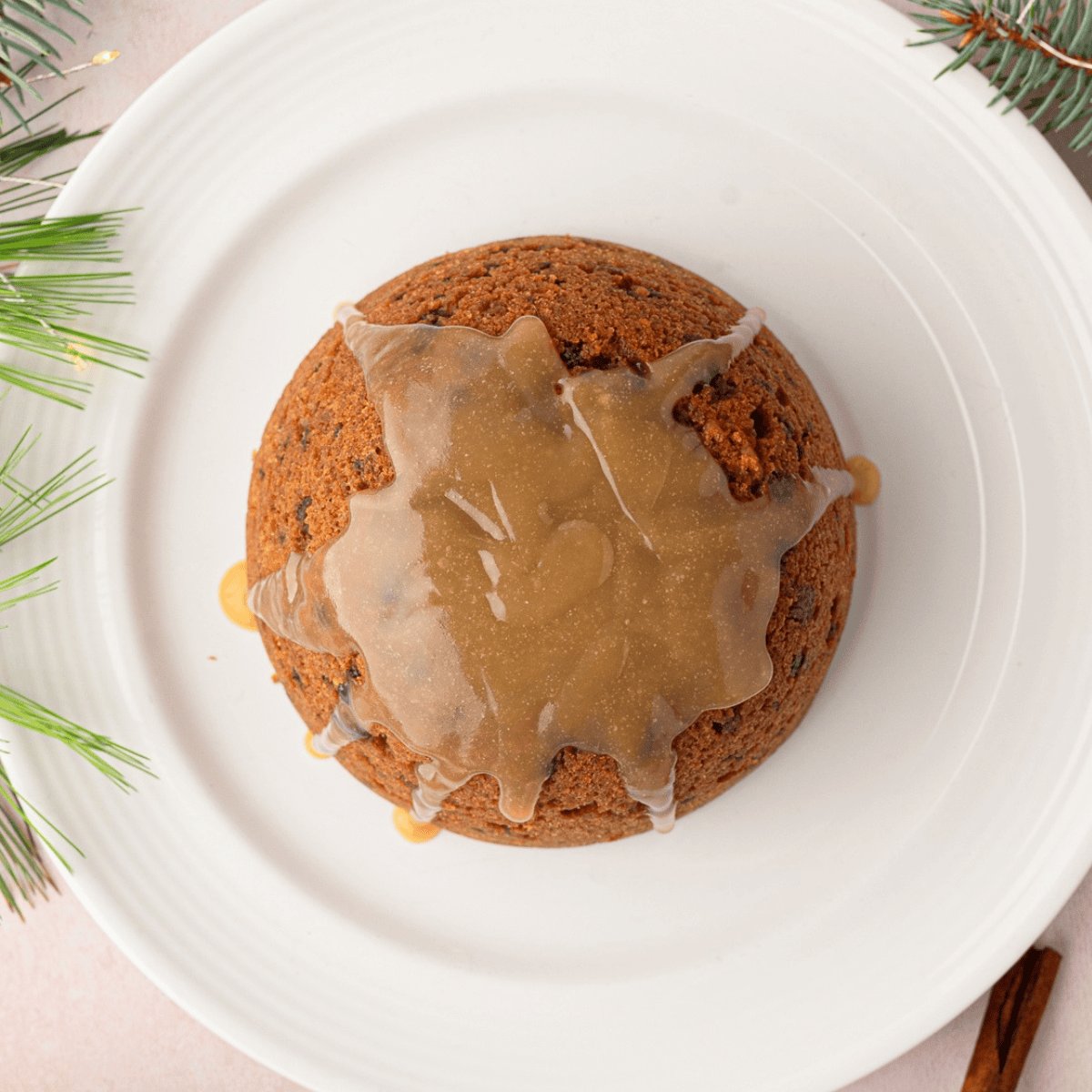
- Turn out and serve. Remove the string, foil and greaseproof paper. Turn the pudding out onto a serving plate. Pour a little butterscotch sauce over the top, cut into wedges and serve with more warm sauce.
Top Tips for Seven Cup Pudding
- Use the Right Measure: If you’re measuring in cups, use a ¾-cup measure for each of the seven main ingredients. Full measuring cups will give you too much mixture for the 1.2-litre pudding basin. The tested gram and millilitre quantities are also there if you prefer using a kitchen scale.
- Leave Room to Rise: Keep the pleats in your greaseproof paper and foil when securing them over the basin. They allow the pudding to expand, while the tightly tied covering helps keep water out.
- Keep an Eye on the Water: Set yourself a reminder to check the saucepan during steaming, topping up with boiling water as needed. Keep the water gently simmering and the saucepan lid on between checks.
- Trust the Steaming Time: Count the 2½ hours from when the water reaches a gentle simmer. There’s no need to keep unwrapping the pudding to check it as it cooks.
- Don’t Overcook the Sauce: The butterscotch sauce is quite runny while hot, so don’t keep boiling it in the hope of making it thick – this risks overcooking it or potentially burning it, which is not a nice flavour over your pudding! The sauce will thicken naturally as it cools.
Make Ahead, Storing & Freezing
- Making Ahead: You can make Seven Cup Pudding ahead and freeze it, then you just need to thaw and reheat when required. Keep the pudding and butterscotch sauce separate until serving.
- Freezing: Once the pudding has cooled completely, remove it from the basin and wrap tightly in fresh greaseproof paper followed by foil. Freeze for up to 3 months, then allow it to thaw fully before reheating.
- Leftovers: Wrap any leftover pudding and keep it in the fridge. Individual portions can be reheated in the microwave until hot all the way through.
- Butterscotch Sauce: The sauce can be made 2-3 days before you need it. Allow it to cool, then cover and store in the fridge. It will become thicker as it cools, but will loosen again when gently warmed in a saucepan. Stir as it heats, then serve with the warm pudding.
Reheating Seven Cup Pudding
- Steaming: Return the pudding to its bowl or basin. Cover with fresh pleated greaseproof paper and foil, then secure with string as before. Place the basin/bowl in a saucepan with water around it, cover the saucepan with its lid and bring to a gentle simmer. Steam for approximately 2 hours, until heated through, checking the water level and topping up with boiling water as needed.
- Microwave: Remove all foil and place the pudding in a microwave-safe bowl, basin or dish. As a guide, microwave the whole pudding on full power for 3 minutes, then leave to stand for 1 minute. Heat for a further 2 minutes, followed by another 1 minute standing time. Microwave powers vary, so check that the pudding is hot all the way through, including the centre, and heat further if needed. Individual leftover portions will need less time than a whole pudding.
- Butterscotch Sauce: Warm the butterscotch sauce separately – in a small saucepan over a gentle heat, or in a jug in short blasts in a microwave until warm right through – and pour it over just before serving.
Seven Cup Pudding FAQs
For the pudding itself, I do recommend using the shredded beef or vegetable suet, as listed in the recipe. The butter/block margarine is for greasing the basin and in the butterscotch sauce, but in a pinch, butter/block margarine can be used in place of suet; I would recommend freezing it, then grating it first. It won’t give quite the same traditional texture as suet, but it will still make a good pudding
Although this recipe is written for steaming in a saucepan, it probably could be cooked in a microwave. However, I haven’t tested this, so I can’t confidently give timings or temperatures for microwave cooking. The microwave instructions above are for purely reheating an already-cooked pudding.
No – you can serve this pudding straight after its first steaming. Leave it to cool a bit while you make the butterscotch sauce, then turn it out and serve while still warm.
More Traditional Recipes to Try
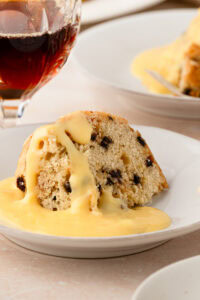
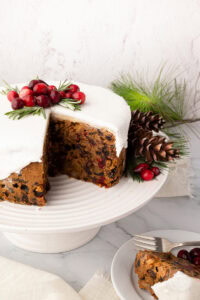
If you loved this Seven Cup Pudding, here are some more of my old-fashioned fruit puddings for you to try next:
Save this recipe!
Want to save this recipe for later? Pop your email below and come back to it when you’re ready to bake.
Seven Cup Pudding with Butterscotch Sauce
INGREDIENTS
For the Pudding
- ¾ cup (100g) Shredded Suet (vegetable or beef)
- ¾ cup (100g) Self-raising Flour
- ¾ cup (100g) Soft Light Brown Sugar (scooped, not packed into cup)
- ¾ cup (40g) Fresh Breadcrumbs (fresh – not golden, panko or dried)
- ¾ cup (120g) Raisins
- ¾ cup (120g) Sultanas
- ¾ cup (180ml) Milk (dairy, soya, oat…)
- 1 Free-range Egg (beaten; at room temperature)
- 1 tsp Mixed Spice
- 1 tsp Ground Cinnamon
- Block Margarine or Butter (for greasing)
For the Butterscotch Sauce
- 100 g Block Margarine or Butter
- 100 g Soft Light Brown Sugar
- 150 ml Double Cream
- ¼ tsp Vanilla Extract
EQUIPMENT
- Measuring Cups (or digital scales)
- 1.2 Litre (2-pint) Pudding Basin or Bowl
- String
INSTRUCTIONS
For the Pudding:
- In a large bowl, add all the pudding ingredients and mix together until everything is well combined and you have a lumpy, sticky mixture.¾ cup (100g) Shredded Suet; ¾ cup (100g) Self-raising Flour; ¾ cup (100g) Soft Light Brown Sugar; ¾ cup (40g) Fresh Breadcrumbs; ¾ cup (120g) Raisins; ¾ cup (120g) Sultanas; ¾ cup (180ml) Milk; 1 Free-range Egg; 1 tsp Mixed Spice; 1 tsp Ground Cinnamon
- Generously grease a 1.2-litre (2 pint) pudding basin with a little butter/margarine, then spoon the pudding mixture into it. Using your spoon, create a slight dip in the centre of the batter (this helps prevent it from rising too much).Block Margarine or Butter
- With a piece of greaseproof paper large enough to cover your pudding basin, fold a pleat in the middle before placing it over the top of your pudding bowl. Repeat with a piece of tin foil, and place it on top of your greaseproof paper before tightly tying it in place – around the top of the bowl – with a piece of twine. Trim away the excess greaseproof paper and tin foil before steaming.
- Place the pudding into a large saucepan with about 5-10cm (2-4 inches) of water around it. Put the lid on and bring the water to a gentle simmer. Steam for 2½ hours, checking the water level and topping up with boiling water as needed. Don't let the pan run dry.
- Once the pudding has finished steaming, remove it from the saucepan. Set aside to cool a little while you prepare the butterscotch sauce.
For the Butterscotch Sauce:
- Place the butter/margarine, brown sugar and cream in a small saucepan and gently bring to a boil, then reduce the heat to a simmer for a few minutes, stirring continuously. Remove from the heat and stir in the vanilla extract.100 g Block Margarine or Butter; 100 g Soft Light Brown Sugar; 150 ml Double Cream; ¼ tsp Vanilla Extract
- Turn the pudding out onto a plate, then pour a little sauce over the top before serving. Cut into wedges to serve, with more warm butterscotch sauce poured over.
IMPORTANT NOTE:
All my recipes are developed using a digital scale and the metric system (grams and millilitres). Cup measurements are available as a conversion, but these, unfortunately, won’t always be as accurate. For best results, I always recommend baking with a digital scale.












ABOUT THE AUTHOR
Amy Beth Reid
Amy Beth Reid is an award-winning food blogger, mother, wife and cookbook author. Inspired by her childhood in the kitchen with her Mum – a professional baker and her children’s Granny – Amy now shares her tried-and-tested traditional home baking recipes with bakers of all abilities around the world. She lives in Scotland with her husband, two sons and her small pack of Siberian huskies.