
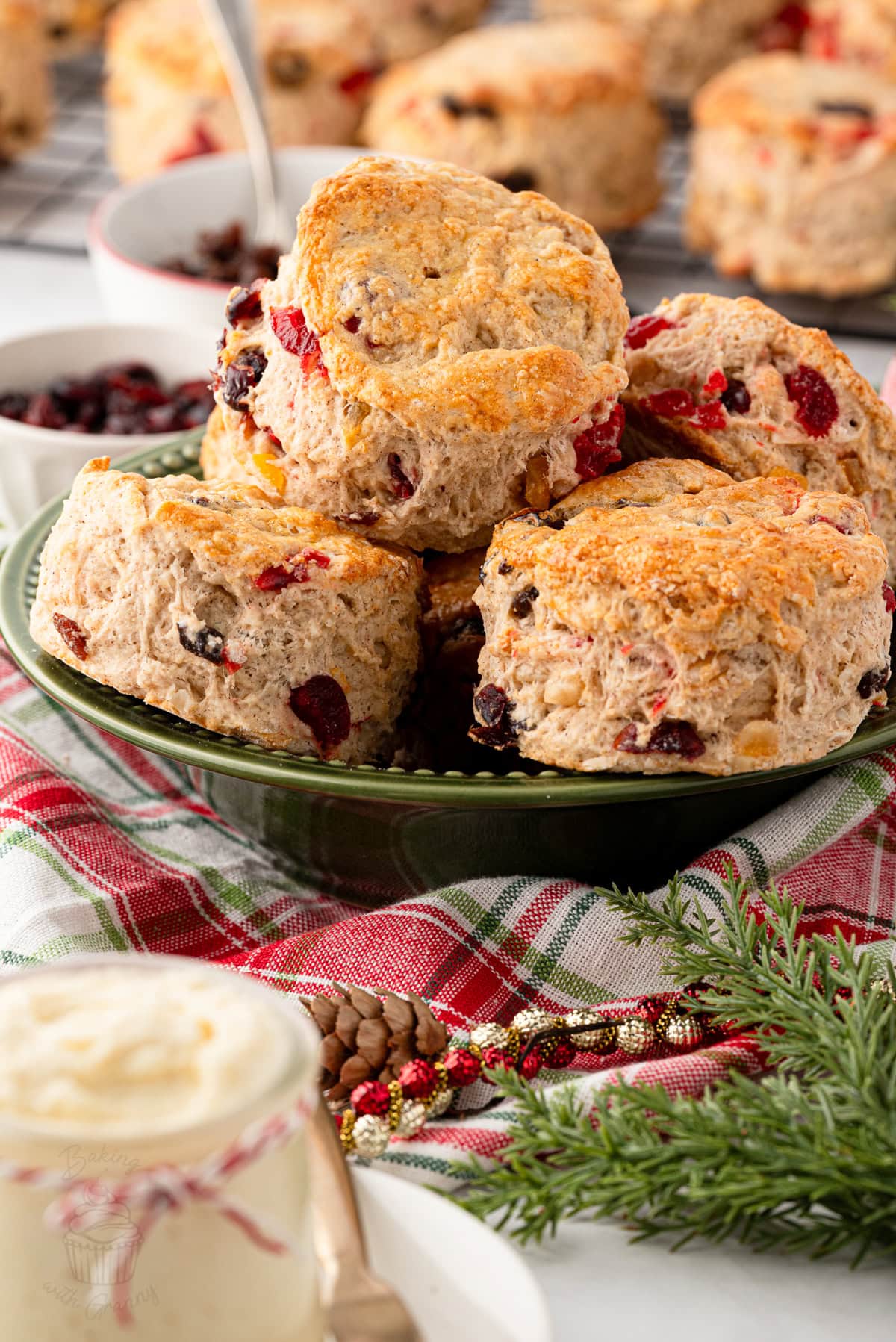
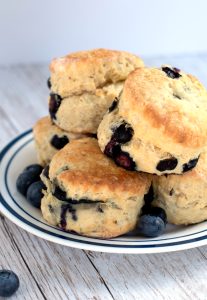
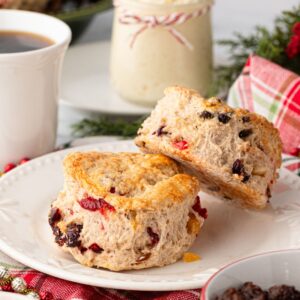
Homemade Christmas Scones, packed with dried fruit, mixed spice and chopped almonds. A festive bake to enjoy with your afternoon cuppa, and a lovely way to use up the odds and ends left over from making your Christmas cakes and puddings!
Christmas Scones Recipe Snapshot
- Recipe: British fruit scones with mixed spice, mixed peel and chopped almonds.
- Difficulty: Super easy, but with a few tips and tricks for perfect scones.
- Makes: Around 7 scones using a 7cm cutter, but you can make them smaller for more scones, or larger for fewer.
- Prep Time: About 20 minutes.
- Resting Time: 10 minutes.
- Baking Time: Around 10 minutes.
- Adaptable: Swap the dried fruit and nuts to suit what you already have to hand.
- Best Served: Freshly baked with some brandy butter! But jam, cream or butter are all delicious too.
Summarise & Save this Recipe on:
What Are Christmas Scones?
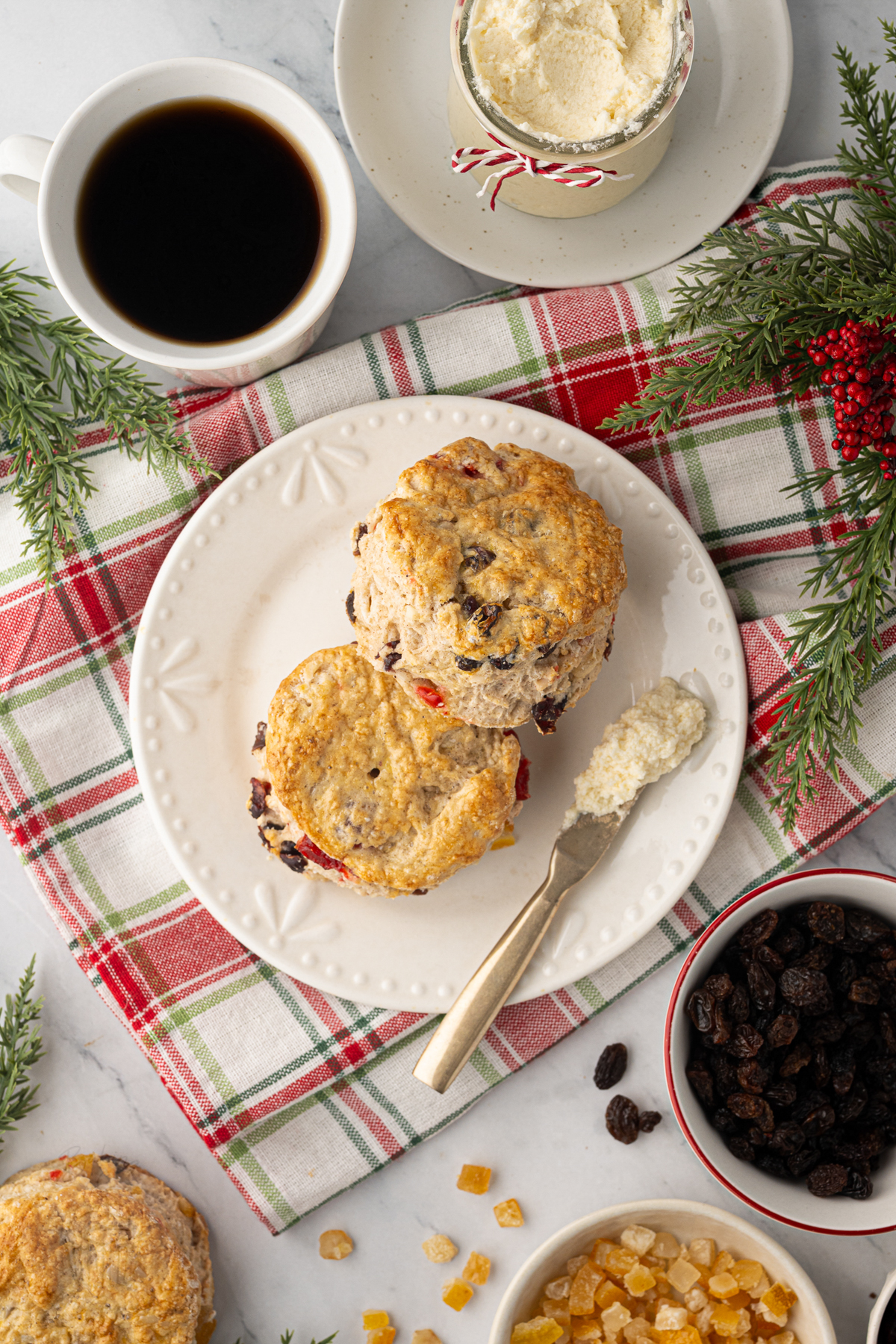
Christmas Scones are a festive variation on traditional British Fruit Scones, with mixed spice and a mixture of dried fruit, mixed peel and nuts added to the dough. My version includes raisins, dried cranberries, glacé cherries, mixed peel, and chopped almonds, although there’s plenty of room for you to use whatever you have left over in the cupboard that needs using up.
They bring together some of the familiar flavours of a traditional Christmas Cake and Christmas Pudding recipe, in a scone that you can make and enjoy, all on the same day. There’s no need to soak the fruit beforehand, and once the dough is mixed, shaped and rested, they only need around 10 minutes in the oven.
The perfect festive treat for when you have visitors on the way and want to serve something delicious while your house smells of Christmas!
My Deliciously Festive Christmas Scones
If you’ve been here a while, you’ll know that scones are something my Mum has always made. So it’ll probably come as no surprise that I’ve built up quite a collection of scone recipes here on Baking with Granny. And I do believe there’s a scone for every season here in the UK!
Christmas Scones came about because I wanted a festive version to add to that collection. But they do also serve a very useful purpose: using up all those leftover dried fruits and nuts from your Christmas baking.
You know, that half-used bag of raisins, that sad handful of dried cranberries left over, the mixed peel that will end up in the bin come Easter… There might not be enough left for another Christmas Cake, but there’s plenty to put towards a batch of festive scones. Best of all? You can easily change up this recipe to suit whatever you have left. Not keen on mixed peel? Leave it out. No almonds? That’s fine too. No raisins but plenty of sultanas? Use them instead!
You can keep things simple and serve them with butter, or add some jam and cream. But if you want to make them especially festive, a generous spreading of brandy butter is my favourite and the ultimate festive flavour. Shop-bought is absolutely fine, although you can make your own brandy butter too, if you fancy it 😋
Key Ingredients
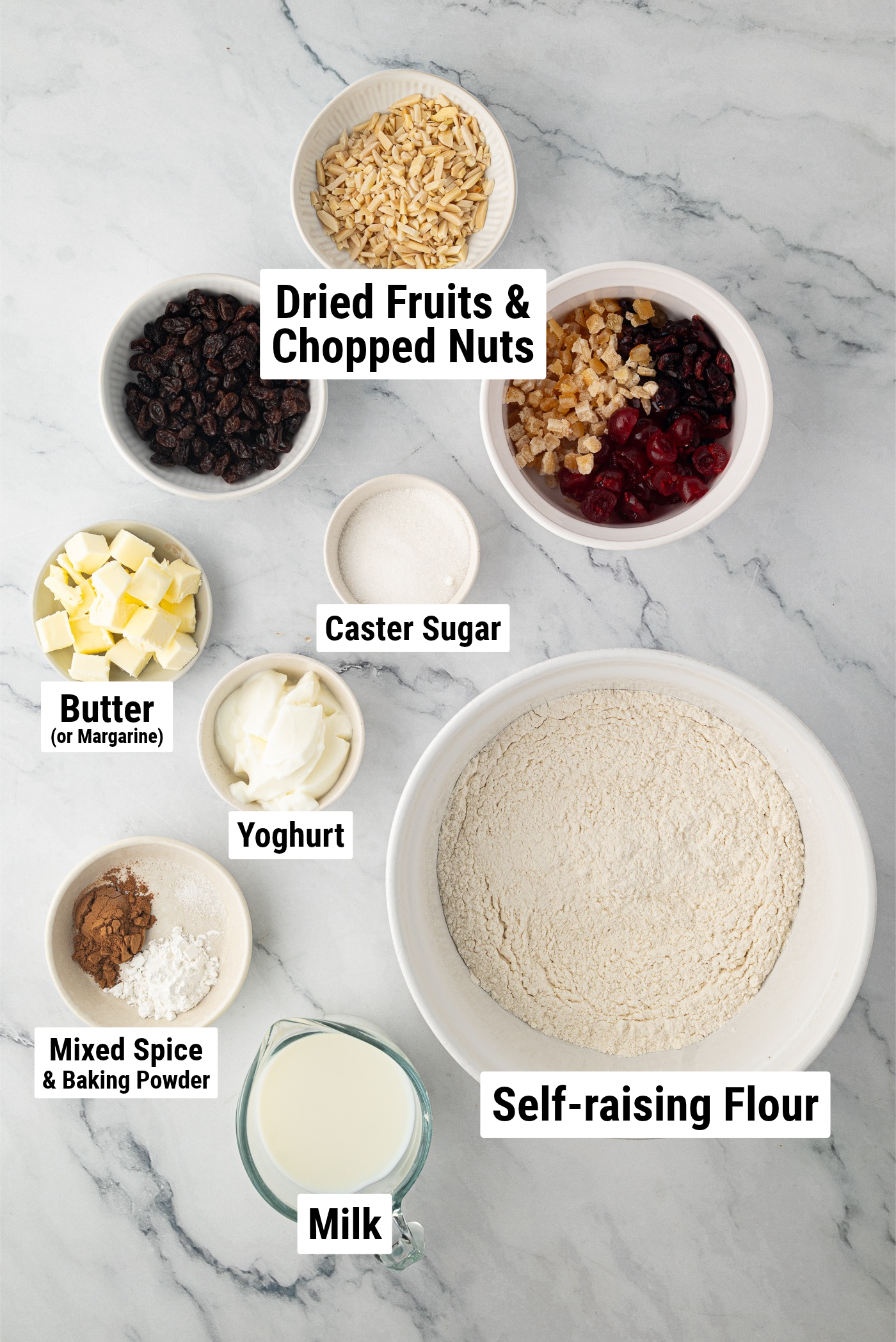
See the recipe card for a full ingredients list, required quantities and cup conversions.
Need cups, a different batch size or an ingredient swap?
Head to the recipe card for US measurements and adjustable ingredient quantities. For advice on ingredients and suitable substitutions, check the key ingredients and substitutions sections.
Substitutions & Additions
Dried Fruits: The fruit I give in the recipe is really just a suggested combination, so feel free to mix and match with whatever you already have. Raisins, sultanas, currants and dried cranberries are all great here, as are larger dried fruits chopped into smaller pieces, like dates and dried apricots. When swapping the dried fruit, aim for roughly the same total weight – the recipe uses 200g of fruit and peel altogether, so around there is ideal.
No Mixed Peel: Mixed peel is one of those ingredients that people tend to have strong opinions about! I personally love it, but if you’re not a fan, you can leave it out, or replace it with another dried fruit.
Different Nuts: Use whatever leftover baking nuts you have. Almonds are great and somewhat festive, but pecans, hazelnuts and pistachios all work well too. Just be sure to roughly chop them before adding. Or simply leave them out if you prefer your scones without nuts.
Glaze: I usually brush the tops of my scones with a little milk or leftover yoghurt before baking. You can use beaten egg instead for a deeper golden, shinier finish, but I don’t usually like to crack an entire egg just for glazing a batch of scones. Whichever you use, brush it over the tops only, making sure it doesn’t run down the sides of your scone before baking.
Looking for dairy-free, gluten-free or vegan adaptations? See the Free-from & Vegan section below.
Free-from & Vegan
Amy recommends: If you regularly need to adapt baking recipes for gluten-free, dairy-free, egg-free or vegan diets, I highly recommend The Elements of Baking by Katarina Cermelj, creator of The Loopy Whisk. It’s a brilliant resource for understanding how substitutions work, rather than simply swapping ingredients and hoping for the best.
Gluten-free Options:
Use gluten-free self-raising flour in place of the regular flour, and check that your baking powder and other ingredients are suitable too. The texture may be slightly different, and the amount of liquid needed can vary. Aim for a soft, slightly sticky dough rather than a dry, crumbly one. Also check your dried fruits if you are using anything pre-chopped (like dates or apricots), as these will sometimes be tossed in flour to prevent them from sticking together.
Nut-free Adjustments:
Simply leave out the almonds and any other nuts. If you’re using dairy-free milk or yoghurt, choose nut-free options, and check your individual ingredients for allergens.
Dairy-free Swaps:
Use dairy-free block margarine, milk and plain yoghurt. And choose dairy-free accompaniments for serving too, particularly when it comes to cream or brandy butter.
Egg-Free Adaptations:
There’s no egg in the scone dough, so simply use the extra yoghurt option for glazing, as opposed to an egg.
Vegan Substitutions:
Follow the dairy-free swaps above, using a vegan block margarine, your favourite vegan milk alternative and vegan yoghurt. And glaze with dairy-free yoghurt instead of egg. Serve with vegan butter, jam, dairy-free cream or a homemade vegan brandy butter, like this one from Baked by Clo.
Allergy Disclaimer & Resources:
Any advice or suggestions to make recipes “free-from” or vegan are purely suggestions. Please double-check all packaged ingredients individually, taking extra caution when baking for those with allergies or intolerances.
For official guidance on food allergies, please see Food Standards Agency (food.gov.uk) | For more info on coeliac disease, please see Coeliac UK (coeliac.org.uk) | For more info on a vegan diet, please see The Vegan Society (vegansociety.com)
How to Make Christmas Scones
These Christmas Scones are made by hand – no mixer or rolling pin needed! Handle the dough gently, and remember to allow for the 10-minute rest before they go into the oven. Trust me, it makes a difference.
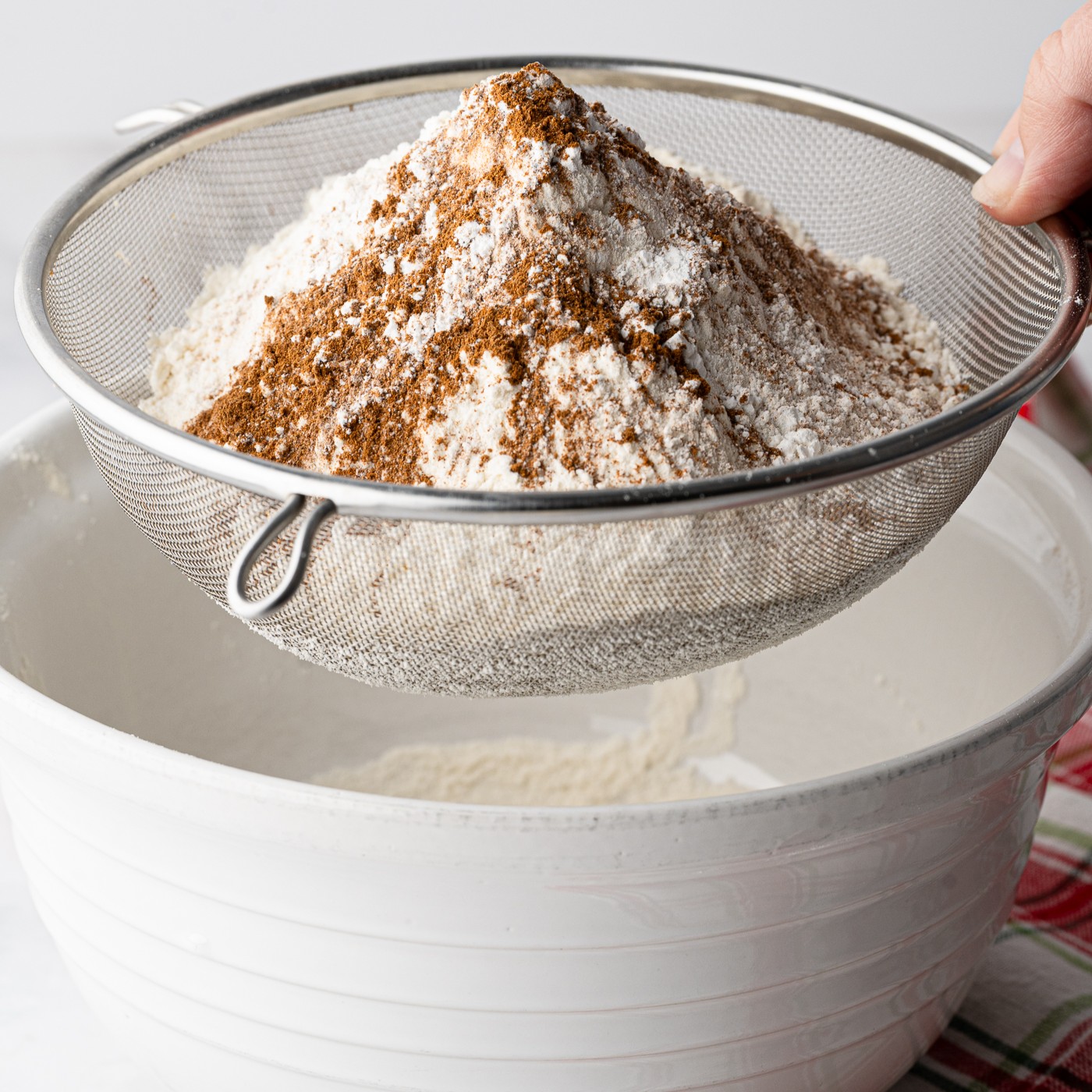
- Prepare your trays and dry ingredients. Preheat your oven to 220°C (200°C fan-assisted, Gas Mark 7 or 425°F). Grease a couple of baking trays. Sift the flour, salt, baking powder and mixed spice into a bowl, before stirring through the sugar.
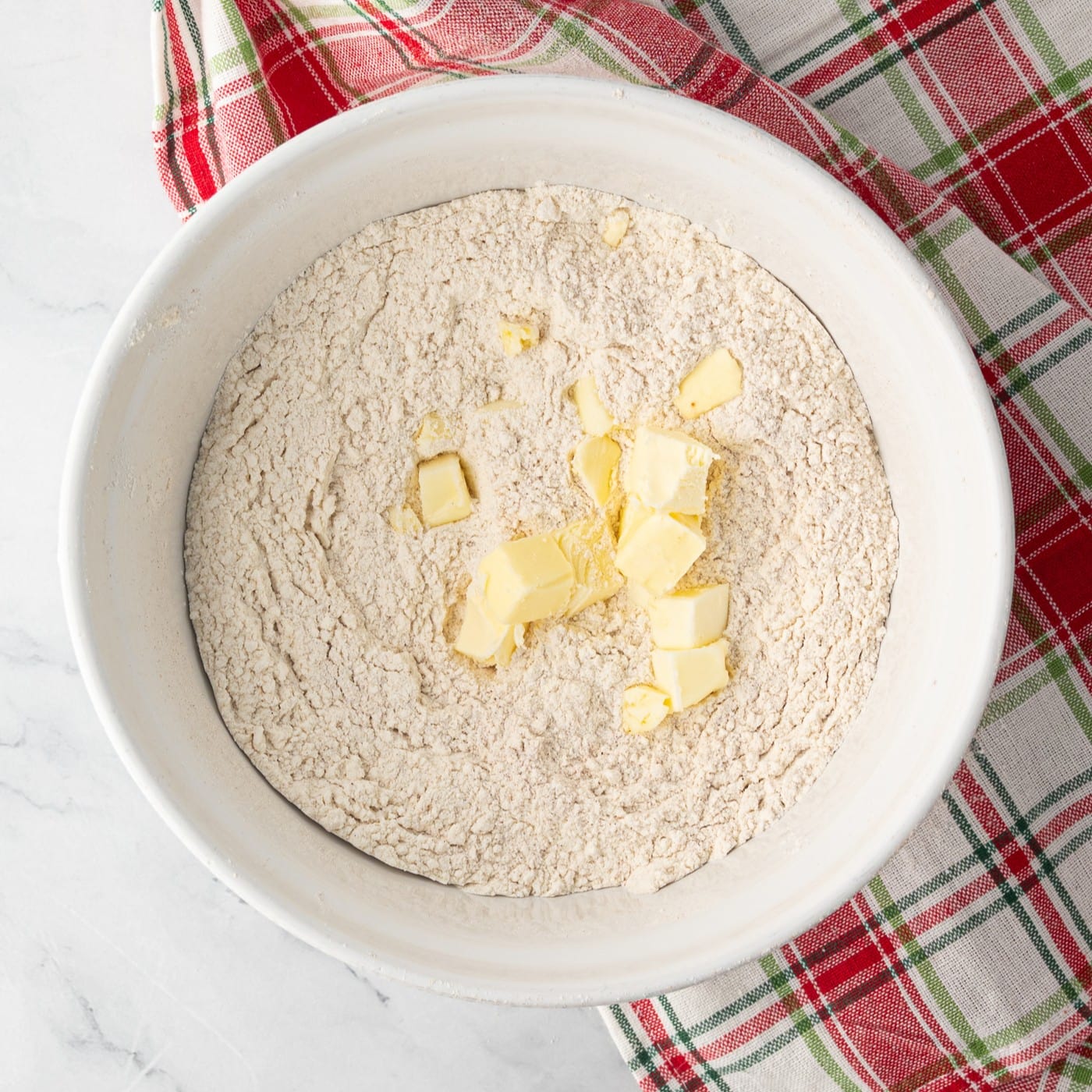
- Rub in the margarine/butter. Add the cold, cubed margarine/butter and rub it into the dry ingredients with your fingertips. Lift the mixture as you go until you have a sandy consistency.
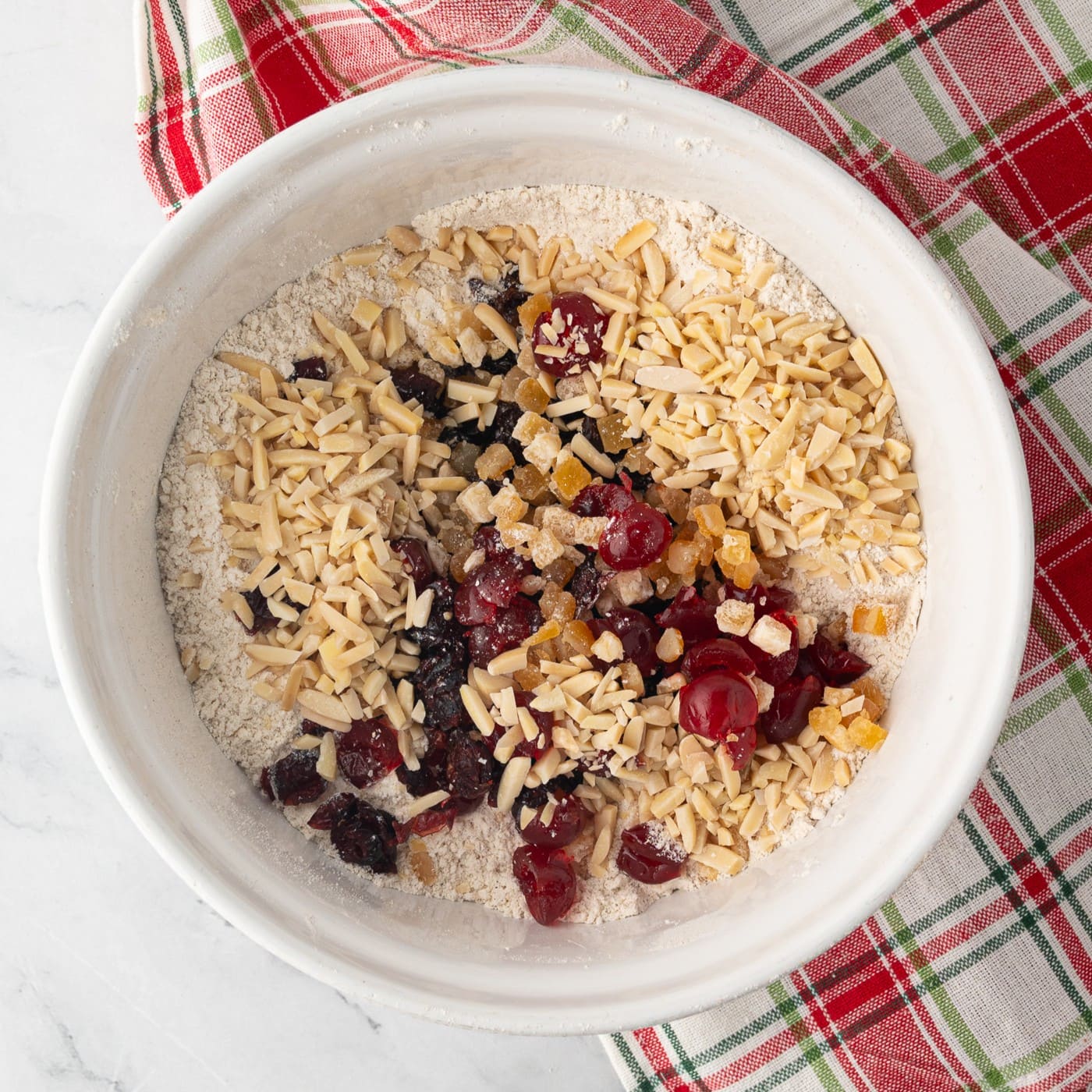
- Add the fruit and nuts. Stir through the raisins, cranberries, cherries, mixed peel and chopped almonds, then make a well in the centre.
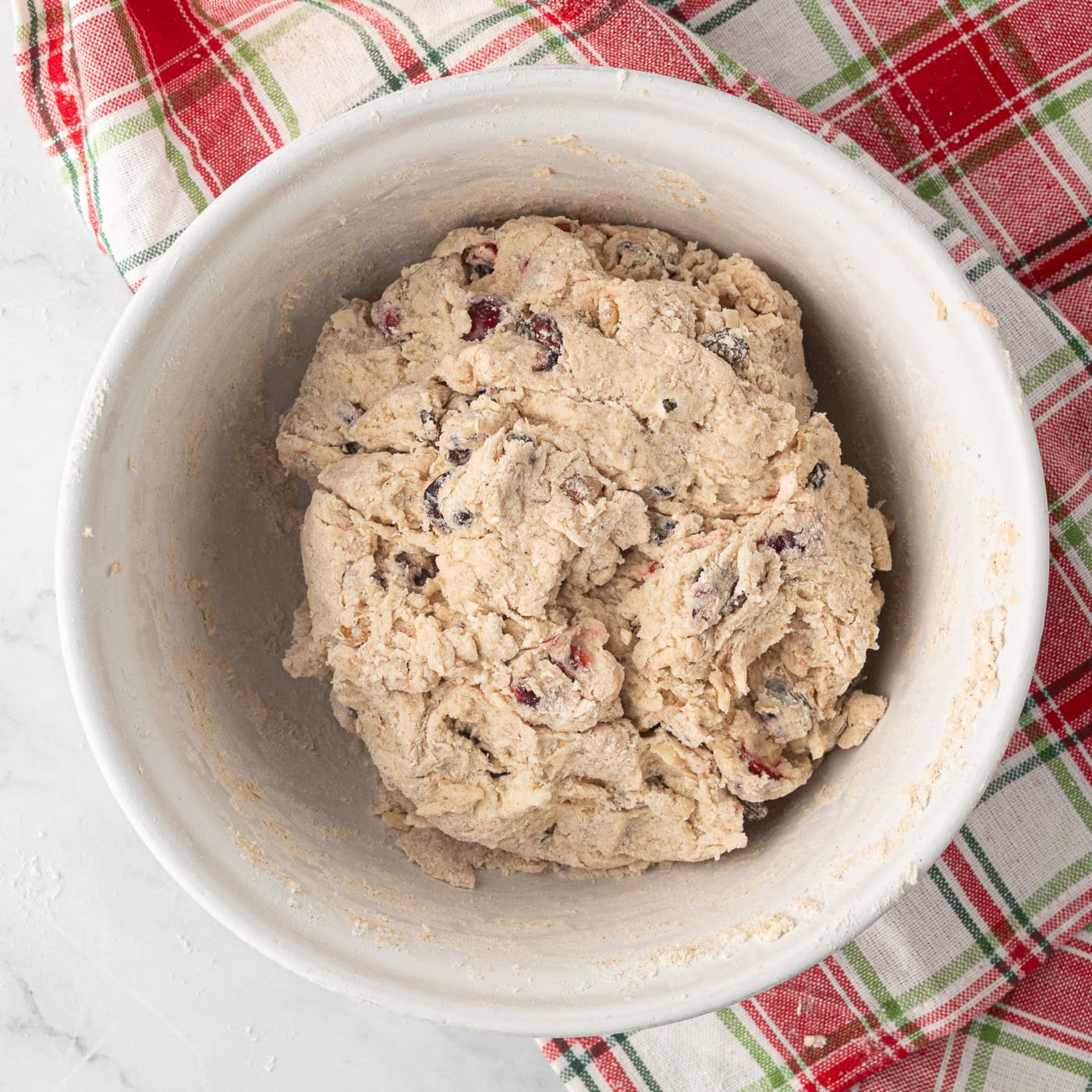
- Bring the dough together. Whisk the milk and yoghurt together, then pour into the well. Using your hands, gently bring everything together into a soft, shaggy, slightly sticky dough.
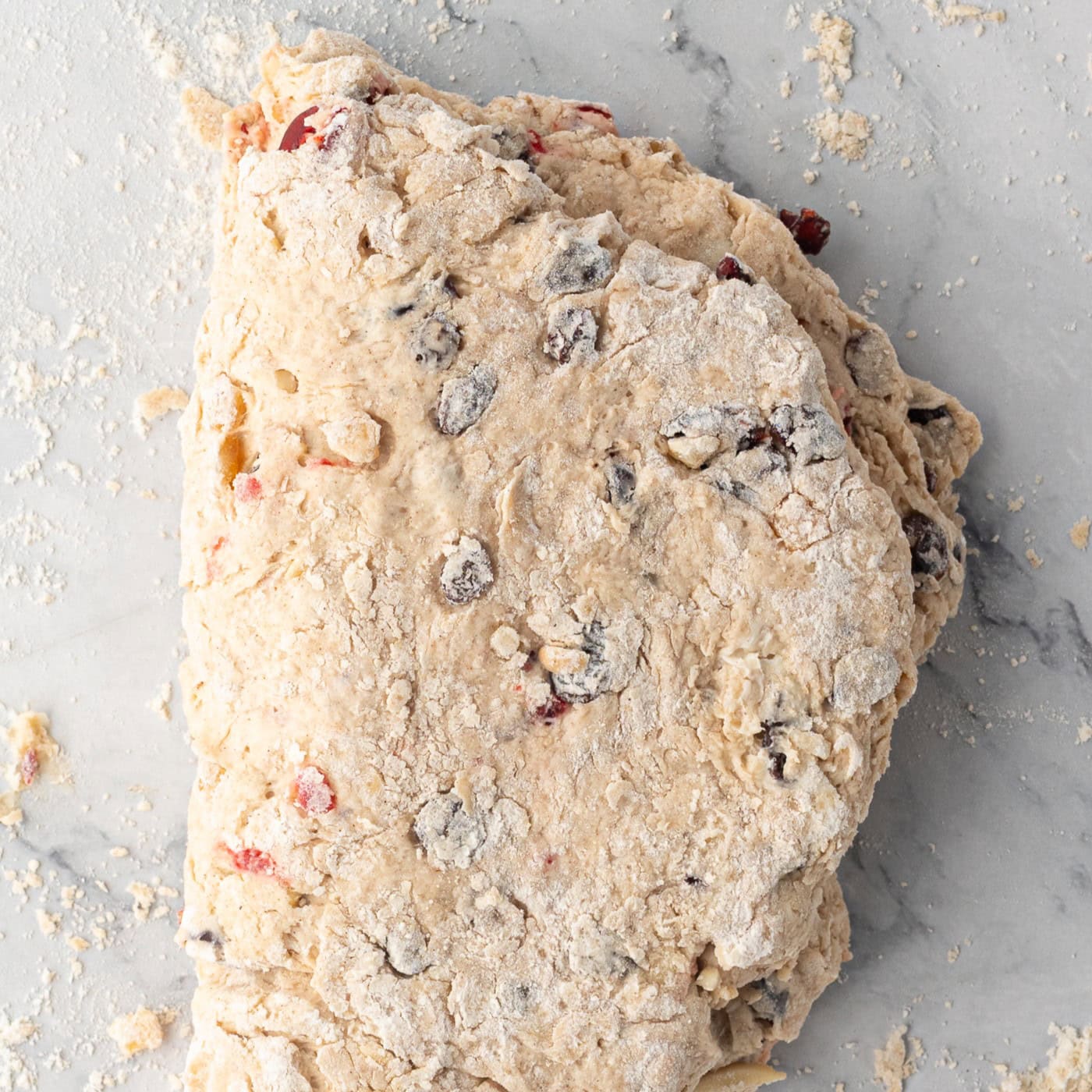
- Stretch and fold. Turn the dough onto a well-floured surface and gently stretch it with your hands to around 2cm (¾ inch) thick, then fold it over on itself. Stretch again to around 2-3cm (¾–1 inch) thick.
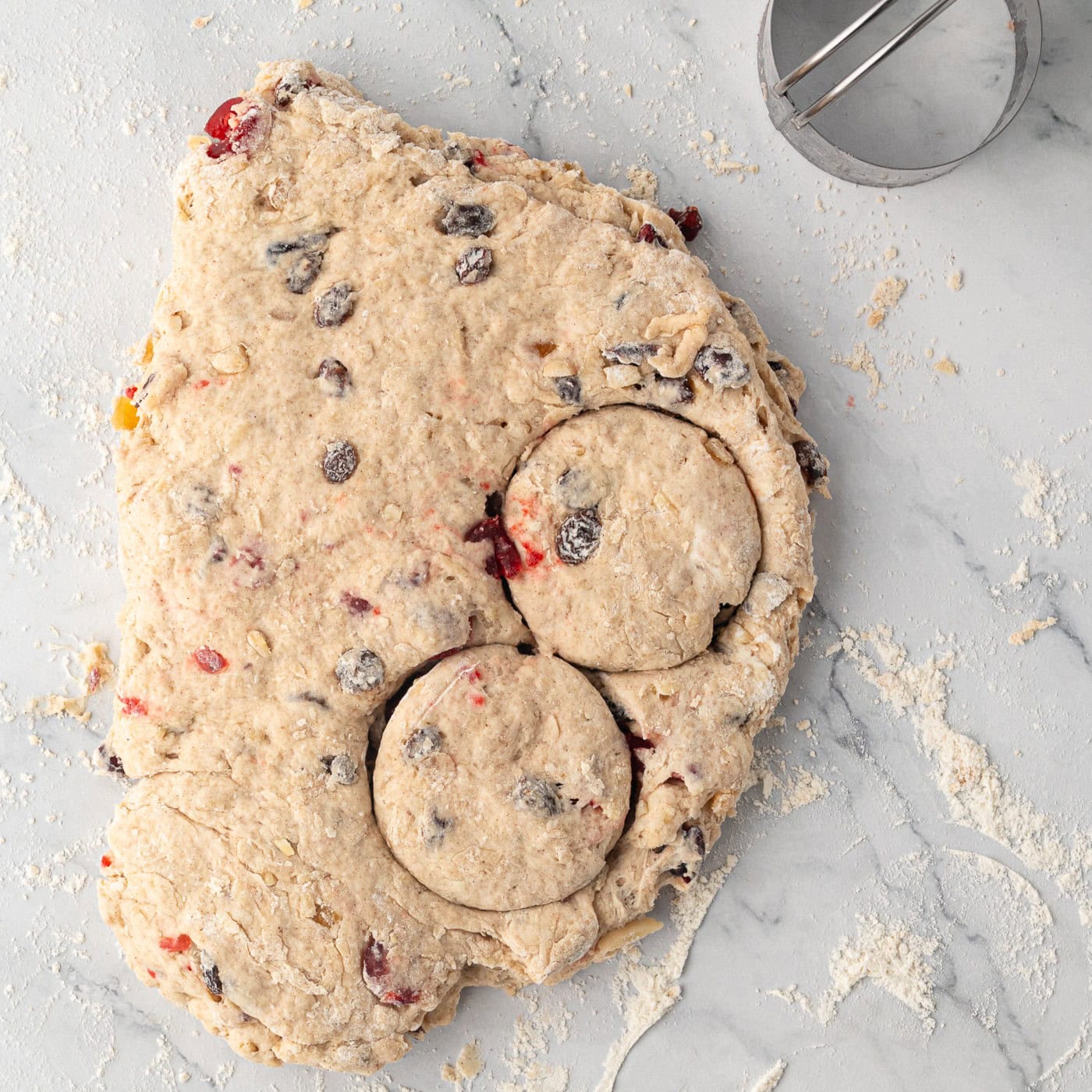
- Cut out your scones. Using a cutter or upturned glass, cut the scones before placing them onto the trays. Gently stretch and fold the remaining dough to use it all up.
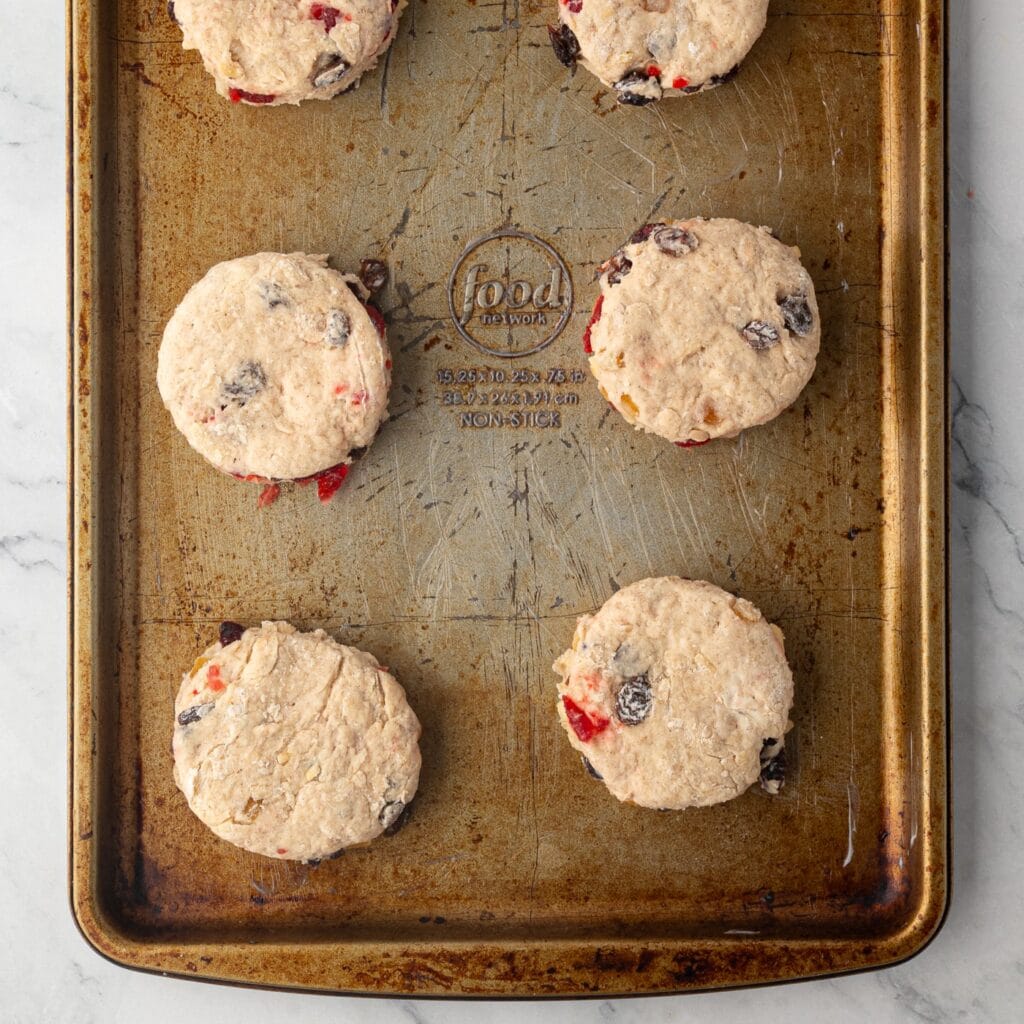
- Rest and glaze. Leave the scones on the trays for around 10 minutes. Brush the tops with beaten egg, milk or yoghurt, making sure it doesn’t run down the sides.
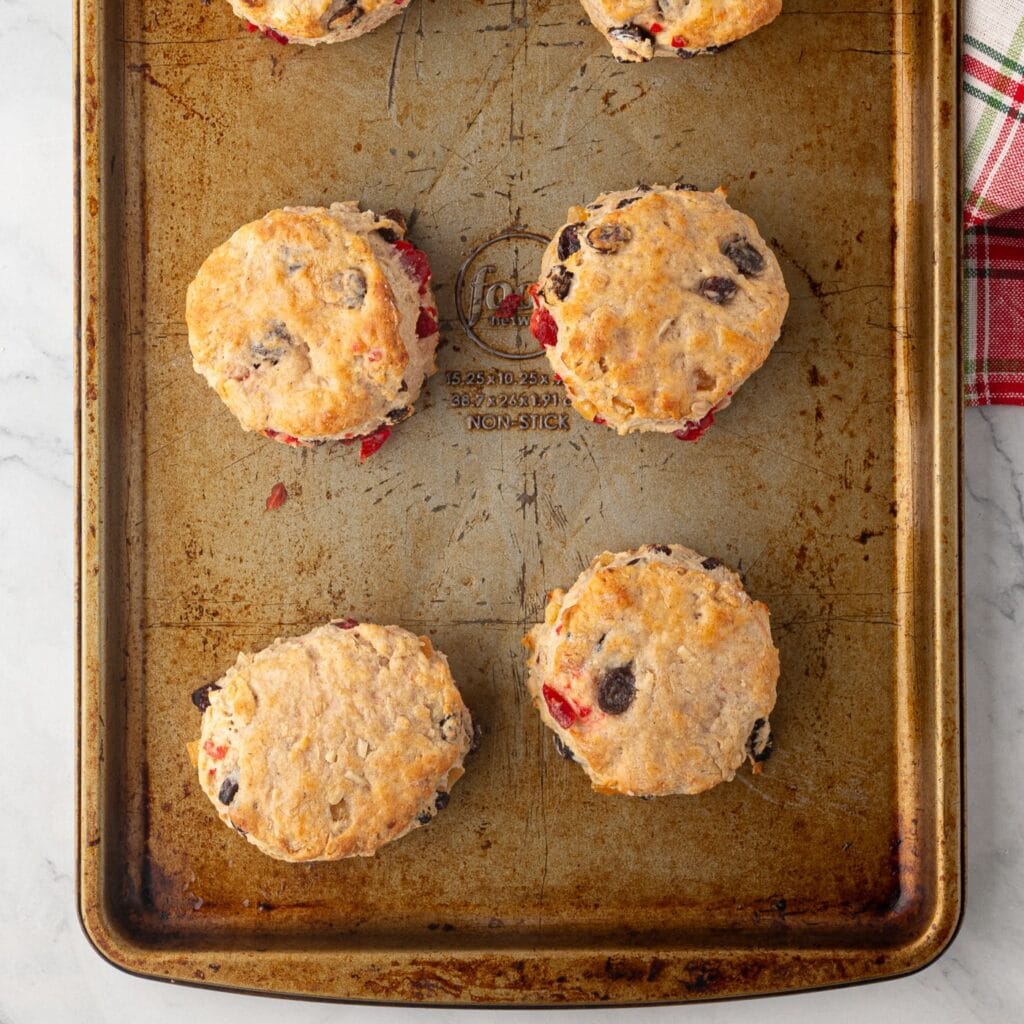
- Bake. Bake for around 10 minutes, until golden and sound hollow when tapped underneath. Once cool enough to touch, transfer to a wire cooling rack. Enjoy while still warm, or leave to cool completely.
Top Tips for Christmas Scones
- Cold Ingredients, Hot Oven: Take the butter/margarine, milk and yoghurt from the fridge when you’re ready to use them. If your kitchen is particularly warm, you can pop butter/margarine in the freezer for a few minutes before starting. And make sure your oven is pre-heating before you begin and is hot before baking.
- Keep the Air In: Sift the flour from a little height, use your fingertips when rubbing in the butter/margarine and handle the dough lightly once the liquid is added. More air in the dough means lighter scones!
- Slightly Sticky Dough: The dough should be soft and a little shaggy when it comes together. Flour your hands and work surface to make it easier to handle, rather than adding lots of extra flour to the dough, which can end up making the finished scones dry and heavy.
- Be Gentle When Shaping: Put the rolling pin down! Instead, use your hands to stretch the dough, keeping it around 2-3cm thick before cutting. Give the scraps the same gentle treatment when bringing them together for the last few scones.
- Remember the Fold: Folding the dough over itself before the final stretch helps create that natural split through the middle of your scones. It’s a small step, but a useful one when it comes to opening your scone for a spreading of butter!
- Give Them a Rest: Allow the shaped scones on the trays time to rest for around 10 minutes before glazing and baking. It’s also a great time to clear up and make sure your oven is fully heated.
- Keep the Glaze on Top: Brush the tops of your scones lightly with a little beaten egg, yoghurt or milk, avoiding the sides. Glaze that runs down the edges can set as the scones bake and then restrict their rise.
Storage, Freezing & Make Ahead
- Storage: Christmas Scones are best enjoyed on the day they’re baked. Once completely cooled, keep any unfilled scones in an airtight container at room temperature for 1-2 days. If they’re a little past their best the next day, you can gently warm them up again before serving.
- Freezing: Allow the baked scones to cool completely, then place them in an airtight container or freezer bag. Freeze as they are, without any butter, jam or cream. Defrost at room temperature, then warm gently before serving (if you like).
- Make Ahead: If you’re baking for another day, freezing the baked scones is a good idea, as scones are at their best on the day they are baked. Let them thaw before you need them, then add your chosen toppings when serving.
How to Serve Christmas Scones
Christmas Scones are absolutely best served while they’re still a little warm. Split them in half and spread with butter, or add jam and cream if you fancy more of an afternoon tea treat.
For something especially festive, try a generous spreading of brandy butter 😋 Shop-bought is totally fine, but you can make your own too – Christina’s Cucina Brandy Butter is a great, easy recipe.
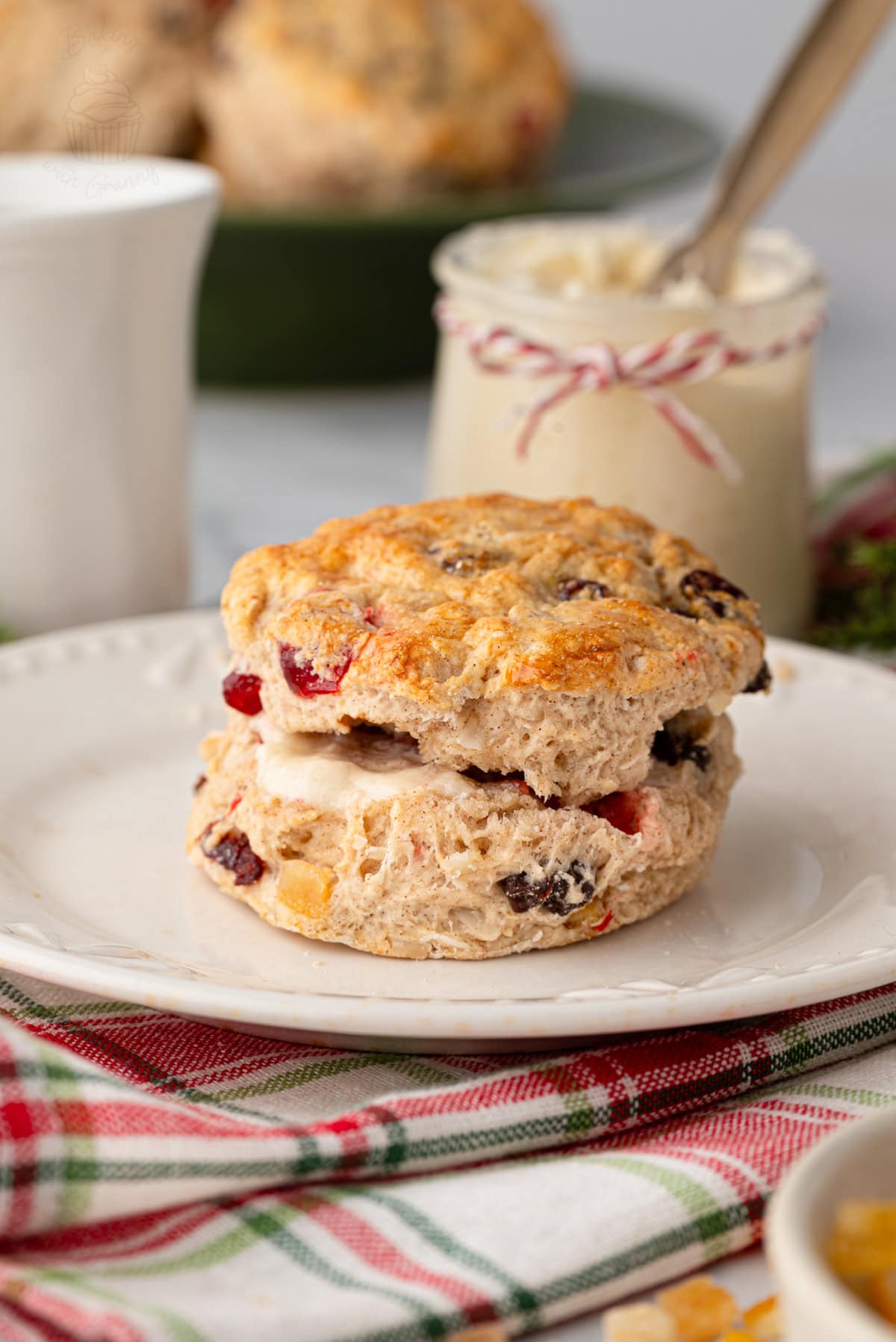
Thank you to Naomi Seiler for creating these photos.
Christmas Scones FAQs
Nope! There’s no alcohol in the scone dough, and the fruit doesn’t need soaking in any either. Saying that, there’s nothing to stop you from soaking your fruit in alcohol, if you want. And brandy butter does contain alcohol, so choose butter, jam or cream if you’d prefer to serve them without it.
Yes! A 7cm cutter gives around 7 scones, but you can use a smaller cutter to make more, or a larger one for bigger scones. Try to keep the dough around 2-3cm thick before cutting. Smaller scones may bake more quickly, so start checking on them earlier and look for golden tops and bottoms, with a hollow sound when tapped underneath.
The leftovers I use here are the dried fruits and nuts left in their packets after making your Christmas cakes and puddings. This recipe is designed for those ingredients, as opposed to pieces of leftover cake or pudding. So use your leftover raisins, cherries, peel and nuts rather than pieces of finished cake or pudding.
More Scone Recipes
If you loved these Christmas Scones, here are some more of my favourite British scone recipes for you to try next:
Save this recipe!
Want to save this recipe for later? Pop your email below and come back to it when you’re ready to bake.
Christmas Scones
INGREDIENTS
- 450 g Self-raising Flour (plus extra for dusting)
- Pinch of Salt
- 2 tsp Baking Powder
- 2 tsp Mixed Spice
- 50 g Block Margarine or Butter (cold; cubed; plus extra for greasing)
- 50 g Caster Sugar
- 80 g Raisins
- 20 g Dried Cranberries
- 50 g Glacé Cherries (halved/quartered)
- 50 g Dried Mixed Peel
- 50 g Blanched Almonds (roughly chopped)
- 200 ml Milk (dairy, soya, coconut…)
- 100 ml Plain Yoghurt (dairy, soya, coconut…)
- 1-2 tbsp Egg, Milk or Yoghurt (beaten; for glazing)
- Brandy Butter (to serve)
EQUIPMENT
INSTRUCTIONS
- Preheat your oven to 220°C (200°C for fan-assisted ovens, Gas Mark 7 or 425°F). Grease a couple of baking trays with a little extra margarine/butter and set aside.
- Sift the flour, salt, baking powder and mixed spice into a large bowl, holding the sieve up to allow some air in. Gently stir in the sugar.450 g Self-raising Flour; Pinch of Salt; 2 tsp Baking Powder; 2 tsp Mixed Spice; 50 g Caster Sugar
- Using the tips of your fingers, rub the margarine/butter into the dry ingredients, again lifting as you do to allow air in. Continue until you have a sandy consistency.50 g Block Margarine or Butter
- Add the raisins, cranberries, cherries, mixed peel and almonds, and stir through to combine. Create a well in the middle.80 g Raisins; 20 g Dried Cranberries; 50 g Glacé Cherries; 50 g Dried Mixed Peel; 50 g Blanched Almonds
- In a separate bowl/jug, whisk the milk and yoghurt together before pouring into the well. Using your hands, gently bring the ingredients together to form a soft, shaggy, slightly sticky dough.200 ml Milk; 100 ml Plain Yoghurt
- Turn onto a well-floured surface. Using your hands rather than a rolling pin, gently stretch the dough to around 2cm (¾ inch) thick. Fold the dough over on itself, then gently stretch again to around 2-3cm (¾-1 inch) thick. This helps create the natural split through the middle of your baked scones.
- Using a cutter of your choice, cut out your scones and place them onto your pre-greased baking trays. The smaller your cutter, the more scones you will get. Reform, stretch and fold the dough as required to use all of the dough.
- Leave your scones to rest on the baking trays for around 10 minutes, then brush the tops with a little beaten egg, milk or extra yoghurt, taking care not to let it run down the sides.1-2 tbsp Egg, Milk or Yoghurt
- Bake in your preheated oven for around 10 minutes, until the tops and bottoms are golden and the scones sound hollow when tapped underneath. Smaller scones may require slightly less time.
- Once cool enough to touch, transfer to a wire cooling rack to cool completely, or enjoy while still warm. Serve halved with a generous spreading of brandy butter.Brandy Butter
IMPORTANT NOTE:
All my recipes are developed using a digital scale and the metric system (grams and millilitres). Cup measurements are available as a conversion, but these, unfortunately, won’t always be as accurate. For best results, I always recommend baking with a digital scale.










ABOUT THE AUTHOR
Amy Beth Reid
Amy Beth Reid is an award-winning food blogger, mother, wife and cookbook author. Inspired by her childhood in the kitchen with her Mum – a professional baker and her children’s Granny – Amy now shares her tried-and-tested traditional home baking recipes with bakers of all abilities around the world. She lives in Scotland with her husband, two sons and her small pack of Siberian huskies.