HomeRecipesScottish

Scottish Shortbread

Author: Amy Beth Reid Updated: 11 August 2026

5 from 52 votes

123 comments on Scottish Shortbread

• This post may include affiliate links.

This traditional Scottish Shortbread recipe is the one my Mum has made for as long as I can remember, and the recipe I grew up helping her make. It follows the classic 1:2:3 Shortbread ratio of one part sugar, two parts butter and three parts flour (by weight), with a little cornflour in place of some of the plain flour for Mum’s lovely, crumbly texture and bite.

I first shared it here in 2016, but it had already been a family favourite for decades before. I’ve continued making it ever since, with years of baker questions and feedback helping me add all the tips you need to get that lovely buttery, crumbly Shortbread every single time.
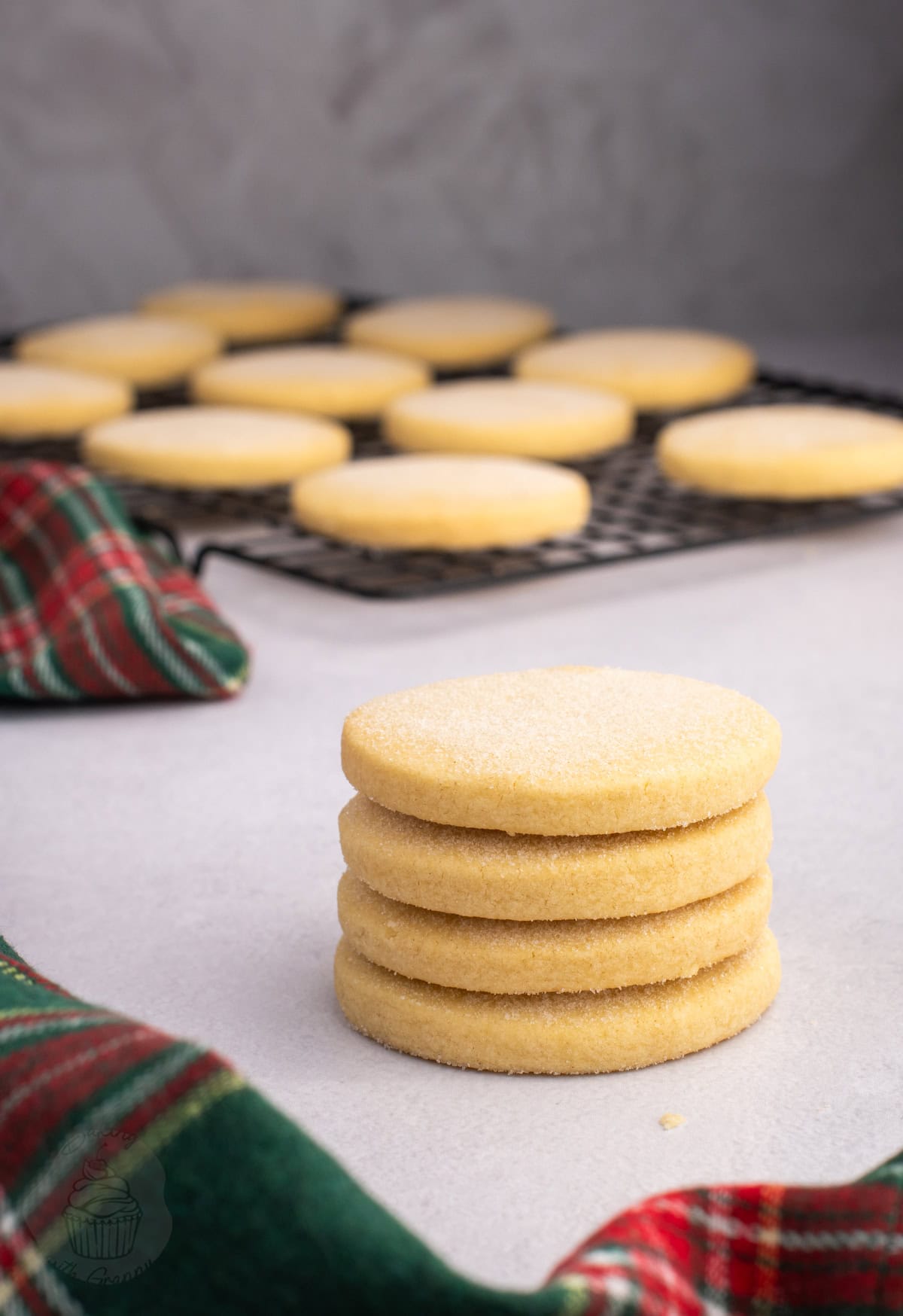
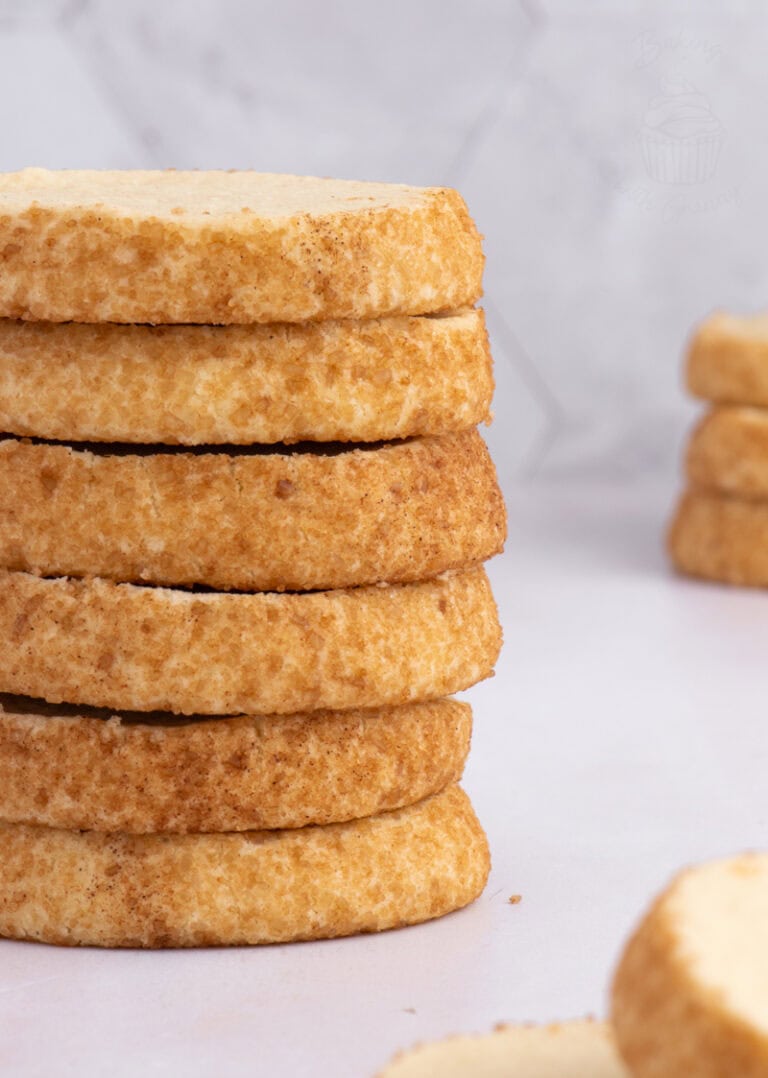
Stack of round Scottish shortbread biscuits with more cooling on a wire rack.

Scottish Shortbread Recipe Snapshot

  • Difficulty: Easy.
  • Prep Time: 20 minutes.
  • Bake Time: 15-20 minutes.
  • Total Time: 40 minutes.
  • Serves: 12 biscuits.
  • Ingredients: Just 4 – butter (or margarine), caster sugar, plain flour and cornflour.
  • Dietary Info: Nut-free and egg-free, with substitutions for gluten-free, dairy-free and vegan included below.
  • Texture: Buttery, crisp and beautifully crumbly.
  • Traditional Formula: 1 part sugar, 2 parts butter, 3 parts flour (by weight).
  • My Mum’s Twist: A little cornflour for a finer, more delicate bite.

Summarise & Save this Recipe on:

What is Traditional Scottish Shortbread?

Scottish Shortbread is a traditional Scottish biscuit made from sugar, butter and flour, without eggs or raising agents. Classic recipes often follow a 1:2:3 ratio by weight – one part sugar, two parts butter and three parts flour. My Mum’s family recipe follows that same ratio but replaces a little of the plain flour (all-purpose flour) with cornflour (cornstarch) for an especially delicate, crumbly texture.

Here in the UK, we’d usually call them shortbread biscuits, while in the US you’re more likely to see them described as shortbread cookies.

And did you know the “short” in Shortbread refers to its crumbly texture? The high proportion of butter (or margarine) coats the flour and limits the gluten development, giving traditional Shortbread that distinctive crisp, crumbly bite rather than a chewy biscuit texture.

Our Family Scottish Shortbread Recipe

If there’s one recipe that instantly takes me back to growing up around my Mum’s baking, it’s her traditional Scottish Shortbread. Alongside her famous Scottish Empire Biscuits and easy Fruit Scones, it’s one of the recipes she’s best known for and one she’s been making (and perfecting!) for literal decades. These buttery Scottish biscuits have the iconic crumbly texture you’d expect from any good Shortbread recipe and are actually surprisingly easy to bake at home.

While every Scottish family seems to have their own version of shortbread, this is ours.

It’s the same recipe I’ve both watched Mum make and made myself more times than I can count. It always makes an appearance at Christmas, weddings, St Andrew’s Day celebrations, Hogmanay… and has been enjoyed with countless cups of tea over the years. And it, of course, features in my debut cookbook, Scottish Bakes, alongside my other shortbread recipes, Highlander Shortbread and Shortbread Petticoat Tails. In fact, the smell of shortbread baking in the oven is enough to transport me straight back to my childhood!
  • Better than Paul Hollywood‘s!

    Best shortbread recipe ever!
    Even better than Paul Hollywood’s (but don’t tell him).
    – Helen
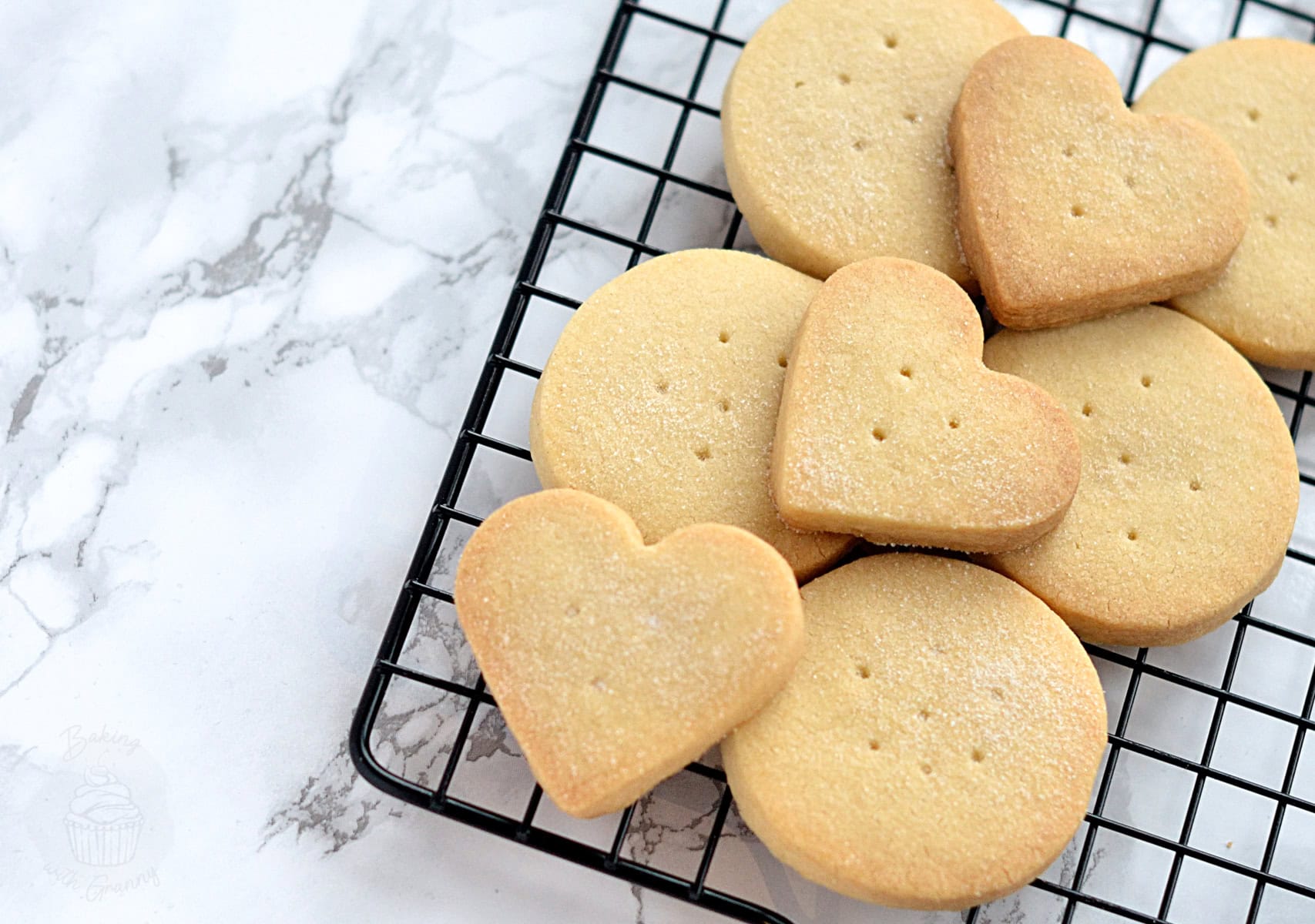
Round and heart-shaped shortbread biscuits cooling on a wire rack.

Key Ingredients

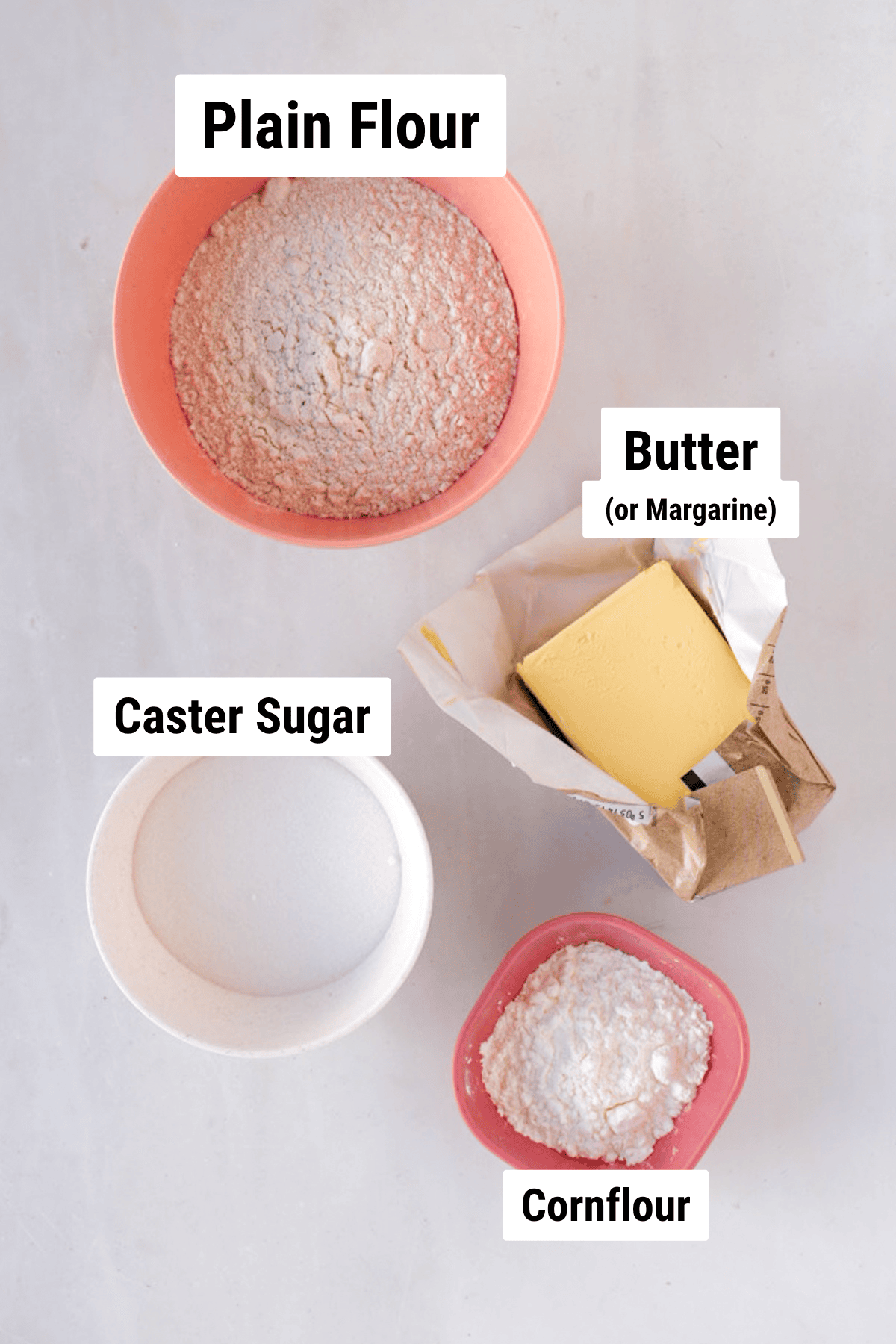
Ingredients for Scottish Shortbread: plain flour, caster sugar, butter and cornflour.

Butter or Block Margarine: Butter is the traditional choice for Shortbread and gives the richest flavour, but I often use block margarine too. Both work well, although I would avoid spreadable margarine from a tub as the higher water content can affect the texture and cause the Shortbread to spread. If using butter, I recommend unsalted so you have full control over the flavour.
For more information on the different kinds of margarine and how to use them in baking, take a look at my Margarine Baking Ingredient Guide.

Caster Sugar: Caster sugar (superfine sugar in the US) is my preference for Shortbread because the finer crystals blend easily into the butter and help give the finished biscuits a lovely delicate texture. Granulated sugar is coarser and can leave the Shortbread with a slightly more noticeable crunch.
To find out more about the differences between caster sugar and granulated, have a look at my Caster Sugar Baking Ingredients Guide.

Plain Flour: Shortbread doesn’t need any raising agent, so plain flour (all-purpose flour in the US) is exactly what you want here. Self-raising flour would give a lighter, puffier result rather than the dense, crumbly texture you expect from traditional Shortbread.
To learn more about the common flours used in baking, see my Plain Flour Baking Ingredients Guide and my Self-raising Flour Baking Ingredients Guide.

Cornflour: My Mum always replaced a small amount of the plain flour with cornflour (cornstarch in the US), and it’s one of the things that gives this Shortbread its lovely fine, crumbly texture. Together, the 200g plain flour and 25g cornflour make up the flour portion of the traditional 1:2:3 Shortbread ratio – one part sugar, two parts butter and three parts flour by weight.

See the recipe card for a full ingredients list, required quantities and cup conversions.

Substitutions & Additions

Sugar: Caster sugar (superfine sugar in the US) is my first choice for Shortbread, as the finer crystals blend easily into the dough and give a lovely delicate texture. Golden caster sugar can be used instead and will give a slightly deeper, more caramel-like flavour. Granulated sugar will work in a pinch, although its larger crystals can give the finished Shortbread a little more crunch.

Cornflour: Cornflour (cornstarch in the US) is what Mum has always used in this recipe and gives the Shortbread its particularly fine, crumbly texture. Some Scottish Shortbread recipes use rice flour instead, but this recipe has been developed and tested using cornflour.

Additions: Traditional Scottish Shortbread really doesn’t need anything added to it, but the basic dough is a lovely starting point for other flavours too. A little citrus zest, chocolate or nuts can all work well, depending on what you’re making.
For something a bit different, you might like my Chocolate & Orange Shortbread cookies, which add dark chocolate and orange to the classic Shortbread base. Or try my traditional Tantallon Cakes, an old-fashioned Scottish Shortbread-style bake with its own traditional twist.
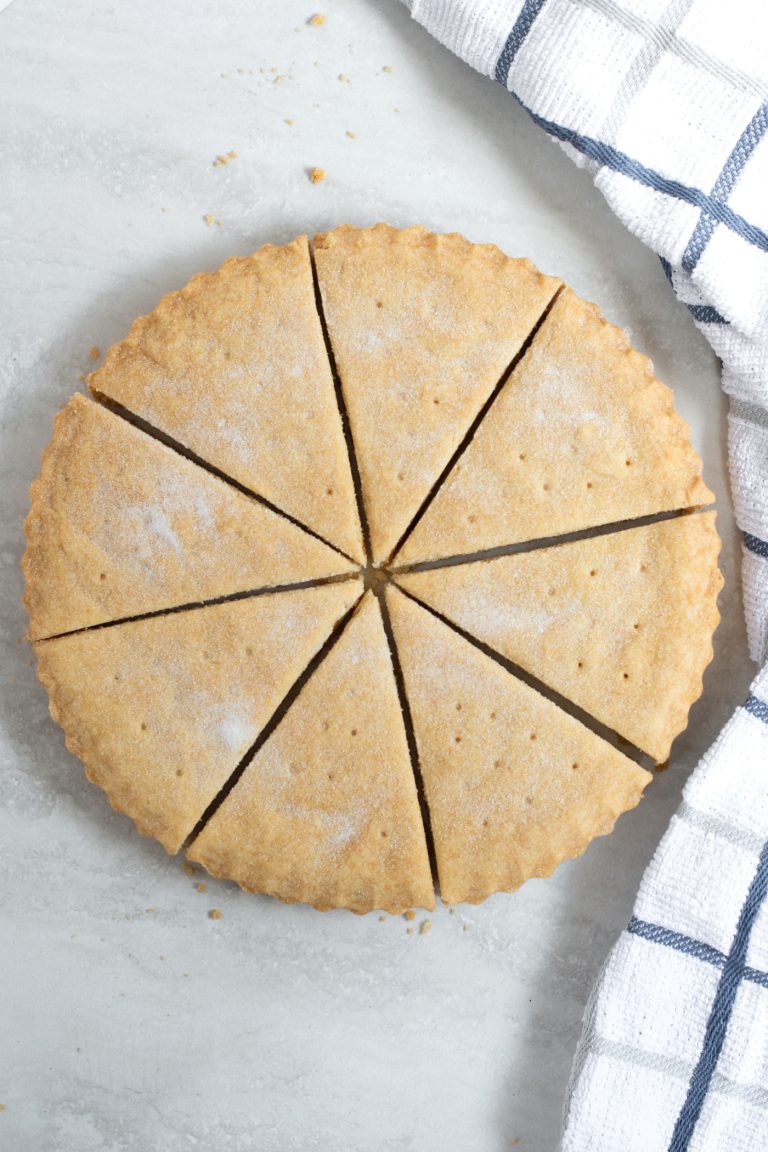
And if you’re looking to make Shortbread as a traditional round and cut it into wedges rather than individual biscuits, try my Shortbread Petticoat Tails recipe.

Butter vs Margarine in Shortbread

If you look at traditional Scottish Shortbread recipes, you’ll often find butter listed as the fat of choice. Historically, that was undoubtedly the case. But like many traditional recipes, shortbread has evolved over the years depending on what ingredients were available and affordable.

Generally, my Mum would try to use butter when making shortbread if money allowed. But over the years, I’ve made it with both butter and block margarine, and I can honestly say that both produce delicious results. Modern block margarines are also much closer to butter than they used to be, making them an excellent choice for baking (and my preference in many recipes). They also tend to be a little more budget-friendly, without too much compromise on texture or flavour, especially when there’s a good amount of sugar, like in Scottish Shortbread.

It’s also worth remembering that many cheaper shop-bought shortbreads use vegetable fats or butter blends, while products that are actually made entirely with butter are generally labelled “all-butter shortbread”.

So whether you choose butter or block margarine, you’ll end up with a delicious homemade Scottish Shortbread. If you love the richness of butter, go for it. If you’re looking for a more economical option that’s been tried and tested, block margarine works well too.

Free-from & Vegan

Amy recommends: If you regularly need to adapt baking recipes for gluten-free, dairy-free, egg-free or vegan diets, I highly recommend The Elements of Baking by Katarina Cermelj, creator of The Loopy Whisk. It’s a brilliant resource for understanding how substitutions work, rather than simply swapping ingredients and hoping for the best.

Gluten-free Options:

To make this a gluten-free Shortbread recipe, use a gluten-free plain flour in place of wheat flour. Gluten-free flours can be slightly drier, so add it to the butter/sugar mix gradually, or hold back on the cornflour and only add it if/when you feel the dough needs a little more flour to come together.

Nut-free Adjustments:

This recipe contains no nuts, but as always, be sure to double-check the allergen lists for your individual ingredients.

Dairy-free Swaps:

To make this Shortbread recipe dairy-free, simply use your favourite dairy-free block margarine in place of the butter. Be sure to avoid spreadable varieties, as they contain too much water and can affect the finished texture.

Egg-Free Adaptations:

This recipe contains no eggs, but as always, be sure to double-check the allergen lists for your individual ingredients.

Vegan Substitutions:

As above, to make this Shortbread recipe vegan, simply use your favourite dairy-free block margarine in place of the butter. Be sure to avoid spreadable varieties, as they contain too much water and can affect the finished texture.


How to Make Scottish Shortbread

Scottish Shortbread is really simple to make, but taking the time to cream the margarine/butter and sugar properly, then handling the dough lightly, is what gives you that lovely melt-in-the-mouth texture. Follow the step-by-step below, or head to the recipe card at the bottom for the full printable recipe.
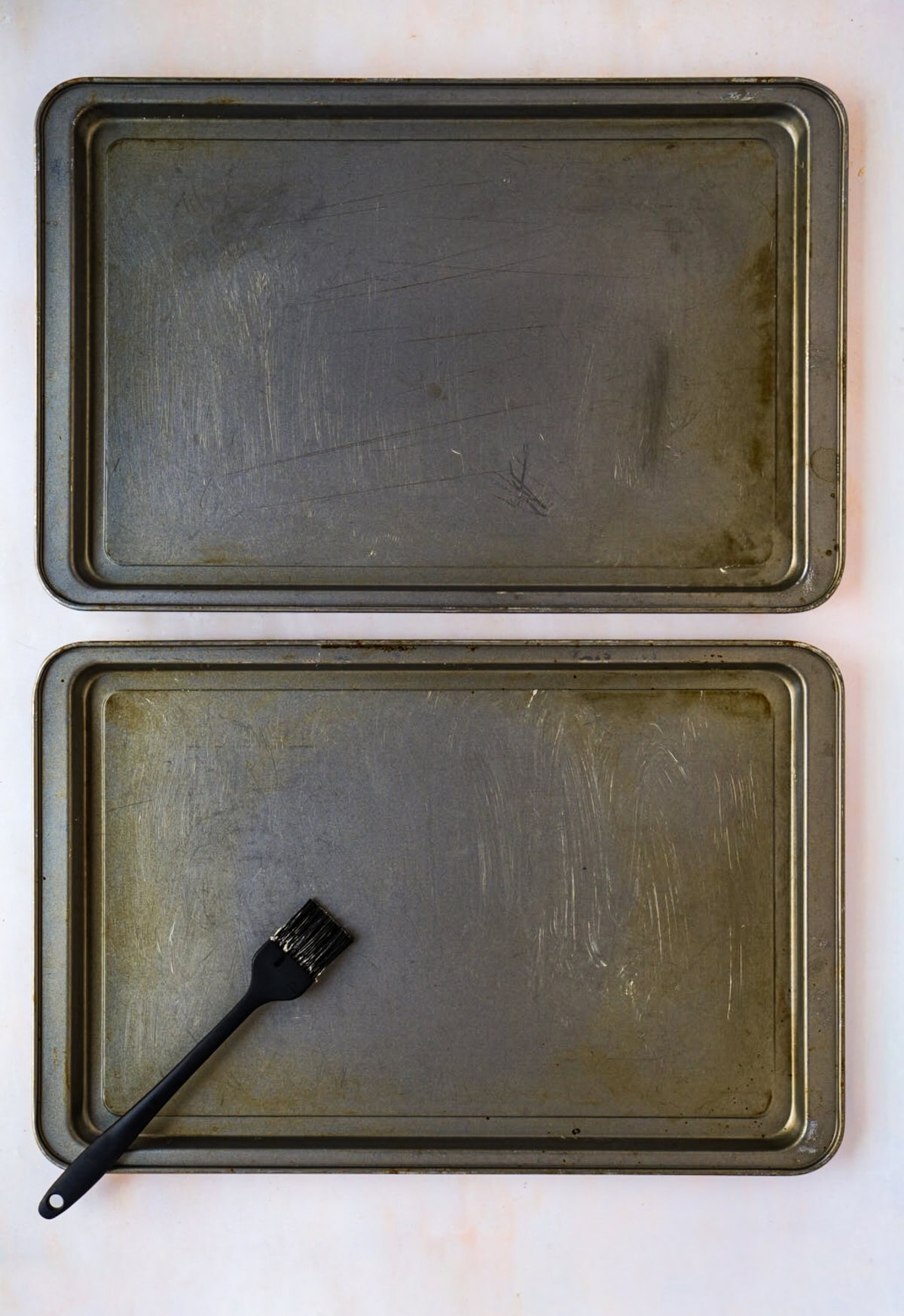
Baking trays being lightly greased before making Scottish Shortbread.
  1. Prepare the trays. Preheat your oven to 180°C (160°C fan-assisted ovens, Gas Mark 4 or 350°F). Lightly grease a couple of baking trays with a little extra butter/margarine.
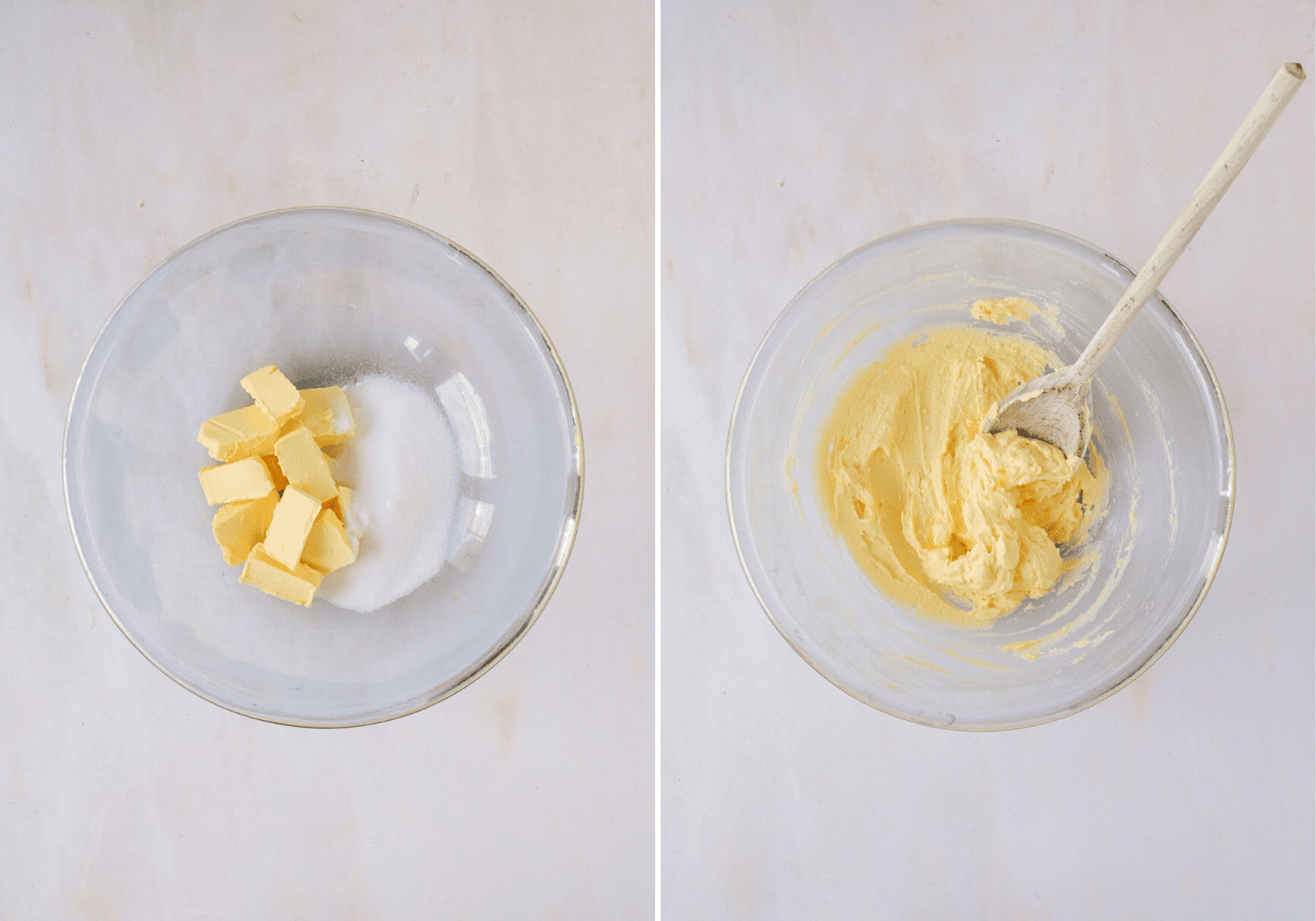
Butter and caster sugar before and after creaming until light and fluffy.
  1. Cream the butter and sugar. Beat the butter/margarine and caster sugar together until light and fluffy, both in colour and texture.
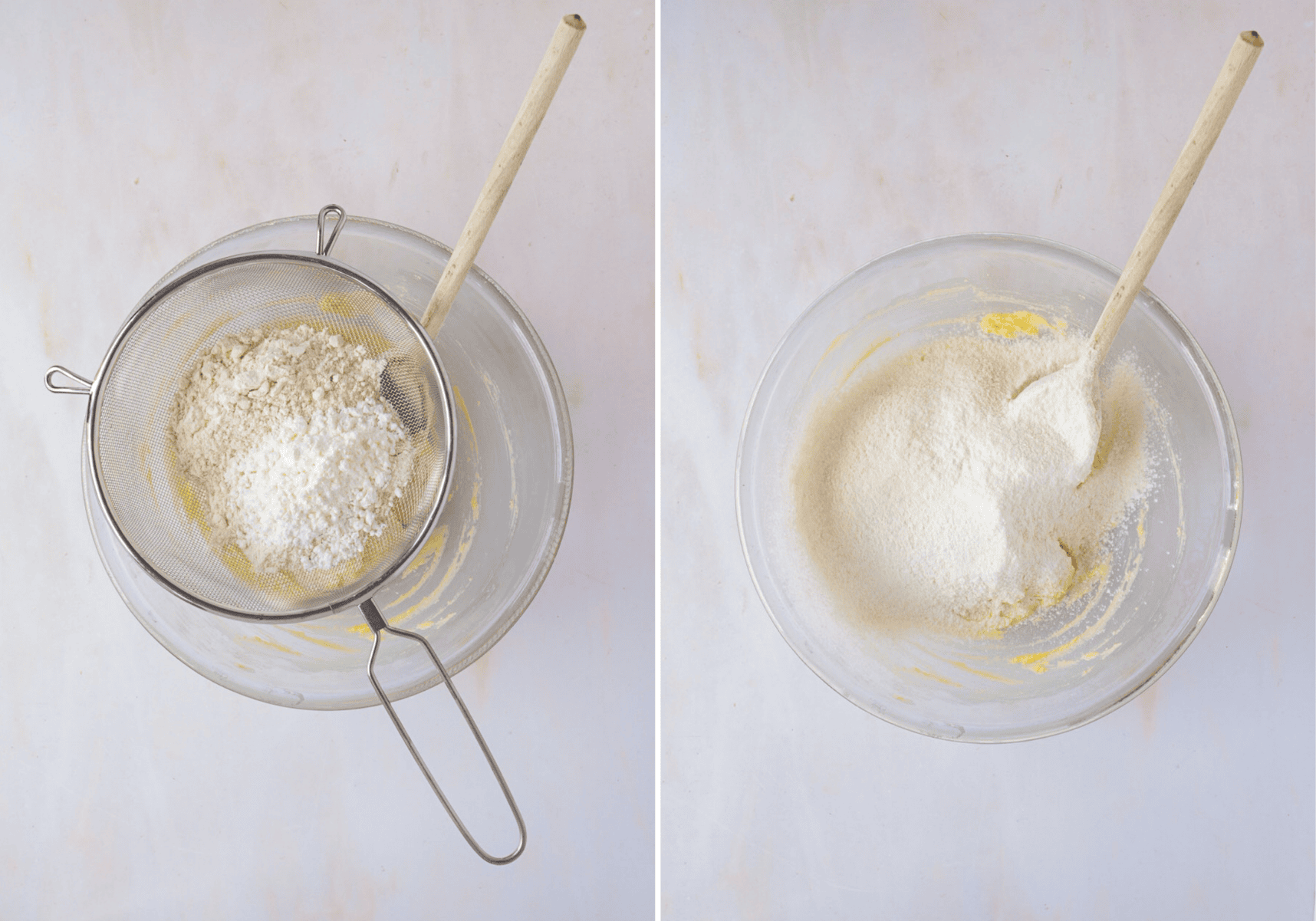
Plain flour and cornflour being sifted into the creamed butter and sugar.
  1. Add the flour. Sift in the plain flour and cornflour, then gently mix until the mixture starts to form a dough.
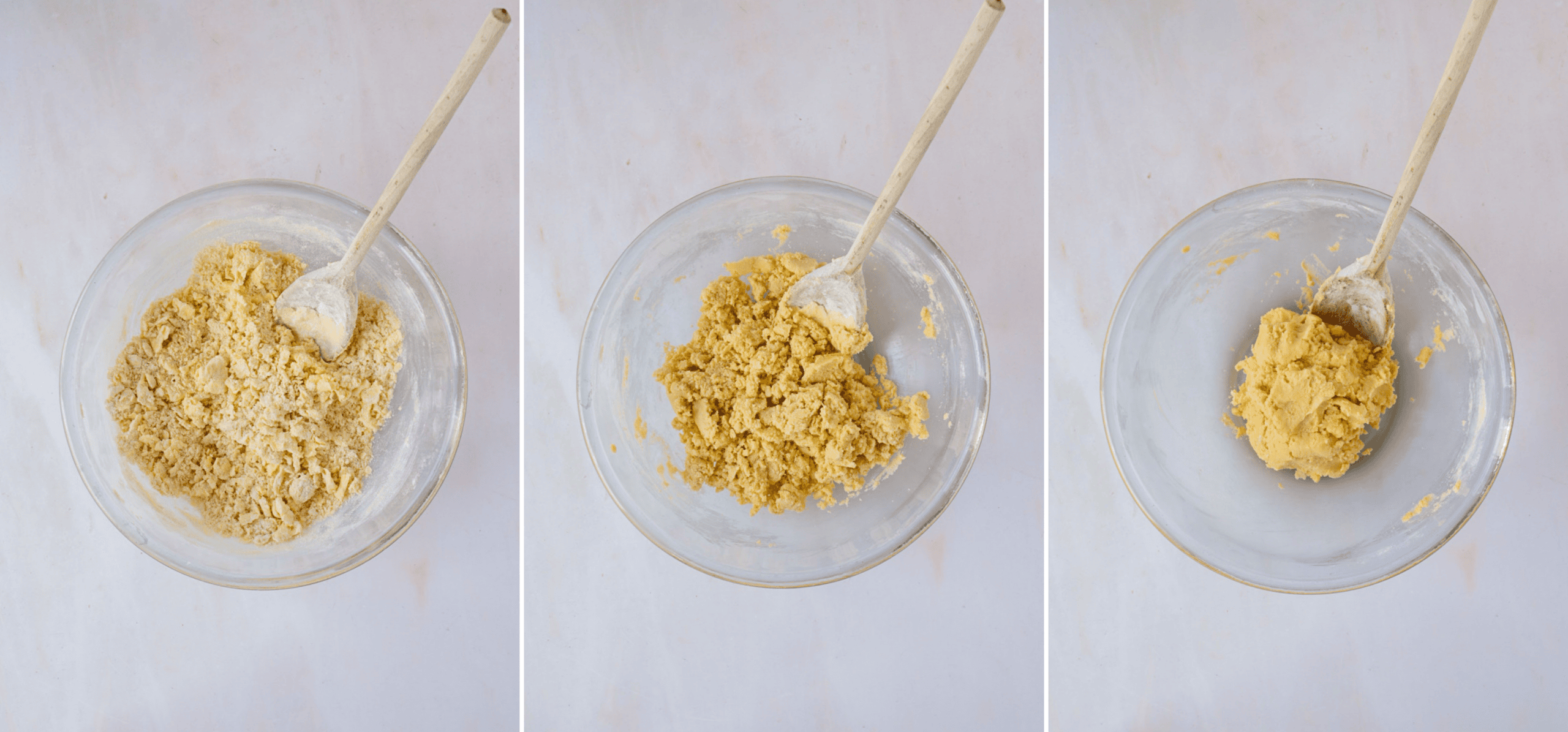
Scottish Shortbread mixture gradually coming together from crumbs into a soft dough.
  1. Bring the dough together. Don’t worry if it looks quite dry and crumbly at first. Use your hands to gently bring everything together into a smooth dough, handling it as little as possible and resisting the temptation to add any liquid.
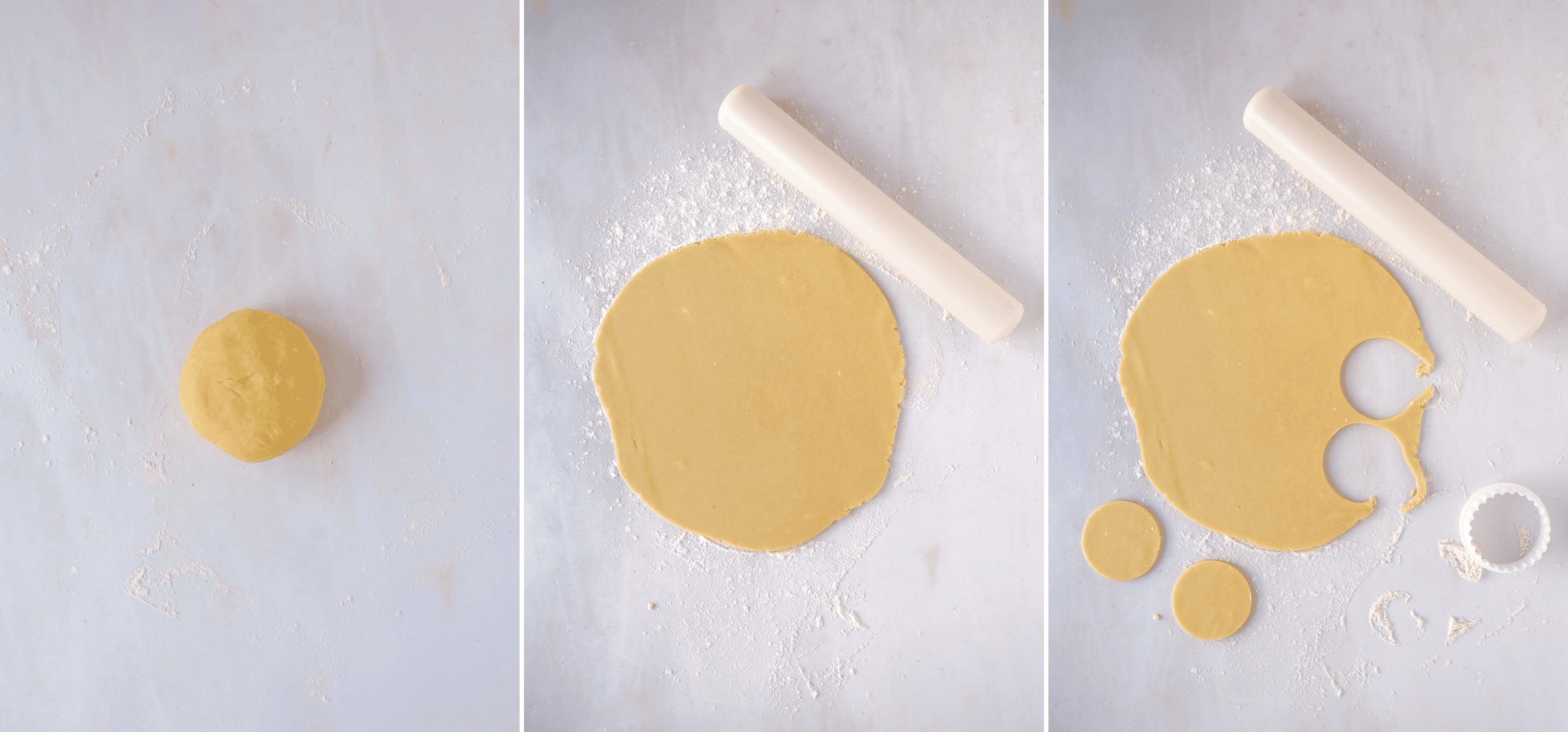
Shortbread dough shaped, rolled out and cut into round biscuits.
  1. Roll and cut. On a lightly floured surface, roll the dough to around 5mm–1cm (¼-½ inch) thick, depending on how thick you like your Shortbread. Cut into rounds or your preferred shape.
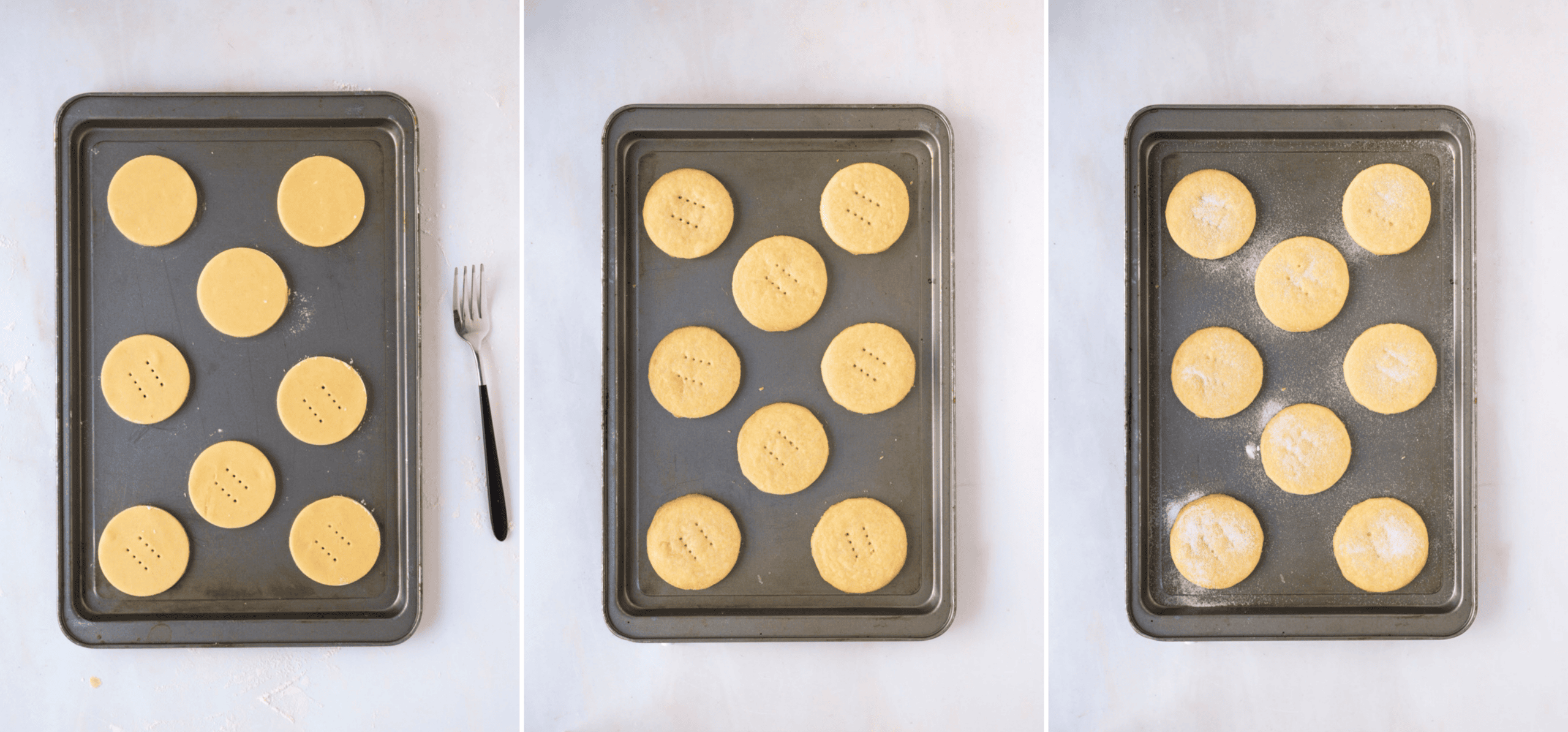
  1. Prick and bake. Place the biscuits onto your prepared trays and prick the tops with a fork. Bake for around 15-20 minutes, until the tops look dry and the edges are only just beginning to turn lightly golden. Sprinkle the warm Shortbread with a little caster sugar, then leave on the baking trays until cool enough to touch, before transferring to a wire cooling rack to cool completely.
  • It didn’t disappoint!

    First time I’ve ever made shortbread. So many recipes about, but I’ve tried other recipes from this site that have been great, so I went with this recipe. It didn’t disappoint!
    – Antonia

Top Tips for homemade Shortbread:

  • Cream Until Light and Fluffy: My Mum has always creamed the butter and caster sugar together until light and fluffy for this Shortbread recipe, and that’s the method I use too. Some Shortbread recipes use a less-aerated method, but this family recipe has been made this way for decades and gives us the delicate, crumbly texture that you’re looking for.
  • Don’t Overwork the Dough After the Flour: Once the flour has been added, handle the dough as little as possible. Use your hands to gently bring everything together, rather than kneading it a lot like a bread dough. Too much handling can make your Shortbread tougher rather than beautifully crumbly.
  • Don’t Panic if It Looks Crumbly: Shortbread contains no egg or other added liquid, so the mixture can look quite dry and crumbly before it comes together. Resist the temptation to add milk or water – gently bring it together with your hands, and the butter will do the rest.
  • Chill the Dough if It Feels Too Soft: If your kitchen is warm or the dough has become particularly soft while you’re working with it, pop it into the fridge for a short while before rolling and cutting. You want it firm enough to hold its shape without becoming rock hard.
  • Prick Before Baking: Don’t forget the traditional little fork holes before your Shortbread goes into the oven. As well as giving it that familiar Shortbread appearance, pricking helps it bake more evenly.
  • Keep an Eye on the Colour: Shortbread should stay relatively pale, with just the faintest hint of golden colour around the edges. Don’t wait for it to become golden-brown all over – by that point it is likely to be overbaked and will lose that lovely delicate texture.
  • Let It Cool Before Moving: Shortbread can be quite fragile when it first comes out of the oven. Leave it on the baking tray until it has firmed up enough to move, before transferring it to a wire cooling rack to cool completely.

Storage & Freezing

  • Storage: Store your baked Scottish Shortbread in an airtight container at room temperature for up to a week. It actually tastes even better after a day or two, once the flavours have had a chance to develop (hard to believe it is even possible, I know!).
  • Freezing: For the best results, I would recommend freezing your shortbread dough, as opposed to the baked biscuits. Simply wrap the dough in cling film, then tin foil and keep it in your freezer for up to 3 months. When ready to bake, simply remove the dough from the freezer and allow it to defrost at room temperature before using as normal.

recipe featured in:

my debut self-published cookbook

Scottish Bakes

order now!

Scottish Shortbread FAQs

Why does this Scottish Shortbread recipe use cornflour instead of rice flour?

Traditional Shortbread doesn’t actually need either cornflour or rice flour – different Scottish families have their own versions. Mum has always replaced a little of the plain flour with cornflour (cornstarch in the US), which gives her Shortbread a particularly fine crumb. Some recipes use rice flour for a slightly sandier texture, but this recipe has been developed and tested using cornflour.

Should you cream the butter and sugar when making Scottish Shortbread?

There are different methods for making Shortbread, but in our family, yes. My Mum has always creamed the butter and sugar together until light and fluffy, and it’s the method I now use for this recipe too. It’s how this Shortbread has been made in our family for decades and how the recipe is written in my cookbook, Scottish Bakes. The result is a beautifully delicate, crumbly Shortbread.

Why is my Shortbread dough so crumbly?

Don’t panic if the mixture looks quite dry and crumbly at first. Shortbread contains no egg or added liquid, so it won’t come together like many other biscuit doughs. Gently bring it together with your hands and resist the temptation to add milk or water. If you’ve weighed the ingredients accurately, the butter should be enough to bind everything together.

How do I know when Scottish Shortbread is cooked?

Scottish Shortbread should still be quite pale when it is ready. Look for the edges just beginning to turn very lightly golden while the middle remains pale and the tops look dry. It may still feel a little soft when it first comes out of the oven, but it will firm up as it cools. Don’t wait for the biscuits to become golden-brown all over or they will end up overbaked.

Why did my Shortbread spread in the oven?

If your Shortbread spreads or loses its shape, the dough may have become too warm before baking, or you may have possibly used a spreadable margarine rather than butter or block margarine. If your kitchen is warm or the dough feels particularly soft, chill it for 20-30 minutes before rolling and cutting, or chill the shaped biscuits before baking.
  • Exactly what I’m looking for!

    I’ve tried many different versions of shortbread, and none have that dissolving buttery texture/flavour that I’m looking for…until NOW!!!!! Thanks so much, Amy!! Delicious!
    – Rebecca
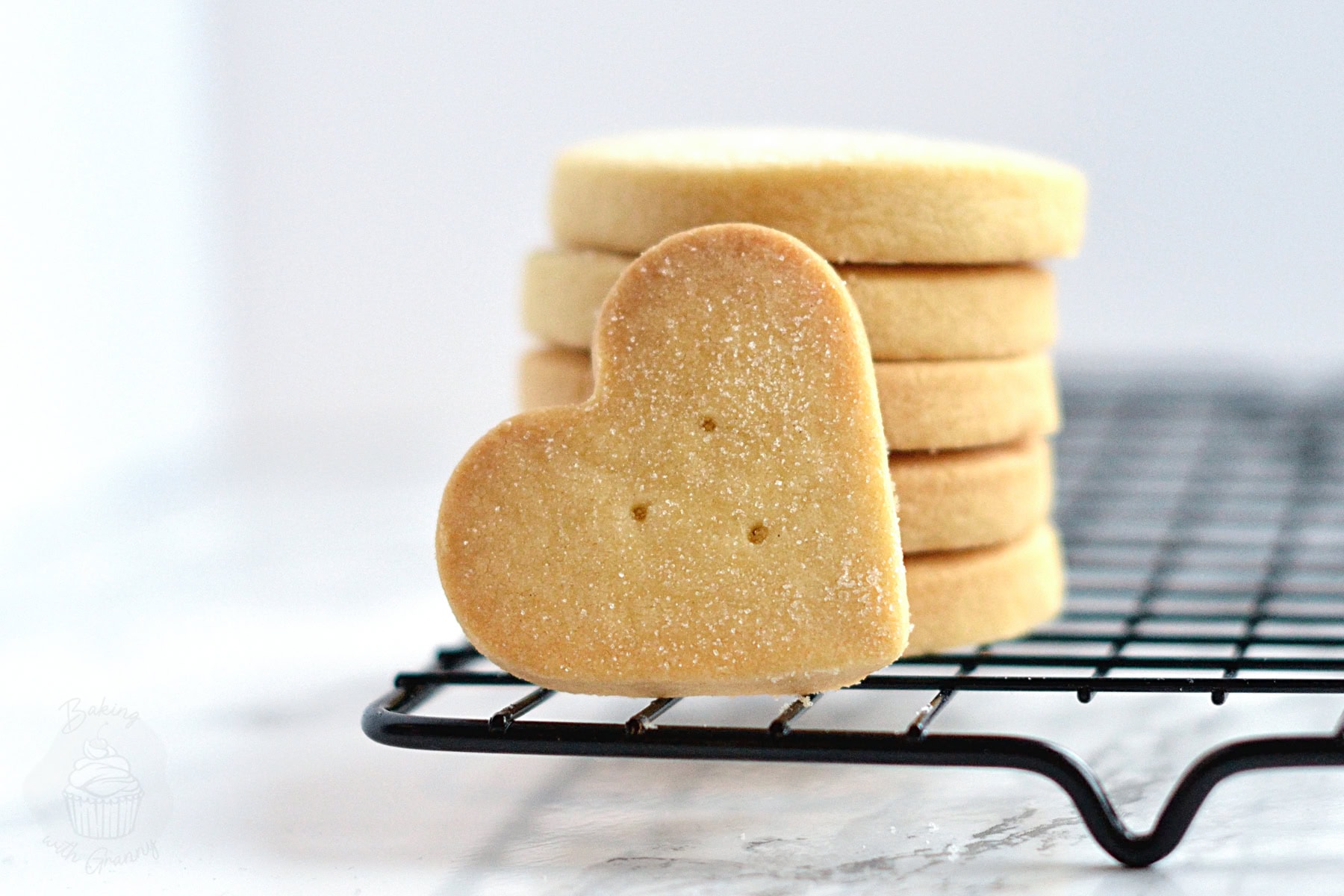
Heart-shaped shortbread biscuit in front of a stack of round shortbread.

More Traditional Scottish Bakes:

If you loved this traditional Shortbread, here are some more of my favourite Scottish baking recipes for you to try next:
Save this recipe!

Want to save this recipe for later? Pop your email below and come back to it when you’re ready to bake.
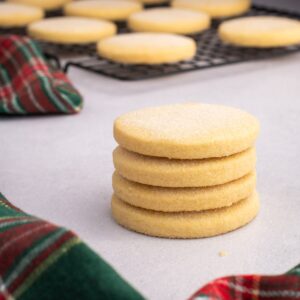
Stack of round Scottish shortbread biscuits surrounded by tartan fabric, with more cooling on a wire rack behind.

Scottish Shortbread

A traditional Scottish Shortbread recipe made with butter, caster sugar, plain flour and a little cornflour for a rich, beautifully crumbly biscuit. This easy family recipe has been made by my Mum for decades and is perfect for Christmas, Hogmanay, gifting or simply enjoying with a cuppa.
5 from 52 votes
PRINT RECIPE
Course: Dessert, Snack
Cuisine: Scottish
Prep Time: 20 minutes
Cook Time: 20 minutes
Total Time: 40 minutes
Servings: 12 biscuits

INGREDIENTS
 

INSTRUCTIONS

  • Preheat your oven to 180°C (160°C for a fan-assisted oven, Gas Mark 4 or 350°F). Grease a couple of baking trays with a little extra butter/margarine and set aside.
  • In a large bowl, cream together the butter/margarine and sugar until light and fluffy, in both colour and texture.
    75 g Caster Sugar; 150 g Block Margarine or Butter
  • Sift in your flour and cornflour, mixing until a stiff dough starts to form. Use your hands if needed. Turn the dough onto a floured worktop and gently bring it together into a smooth dough, handling it as little as possible.
    200 g Plain Flour; 25 g Cornflour
  • Roll your dough to between 5mm-1cm (¼-½ inch) thick, depending on how thick you want your shortbread biscuits to be. Cut into your desired shape and size. Transfer each biscuit to your prepared baking trays and prick the tops with a fork.
  • Bake in your preheated oven for around 15-20 minutes, or until the edges are lightly golden and the tops appear dry.
  • Remove from the oven and sprinkle a little extra sugar over each shortbread biscuit. Leave to cool on the baking trays until cool enough to touch, then transfer to a wire cooling rack to cool completely.

IMPORTANT NOTE:

All my recipes are developed using a digital scale and the metric system (grams and millilitres). Cup measurements are available as a conversion but these, unfortunately, won’t always be as accurate. For best results, I always recommend baking with a digital scale.
RECIPE NOTES:

Butter or Margarine: Use butter or a block margarine at room temperature – avoid spreadable margarine from a tub, as its higher water content can cause the Shortbread to spread. Unsalted butter is my preference, but salted butter can also be used if you prefer a slightly saltier Shortbread.
Cornflour: UK cornflour is called cornstarch in the US. This family recipe has been developed and tested using cornflour alongside the plain flour to give the Shortbread its fine, crumbly texture.
Dough Texture: Don’t worry if the mixture looks quite dry and crumbly after adding the flour – this is normal for Shortbread, and it will come good. Gently bring it together with your hands and don’t add any milk or water. And iff the dough feels very soft or warm instead, chill it for 20-30 minutes before rolling and cutting.
Baking & Doneness: The exact baking time will vary depending on how thick you roll your Shortbread. It should still be fairly pale when baked, with dry-looking tops and just a hint of golden colour around the edges. It may feel a little soft while hot but will continue to firm up as it cools.
Serving: 1biscuit | Calories: 182kcal | Carbohydrates: 21g | Protein: 2g | Fat: 10g | Saturated Fat: 6g | Polyunsaturated Fat: 0.4g | Monounsaturated Fat: 3g | Trans Fat: 0.4g | Cholesterol: 27mg | Sodium: 81mg | Potassium: 21mg | Fiber: 0.5g | Sugar: 6g | Vitamin A: 313IU | Calcium: 6mg | Iron: 1mg

Nutrition information is provided as a guide and is based on automatic calculations. Actual values may vary depending on the ingredients and brands used, how the recipe is prepared, and individual portion or serving sizes.

Tried this recipe?

Tag @bakingwithgranny or use the hashtag #bakingwithgranny!
Pin recipe for later

Love this? Share it!

More Recipes You Might Like

ABOUT THE AUTHOR

Amy Reid

Amy Reid is an award-winning food blogger, mother, wife and cookbook author. Inspired by her childhood in the kitchen with her Mum – a professional baker and her children’s Granny – Amy now shares her tried-and-tested traditional home baking recipes with bakers of all abilities around the world. She lives in Scotland with her husband, two sons and her small pack of Siberian huskies.

Leave a Review

Got a question? Tried this recipe & want to leave some feedback? Please use the comment section below! Required fields are marked *

Recipe Rating


This site uses Akismet to reduce spam. Learn how your comment data is processed.

123 Comments

  1. 5 stars
    The biscuits are delectable. I served them with a lemon posset at a dinner in France and the French attendees absolutely loved them.

  2. 5 stars
    I’ve tried many different versions of shortbread and none have that dissolving buttery texture / flavour that I’m looking for….until NOW!!!!! Thanks so much Amy!! Delicious!

  3. 5 stars
    Made these shortbread biscuits twice now and they are delicious. the last time I didn’t have cornflour so just put more plain flour and they were absolutely fine.. they last for ages in an airtight Tin and me and my hubby have one with our morning coffee each day.

    1. 5 stars
      Lovely, not to sweet, easy to make too. I added a pinch of salt but will try with salted butter next time to compare.

  4. 5 stars
    The quantity of butter is correct.Shortbread is a 1-2-3 recipe. One part sugar, two parts butter, three parts flours.

  5. 5 stars
    My nan recently passed away suddenly and we always joked that she would write all her recipes down for me. I remember alot of them but stumbling across your website and making this recipe I sat crying in my kitchen remembering my nan. Thankyou for the recipes my nan never got chance to write down for me. These take me back to the way my nan always baked

  6. 5 stars
    Ohhh this tasted amazing! I have tried many recipes for biscuits but this has to be the one. Very easy to make with lids and they really enjoyed it. We used different shape cookie cutters to make different shapes and it tasted and looked amazing! Thank you!

  7. 5 stars
    Hi Amy
    Shortbread recipe is amazing.
    I need to know how you roll and cut shortbread so clean and evenly which look so professional.
    Kind regards
    tookie

    1. 5 stars
      It’s an old recipe I’ve been looking for , and I’m 84 . My granny used to roll out ,then roll the result into a roll . She could then cut the breads as she wanted them ,with no bother of left over, and equal biscuits .so lucky to have found this site .

  8. 5 stars
    Brilliant, have used Amy’s recipe for tablet (and other treats) a few times now, and always works perfectly. Reminds me of my childhood, growing up with wee Grannies and Great Aunties that loved to bake and stuff us full of home made sweeties.

  9. 5 stars
    My first time using this recipe – made half quantity as the base for my mincemeat crumble bars, so I had to compromise on gas mark/cooking time – nevertheless I think you should have sub-titled your book ‘Recipes That Work’

    Have a good Christmas

    Clive

  10. 5 stars
    My go to recipe for shortbread. My boys love them when i add white choc chips!! Another barch just out of the oven. Thankyou!! x

  11. 5 stars
    I haven’t tried this recipe yet but have no reason to believe it will not be delicious like everything else I’ve made from the site.
    Regarding measurements and the comments made, I do believe that the recipe has the option to choose metric (uk) or cups (us), this is immediately below the recipe ingredients. Let’s be kind to one another in a world with many problems.

  12. 5 stars
    made this while sleep deprived, turned out really well! I don’t have cute cookie cutters sadly, so i just cut them all into rectangles and cubes.

  13. 5 stars
    Another amazing recipe – thank you Amy. I’m now starting to build a repertoire of ‘trusty favourites’ that I’ll turn to again and again.

  14. I had to cook it longer and it still feels a bit soggy on the bottom don’t know if it’s because I greased the baking paper

    1. 5 stars
      These are probably the nicest shortbread I’ve ever tasted, much better than shop bought. I did a batch with sprinkled sugar on and a batch with chocolate and my family absolutely loved them. Thank you

  15. 5 stars
    I’ve made these many times and they have always gone down a treat. I have been asked for the recipe many times which is obviously testament to how good the recipe is. Few ingredients and easy to make. A lovely one for children to make for their friends/ teachers/ family at Christmas. Many thanks Amy for this fab recipe ❤️

  16. Been making this since I was a wee lad about 60 years. Never used corn flour. Never had any complaints. Just saying.

  17. 5 stars
    Oh Wow, this has to be the best shortbread I have ever baked, they are absolutely delicious, what a great easy recipe to make, can’t stop eating them ha ha
    Thank you

  18. 5 stars
    Absolutely delicious. Made exactly as instructed and kept fresh in a sealed tin for 3 days until all eaten. Thank you!

  19. Hi this mixture was as dry as a stick! Too much flour so it was like sand. Trying to rescue with more butter. I can share a photo if needed.

  20. 5 stars
    I bake this shortbread regularly. It’s loved by all the family and the grandchildren. Success every bake. Thank you.

  21. I’m not sure what I did wrong. I followed ingredients to the letter but it felt way too soft from the start I couldn’t really get it into a dough when I cooked it it just lost it’s shapes and melted all over the pan. It was still delicious if flat so will try again but use less butter.

  22. 5 stars
    Have been using this recipe for sometime now and always delighted with the result. In the summer we have them with cream and strawberries and in the winter enjoy them with whatever drink we are having. I dust with golden brown sugar. Thank you for sharing.

  23. Hi, I was just curious using an average size cutter, how many biscuits do you get from the dough? Also saw the cups/grams conversation and thought this site can help it’s great you type in the ingredient and it converts it to American/Australian and British measures.

    1. 5 stars
      Oh, one thing I had to bake for 10mins longer than stated. When they came out of the oven they were still fragile. Great though once cooled.

  24. 5 stars
    My mum’s recipe too,but her grannie used ground rice in it instead of cornflour. I have tried it. Makes it quite crumbly though. Tastes nice enough.

    Maybe your gran has heard of it?

    Also,for the last 34 years,I have tried every tablet recipe under the sun. I just can’t make it,until this one. Never goes wrong. Thanks

  25. 5 stars
    I am a complete novice Baker have never made shortbread in my life and was look for a shortbread recipe that gave a good crunch to the biscuit. I have now made this 4 times as everyone loves it. I am going to try it with some coconut in it. Thank you

  26. Hello !! Thank you so much for sharing your lovely recipes!!! Can I decorate this biscuits with royal icing???

    Thanks!

    Liena

  27. Hi, most shortbread recipes I have come across require you to put the dough in the fridge before baking – is there a reason this recipe doesn’t require it?

  28. 5 stars
    All I can say is 5 stars is not enough this recipe deserves a whole galaxy of stars ⭐️ . The bikkies are SCRUMPTIOUS!!!!! Melt in the mouth, eat 10 then go for a run… to justify eating the rest post run. They are just . Thank you !

  29. Amy, the recipe says pre-heat the oven at 180c but then later it says bake at 160c, which temperature is it? Also could the cornflour be replaced with semolina or ground rice?

    Regards……Maria

  30. I don’t understand what the hell im doing- I’m following this to a t and still my dough is waaayy to soft to even handle let alone cut shapes from.

    1. Try putting your dough in fridge. Had same problem as house was warm ,so butter got too soft.
      Only takes 10 minutes

  31. 5 stars
    Delicious shortbread. Recipe was spot on. I kept mine in oven for a few more minutes to get quite brown as that’s my personal preference. A Scottish taste sensation!

  32. 5 stars
    First time I’ve ever made shortbread. So many recipes about but I’ve tried other recipes from this site that have been great so went with this recipe.
    It didn’t disappoint. Easy to follow. Mine needed to cook for around 10 mins longer but tasted amazing

  33. 5 stars
    My favourite shortbread. So easy to make and yummy! I like to add chopped up nuts and smarties.

  34. Can I make this recipe of shortbread into 2 x 20 cm round sponge tins as I quite like wedges.

    1. Can I make this shortbread recipe into 2×20 cms round sponge tins as I quite like wedges of it.

    2. I’m sure you can – just press the shortbread into the pan nice and firmly, and cut lines in it before you bake it so it will be easier to break into wedges later.

  35. 5 stars
    I’ve made these biscuits lots of times and they are always well received! I use this recipe all the time- it’s the best!!! Sometimes I’ve added some chocolate chips and nuts. They are very nice!

  36. 5 stars
    The longer you allow the shortbread to sit, the richer it becomes. My 7th grade English teacher was from Scotland. She made these for class and gave out the recipe. She said she made these and allowed them to sit until the next Christmas. I tried, but I am too weak. All I could think about was shortbread cookies aging in my cubbard. That was it! They were gone!

  37. 5 stars
    Love this recipe ,,,
    As for conversions do what most people do look on the iinternet like we have to do to convert from USA cup

  38. This looks amazing! My mum was Scottish, so this recipe reminds me of her! Definitely going to give it a whirl soon! Just discovered you via the #BIBS voting platform – good luck!

  39. 5 stars
    Oh my goodness these are simply amazing. I was looking for something quick easy and snacky and this was perfect!!! Thank you so much

  40. 5 stars
    Oh my goodness these are simply amazing. I was looking for something quick easy and snacky and this was perfect!!! Thank you so much

    1. Oh for pities sake…buy a flipping set of scales! The blogger is British. We have to deal with your hugely inaccurate ‘cups’, so the least you can do is appreciate that the world does not revolve round the Americans, and either convert the recipe yourself or buy some cheap equipment.

      1. 5 stars
        Well said Barbara!
        Delicious shortbread. Well worth investing in weighing scales to get the quantities accurate.

        1. Hi Annie how can you possibly say well said to Barbara’s bad manners what a terrible attitude many times I have had to ask for help with measurements & weight’s &I am not from America what does it matter where you come from I’m Scottish living in Australia I sometimes do recipes from America don’t encourage bad manners

          1. Isobel agree.
            Bad manners demonstrates what a person is really light.
            Cups spoons whatever…Celsius Farenheit imperial cents shillings $ or £ weights and measurements etc… a cup of kindness goes a long way. Makes the best shortbread.

        1. 5 stars
          I made this beautiful recipe today . My friend had a birthday and I saved a few for hubby and myself . I am 73 years old and this will be my go to shortbread for my family from now on . Thank you so much for sharing

        2. Good on you Karen What a terrible attitude Barbara had to that reasonable request what’s wrong with getting out of your comfort zone & offer to help out it doesn’t matter where we come from I’m with you #bekind

        1. Norma, you may be located in the states but the owner of this website is in Scotland! See the “uk” at the end of the URL? Surely, you are capable of doing the math like the rest of us Americans who find recipes on sites in countries that use the metric system. Is your name really Norma? “Karen” seems more fitting…. what a sense of entitlement you have!

          1. What is wrong with you lot in Scotland having such bad manners I’m Scottish living in Australia Does that make me a Karen? Because I ask for help ? Who care where you are born or what system is used replying in such a way is un called for showing kindness & patience does not cost anything , no wonder the world is in a mess we have lost common curtesy!!!!

      2. Dear Barbara what ever happened to manners ? Making such a rude comment was unnecessary What does it matter if it takes a bit out of anyone’s comfort zone to help out it’s no big deal Barbara . We should be all willing to help each other no matter where we come from take a chill pill Dear be kind it doesn’t cost anything

      3. I agree to be honest, I have read many recipes with cups and instead of keep asking I just google the conversions it’s easy

    2. Good on you Lyn For helping out there should be more Lyn’s in the world willing too lend a hand thank you

    3. 5 stars
      Oh honestly, I use loads of American recipes and wouldn’t dream of expecting them to include “English measurements “ You are commenting on here so obviously more than capable of using the internet? Google is a wonderful thing

      1. It was actually hard to find exact measurements for the equivalents— even with the converters, especially without having been able to actually taste the original recipe to see if the converted product was even close to the original. It was kind of Lyn to make that effort. I would be happy to do that for an English or Scottish baker if the roles were reversed!

    4. Thank-you so much for these measurements. Fortunately, after living in Scotland for two years, I do know what castor sugar and corn flour are—along with golden syrup and mince!! I would never disparage a British cook for asking me what the measuring cup equivalent in grams was!

  41. 5 stars
    Hi Amy,

    Thanks so much for sharing this awesome recipe.
    I bake Christmas cookies every year and I can say without hesitation that this has been my most sucessful batch yet.
    I doubled the recipe and counted more than 100 cookies in different shapes; angels, donkeys, stars, snowflakes & Christmas trees.
    I sprinkled a mix of brown sugar, cinnamon & pink glitter dust over them – they turned out sooo pretty and yummy.
    Have a look at my Instagram page, I posted an image @zydia.
    Thanks so much.
    Have a wonderful Christmas.

    1. For best results with freezing, you’d be best freezing the dough and defrosting in the fridge over night before baking. Wrap the dough in cling fling and tin foil for freezing and it will keep fine for up to 2 months.

      1. 5 stars
        You do know your stuff

        this website is amazing definitely recommend I even got my friend to sign up.

  42. 5 stars
    Ooh these look gorgeous Amy. I’ve not had any homemade shortbread for quite some time for some reason, and yet I absolutely adore it. I really like the sound of Granny’s favourite – one I really must try.
    Angela x

  43. I love shortbread and yours looks delicious. Family recipes, are to me, the most precious. All the memories and love that are entwined in them. I shall certainly be trying these! Sammie

  44. These look so beautiful – I find it is easy to catch Shortbread but it is still really forgiving and will always get eaten. Yours is baked perfectly though. Thanks so much for joining in once again with #Bakeoftheweek x

    1. I believe Cornflour is also known as Cornstarch out with the UK. Cornmeal is what is regarded as Polenta in the UK. Or so is my understanding!

      1. We had to order corn flour here in the US. Corn Starch is NOT corn flour or corn meal. Googled it to find out.

        1. In Canada, corn flour is yellow. Corn starch is white.
          Corn meal is so much courser than the corn flour and good for bread, muffins etc.

        1. 5 stars
          Following this recipe it was so successful, I made 3 batches in one week. But I had to scale to the butter of 250g ratio to make life easier as in uk a block of butter is either in 250g or 500g.
          I am going to make many for our Christmas goody bags as well as the tablet I just made an hour ago, again, very successful. Most grateful for your kindly sharing these lovely recipes.

          1. Hi Mary what ratio did you use with the flour and sugar cornflour etc thanks in advance

          1. If you’re in the U.K. you can use flora dairy free butter – unsalted. I use it and it works brilliantly, very “short” shortbread and good flavour. Am dairy free for milk allergy so this is the only way I get shortbread.