
Summarise & Save this Recipe on:
Summarise & Save this Recipe on:
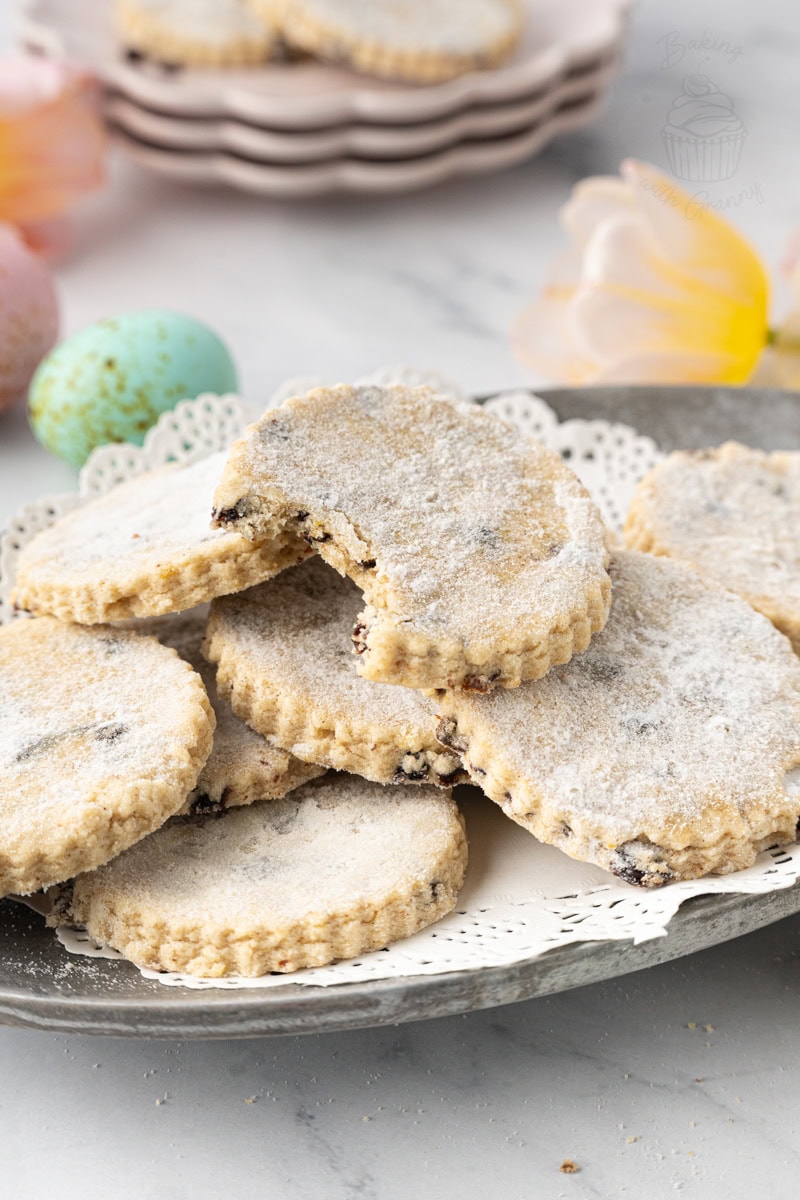
What are traditional Easter Biscuits?
Not everything at Easter has to be about chocolate!
Easter Biscuits are a proper old-school British bake, with roots going right back to the West Country of England. Traditionally made and shared on Easter Sunday, they were often given as wee gifts after church – something simple, homemade, and to be enjoyed together.
Like a lot of traditional Easter foods, these biscuits are tied to the end of Lent, when ingredients like butter, eggs and dried fruit were back on the menu again. That’s exactly what you’ll find in traditional Easter Biscuits – richness from the butter and egg, a bit of warmth from the mixed spice and lemon zest, and little bursts of sweetness from the currants.
What do traditional Easter Biscuits taste like?
They’re also a bake that reflects their origin. Originally from the West Country, where spices and dried fruits were more readily available through trade, Easter Biscuits became known for their lightly spiced flavour and soft, slightly crumbly texture.
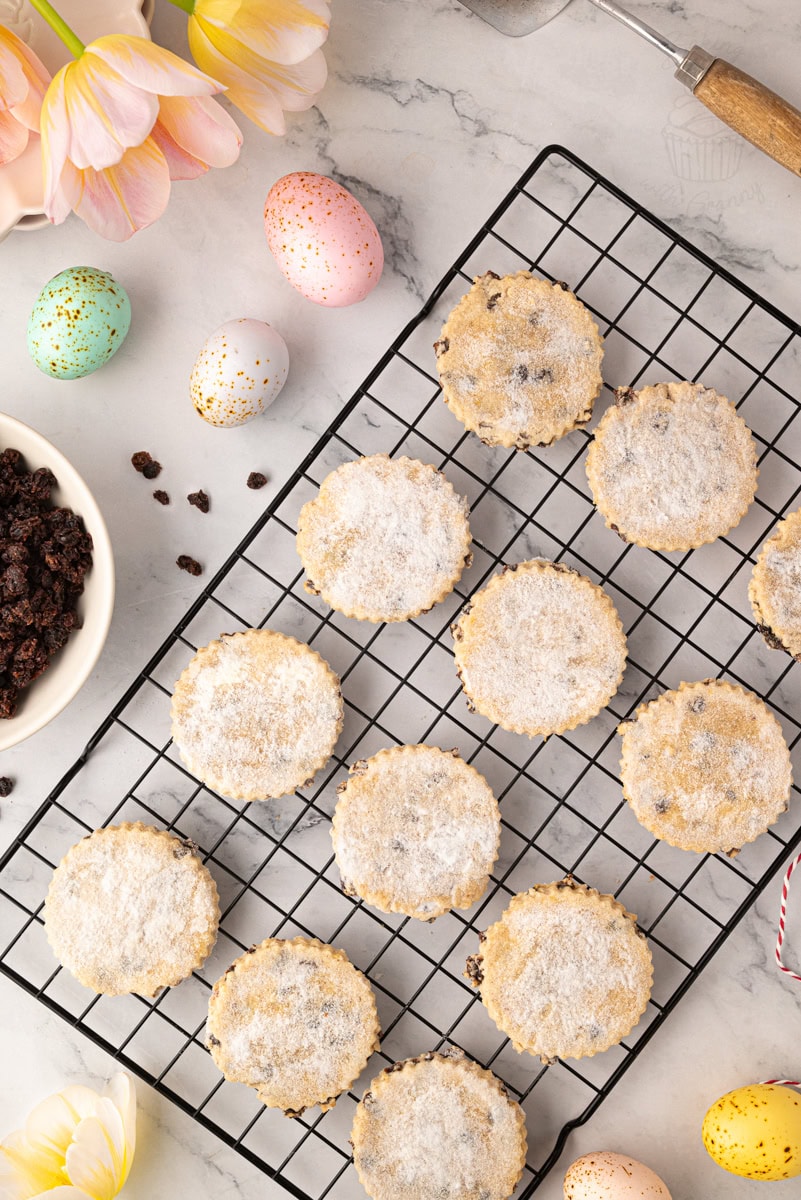
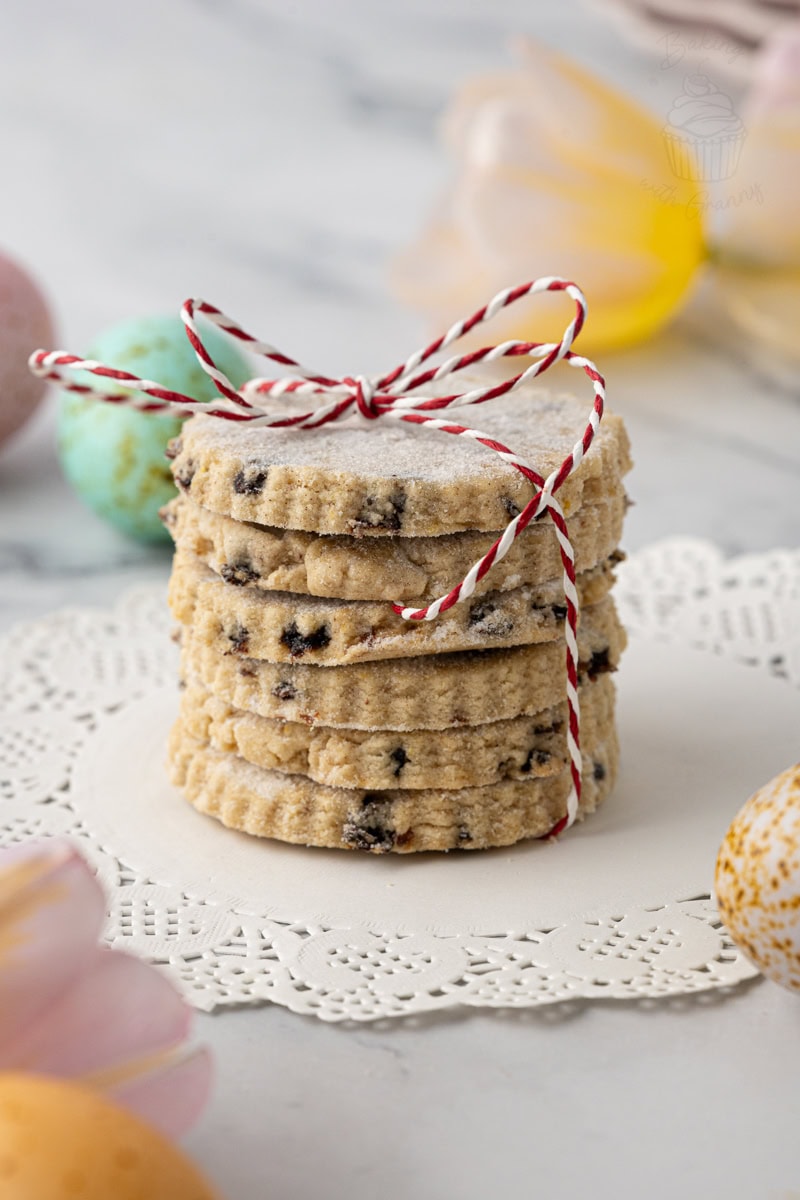
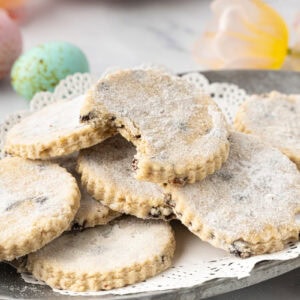
In terms of flavour, they sit somewhere between a biscuit and something a bit more nostalgic – think the gentle spice of a fruit cake, like a Simnel Cake, but much lighter and more suited to everyday. Nothing too rich or heavy – just a simple, well-balanced biscuit. And the finishing touch is what really sets Easter Biscuits apart. That quick brush of egg white and a sprinkle of caster sugar gives them their classic crisp, shiny top.
They might not be as baked as widely these days, but that’s exactly why they are worth trying. Simple ingredients, no fuss, and a real bit of baking history that can still be enjoyed today.
Free-from & Vegan
Gluten-free Options:
To make gluten-free Easter Biscuits, you should be able to swap the plain flour for a gluten-free plain flour. I haven’t tested this myself, but I know readers have had success with this kind of swap in similar biscuit recipes, so it should work here, too.
Nut-free Adjustments:
This recipe contains no nuts, but as always, be sure to double-check the allergen lists for your individual ingredients.
Dairy-free Swaps:
To make these dairy-free Easter Biscuits, simply use a dairy-free baking block margarine instead of butter.
Egg-Free Adaptations:
For the egg yolk in the dough, you could try a small amount of plant milk and a spoonful of cornflour. For the egg white used to glaze, you can brush the biscuits with plant milk instead, then sprinkle with sugar as usual. The finish won’t be quite as crisp and crackled, but they’ll still bake well and taste great.
Vegan Substitutions:
To make vegan Easter Biscuits, use a plant-based block margarine and replace the egg. For the egg yolk in the dough, you could try a small amount of plant milk and a spoonful of cornflour. For the egg white used to glaze, you can brush the biscuits with plant milk instead, then sprinkle with sugar as usual. The finish won’t be quite as crisp and crackled, but they’ll still bake well and taste great.
Allergy Disclaimer & Resources:
Any advice or suggestions to make recipes “free-from” or vegan are purely suggestions. Please double-check all packaged ingredients individually, taking extra caution when baking for those with allergies or intolerances.
For official guidance on food allergies, please see Food Standards Agency (food.gov.uk) | For more info on coeliac disease, please see Coeliac UK (coeliac.org.uk) | For more info on a vegan diet, please see The Vegan Society (vegansociety.com)
Tips for traditional Easter Biscuits:
- Cream Properly: Make sure the butter/margarine and sugar are well creamed until light and fluffy. This helps give your biscuits a lighter texture.
- Don’t Skip the Egg White Finish: Brushing with egg white and sprinkling with caster sugar is what gives Easter Biscuits their signature crisp, shiny, slightly sparkly top.
- Bring the Dough Together Gently: Once you add the flour, avoid overworking the dough. Mix until it just comes together, then knead lightly to smooth it out.
- Roll Evenly: Aim for an even thickness (around 5mm). This helps your biscuits bake evenly and prevents some from catching before others are ready
- Watch the Bake Time: These Easter Biscuits bake quickly. Keep an eye on them during the final few minutes – you’re looking for a light golden colour, not too dark, especially around the edges.
- Adjust for Size: If you use a larger or smaller cutter, remember to tweak the baking time slightly.
- Not a Currant Fan: If you don’t like currants, you can swap them for an alternative dried fruit, but I would advise chopping anything larger than a currant so they distribute evenly throughout the dough. Alternatively, you can just leave them out.
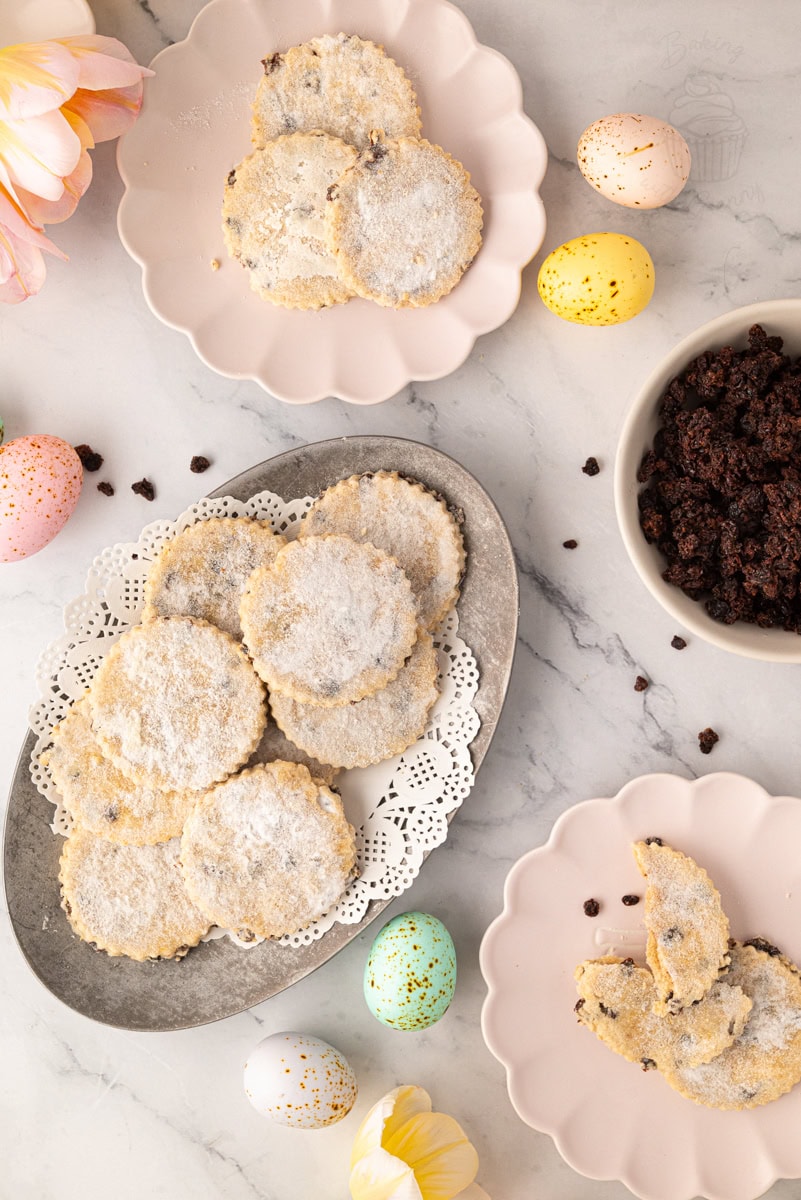
With thanks to Naomi Seiler for creating these photos.
Easter Biscuits FAQs
Easter Biscuits are traditional British biscuits, originally from the West Country of England, and are typically made and enjoyed over the Easter period. They are lightly spiced with mixed spice, dotted with currants, and flavoured with a little lemon zest. They have a delicate, crumbly texture and are finished with a crisp sugar topping for a bit of extra texture.
Brushing the biscuits with egg white helps the caster sugar stick to the tops. As they finish baking, this creates their signature crisp, slightly crackled top. It also adds a little extra sweetness and a bit of texture, which contrasts nicely with the softer biscuit underneath.
Yes, Easter Biscuits are a very easy bake and are made with simple, everyday ingredients. The dough comes together quickly in one bowl, and once mixed, it’s easy to roll out and cut into rounds. There’s no chilling required, making them a great option if you want something homemade without a lot of time or effort.
Yes, you can leave the currants out if you prefer, or swap them for raisins or sultanas. The biscuits will still bake well without them, though you will lose a bit of the traditional flavour and texture that the currants add. If you’re not keen on dried fruit at all, they still work nicely as a simple, lightly spiced biscuit.
Save this recipe!
Want to save this recipe for later? Pop your email below and come back to it when you’re ready to bake.
Easter Biscuits
INGREDIENTS
- 100 g Block Margarine or Butter (at room temperature)
- 75 g Caster Sugar
- 1 Free-range Egg (yolk & white separated) (at room temperature; see Egg Size note below)
- 50 g Currants
- Zest of 1 Lemon
- 200 g Plain Flour
- 1 tsp Mixed Spice
EQUIPMENT
INSTRUCTIONS
- Preheat your oven to 190°C (170°C for fan-assisted ovens, Gas Mark 5 or 375°F). Line a couple of baking sheets with greaseproof paper, then set them aside.
- In a large bowl, cream together the margarine/butter and sugar until light and fluffy. Add the egg yolk and mix through, then add the currants and lemon zest and mix through again.
- Sift in the flour and mixed spice, and mix to create a rough dough – you may need to use your hands to bring it together. Transfer the dough to a floured surface and knead until smooth.
- Roll the dough to about 5mm (¼-inch) thick, then use a round fluted cutter to cut it into rounds. Transfer the biscuits to your pre-lined baking sheets and repeat with the remaining dough.
- Bake in your preheated oven for 8 minutes, then remove and brush the tops with beaten egg white and sprinkle with extra caster sugar, before returning to the oven for a further 3 minutes, or until golden brown.
- Remove from the oven and allow to cool on the baking sheets for a few minutes, then transfer to a wire rack to cool completely.
IMPORTANT NOTE:
All my recipes are developed using a digital scale and the metric system (grams and millilitres). Cup measurements are available as a conversion, but these, unfortunately, won’t always be as accurate. For best results, I always recommend baking with a digital scale.
RECIPE NOTES:
Substitutions:
- Currants: If you aren’t a fan of currants, you can use any other dried fruit to the same weight listed in the ingredients. I would recommend chopping anything larger than a currant to ensure an even distribution in the biscuit dough. Alternatively, you can just leave them out.








ABOUT THE AUTHOR
Amy Beth Reid
Amy Beth Reid is an award-winning food blogger, mother, wife and cookbook author. Inspired by her childhood in the kitchen with her Mum – a professional baker and her children’s Granny – Amy now shares her tried-and-tested traditional home baking recipes with bakers of all abilities around the world. She lives in Scotland with her husband, two sons and her small pack of Siberian huskies.