
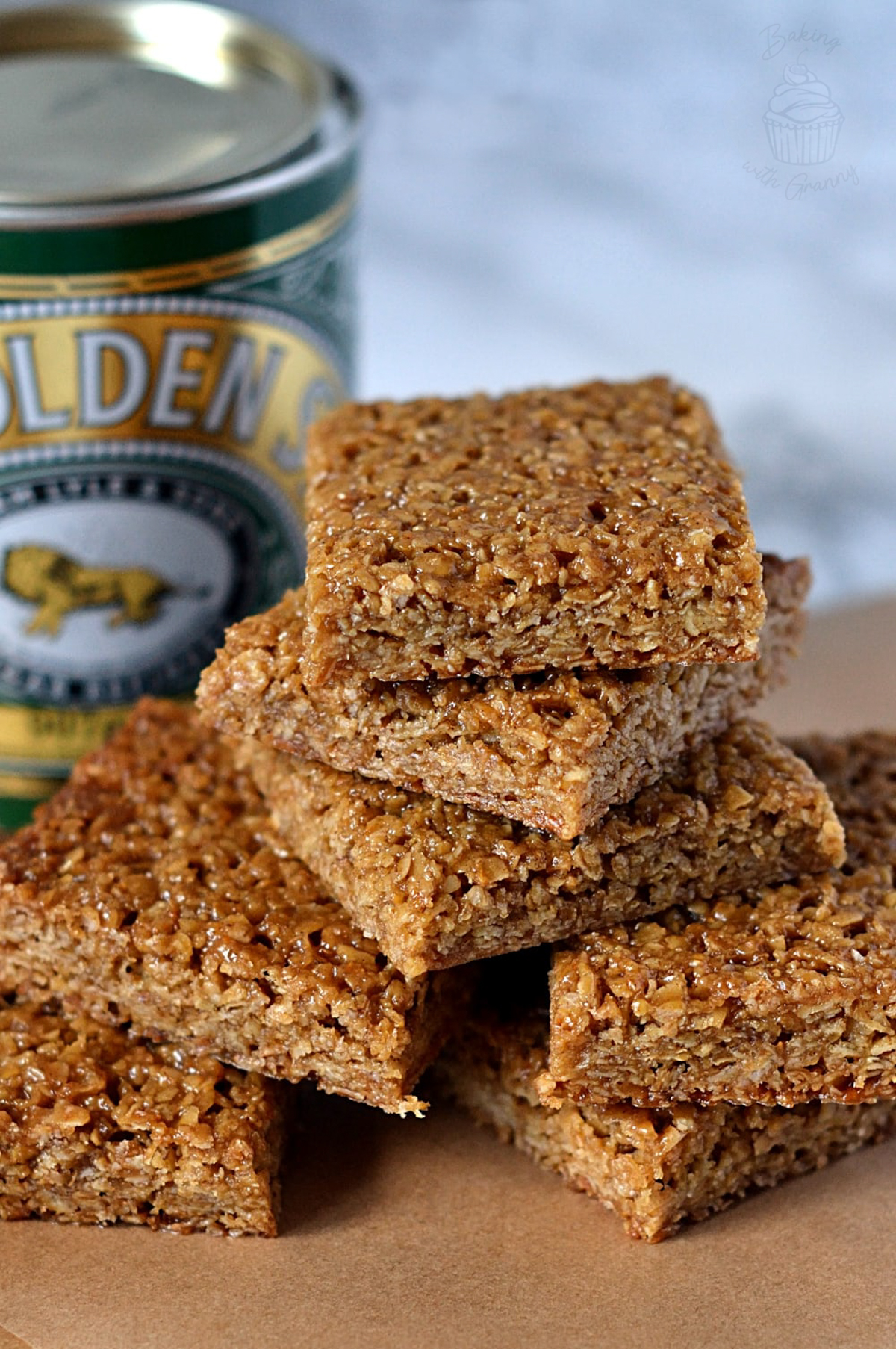
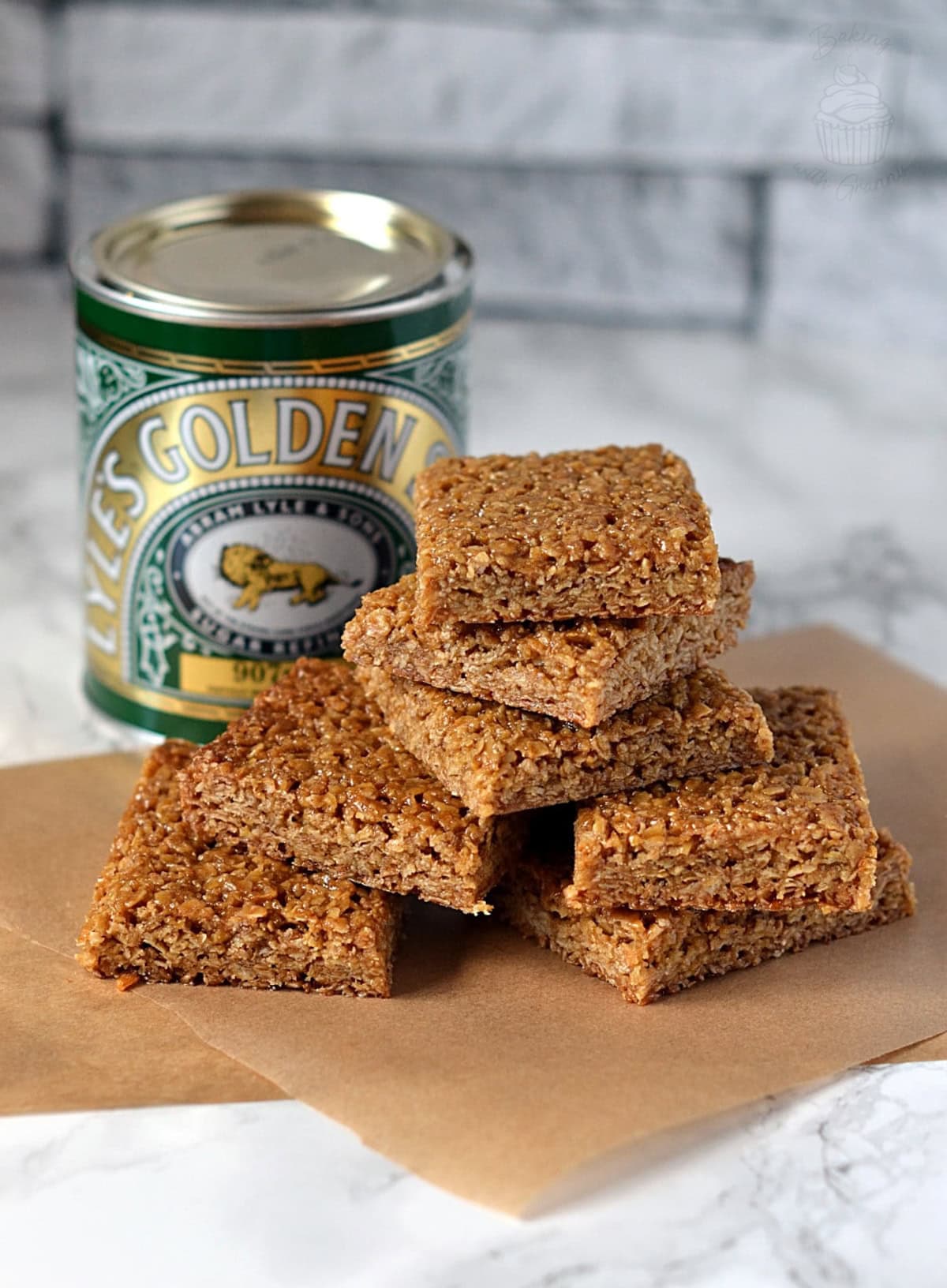
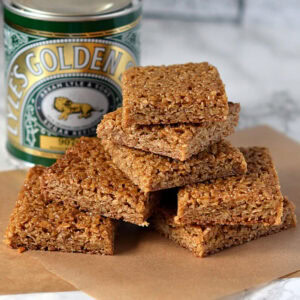
This easy Flapjack recipe makes thick, soft and chewy British flapjacks with golden syrup, brown sugar and everyday porridge oats. I’ve been making and refining this recipe since I first published it in 2017, taking on board years of reader feedback to get that lovely soft, sticky middle without making flapjacks that are greasy or rock-hard.
And us Scots do love some oats! So you can trust that this recipe has been tried and tested hundreds of times (literally!) by my very own family.
Flapjack Recipe Snapshot
- Difficulty: Very easy, but you do need to trust the process.
- Prep Time: 20 minutes.
- Bake Time: 20-25 minutes.
- Total Time: 45 minutes.
- Serves: 16 squares.
- Key Ingredients: Oats, butter (or margarine), brown sugar and golden syrup.
- Dietary Info: Nut-free & egg-free, with substitutions for gluten-free, dairy-free and vegan included below.
- Flavour: Buttery, warm caramel-like golden syrup, with a hint of cinnamon.
- Texture: Soft, sticky and chewy with lightly crisp edges.
- The Secret: Don’t wait for the middle to look completely baked – it should still have a slight wobble when it comes out of the oven.
Summarise & Save this Recipe on:
What is British Flapjack?
British flapjack is a traditional baked oat bar made with porridge oats, butter, brown sugar and golden syrup. Unlike an American flapjack, which is a type of pancake, more along the lines of my Scotch Pancakes recipe or my Shrove Pancakes.
UK flapjack is more of a tray bake and is baked in a tin before being cooled and cut into squares or slices – similar in many ways to my Honey Slice.
Crunchy or Chewy?
That is the question! And my answer? It has got to be chewy. When I want a sweet filling treat, I want a tray bake that isn’t going to break my teeth and take the enjoyment entirely away from me.
For a real, authentic Flapjack, using golden syrup is a must. You could try substituting it with corn syrup, honey, or maple syrup, and although it may turn out just fine, it won’t have quite the same flavour, and the texture will likely be impacted too. So, if my recipe for Golden Syrup Cake and British Treacle Tart weren’t already enough for you to invest in a tin of the liquid gold, this chewy Flapjack recipe should be!
I originally shared this Flapjack recipe way back in 2017(!!). And it has remained a staple snack in our house. But since then I have taken on board some of the comments and feedback this recipe has received over the years, and I’ve made some small adjustments to the ingredient quantities, as well as updating some of the instructions to be more descriptive and helpful.
What is Golden Syrup?
Golden Syrup is a popular baking ingredient in the UK… But what is it? Where can you get it? And what can you use as a substitute?
My in-depth Golden Syrup Ingredient Guide has all the answers to your questions!
Key Ingredients
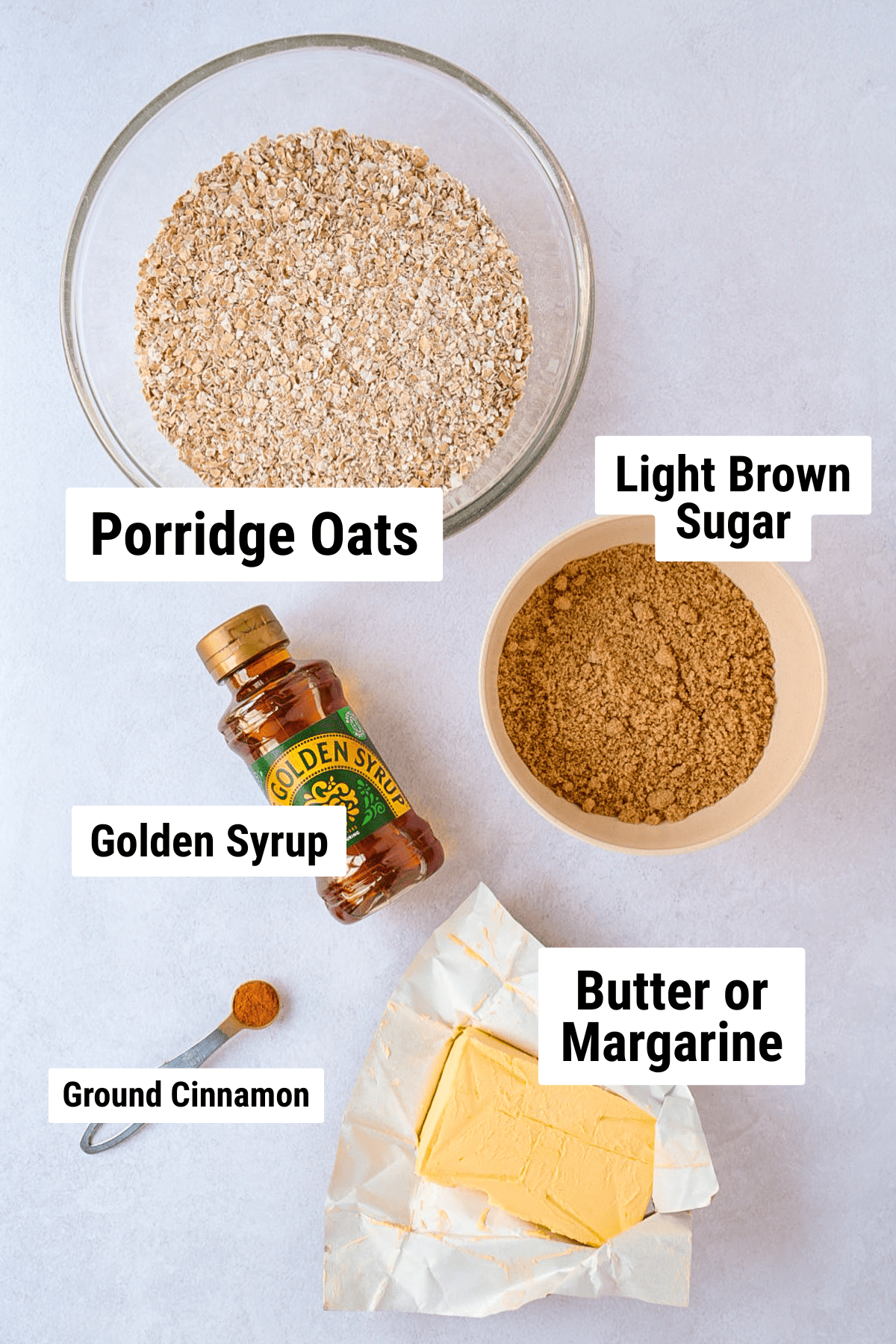
See the recipe card for a full ingredients list, required quantities and cup conversions.
Substitutions & Additions
Butter or Margarine: Either works well in this recipe. If using margarine, make sure it is a block margarine rather than a spreadable one, as spreads contain more water and can affect the finished flapjack.
Soft Light Brown Sugar: This is my preference for that lovely chewy texture and caramel-like flavour. Caster sugar can be used instead, but your flapjack will have a slightly different flavour and a crunchier finish.
Porridge Oats: Regular porridge oats are my favourite for this recipe, particularly the cheaper supermarket varieties with a slightly more powdery texture. Jumbo oats will give a chunkier, looser texture, while instant oats can become too soft and mushy. I also recommend porridge oats for my Scottish Perkins recipe and my Scottish Oatcakes recipe.
Cinnamon: Completely optional but something I love to add. Ground cinnamon gives the Flapjack a little extra warmth, but you can leave it out for a more traditional four-ingredient flapjack.
Additions: Flapjack is also really easy to customise. You can add dried fruit, desiccated coconut, nuts, seeds or chocolate, depending on what you fancy. Just don’t go too overboard with additions, as too many can make it harder for the flapjack to hold together.
Looking for dairy-free, gluten-free or vegan adaptations? See the Free-from & Vegan section below.
Free-from & Vegan
Amy recommends: If you regularly need to adapt baking recipes for gluten-free, dairy-free, egg-free or vegan diets, I highly recommend The Elements of Baking by Katarina Cermelj, creator of The Loopy Whisk. It’s a brilliant resource for understanding how substitutions work, rather than simply swapping ingredients and hoping for the best.
Gluten-free Options:
Gluten-free Flapjack is easy to achieve, as the ingredients don’t usually contain gluten. Most oats are naturally gluten-free, but it’s always worth double-checking or choosing oats labelled gluten-free to be sure.
Nut-free Adjustments:
No nuts are used in this flapjack recipe, but be sure to check the individual ingredients before serving to those with allergies.
Dairy-free Swaps:
To make this a dairy-free flapjack recipe, simply use a dairy-free block margarine in place of butter.
Egg-Free Adaptations:
No eggs are used in this flapjack recipe, but be sure to check the individual ingredients before serving to those with allergies.
Vegan Substitutions:
To make this a vegan Flapjack recipe, simply use a dairy-free block margarine in place of butter.
Allergy Disclaimer & Resources:
Any advice or suggestions to make recipes “free-from” or vegan are purely suggestions. Please double-check all packaged ingredients individually, taking extra caution when baking for those with allergies or intolerances.
For official guidance on food allergies, please see Food Standards Agency (food.gov.uk) | For more info on coeliac disease, please see Coeliac UK (coeliac.org.uk) | For more info on a vegan diet, please see The Vegan Society (vegansociety.com)
How to Make Flapjack
This easy Flapjack comes together quickly, but the most important part is knowing when to take it out of the oven. Don’t wait for the middle to look completely set – that’s how you get a soft, chewy flapjack rather than a hard one. Follow the step-by-step below, or head to the recipe card at the bottom for the full printable recipe.
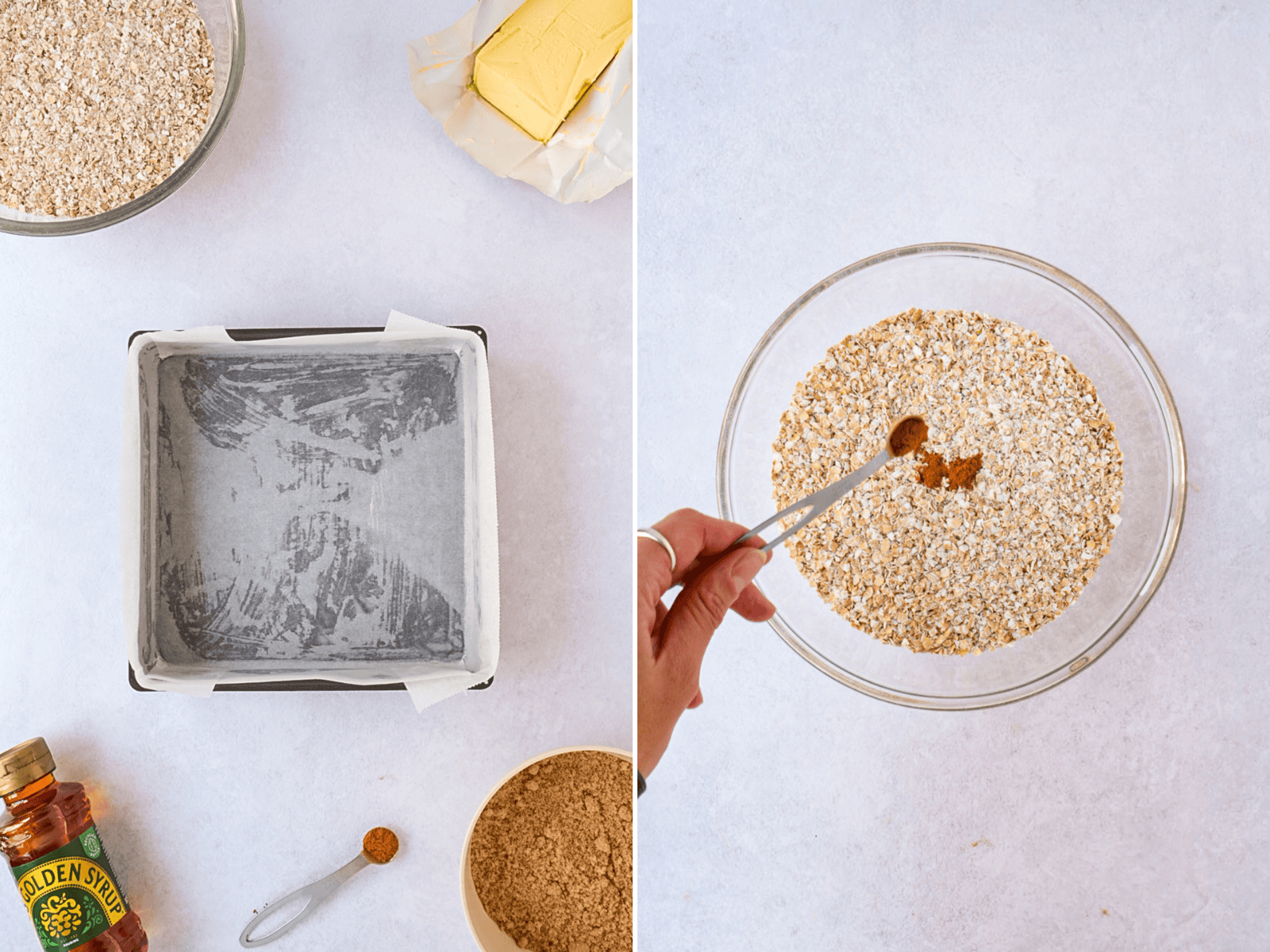
- Prepare the tin and oats. Preheat your oven to 180°C (160°C fan-assisted ovens, Gas Mark 4 or 350°F) and line a 20×20cm (8×8 inch) baking tin with greaseproof paper. Add the porridge oats and cinnamon (if using) to a large bowl.
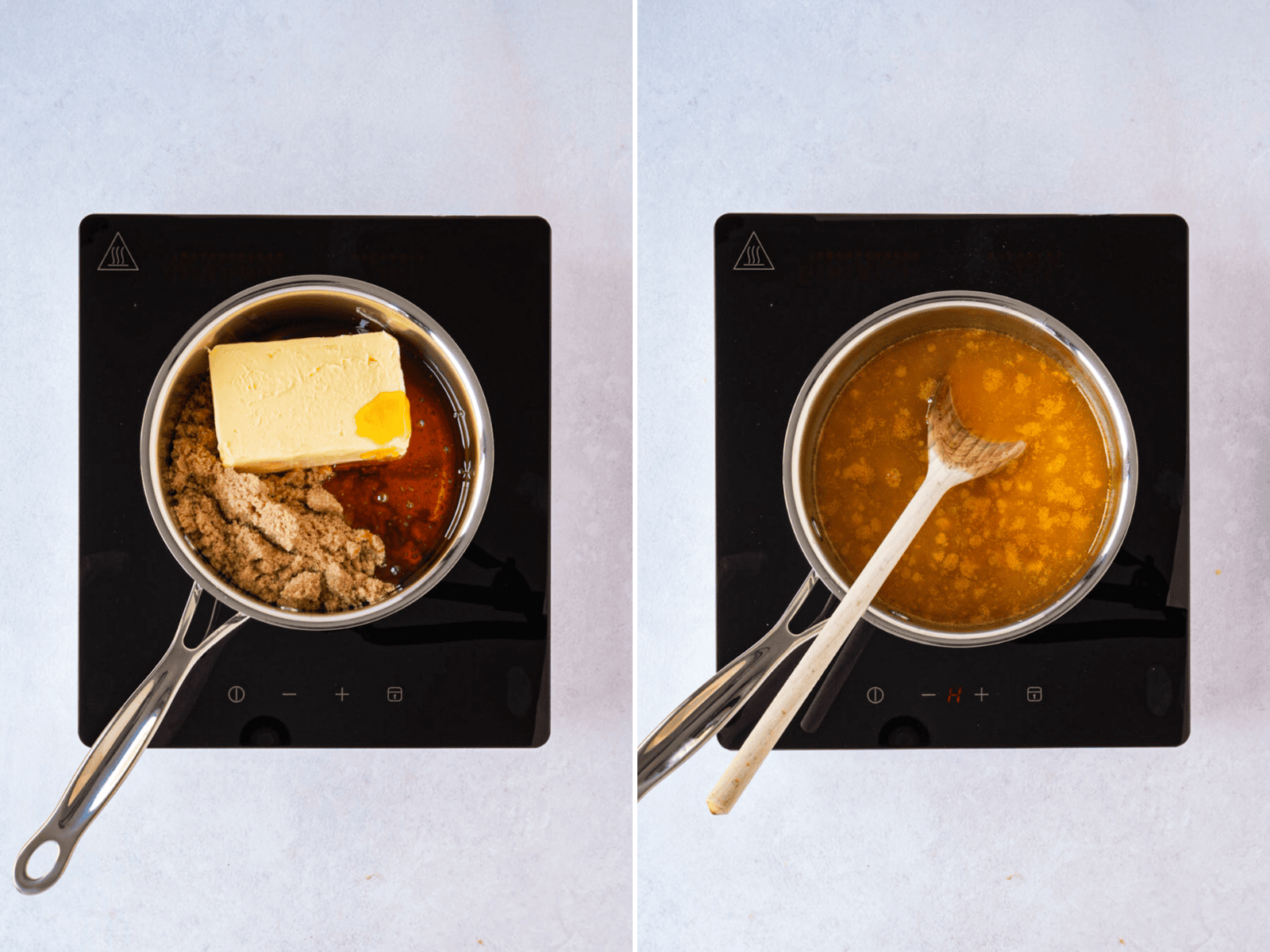
- Melt the butter, sugar and golden syrup. Add the margarine/butter, brown sugar and golden syrup to a saucepan. Warm gently, stirring regularly, until everything has completely melted together.
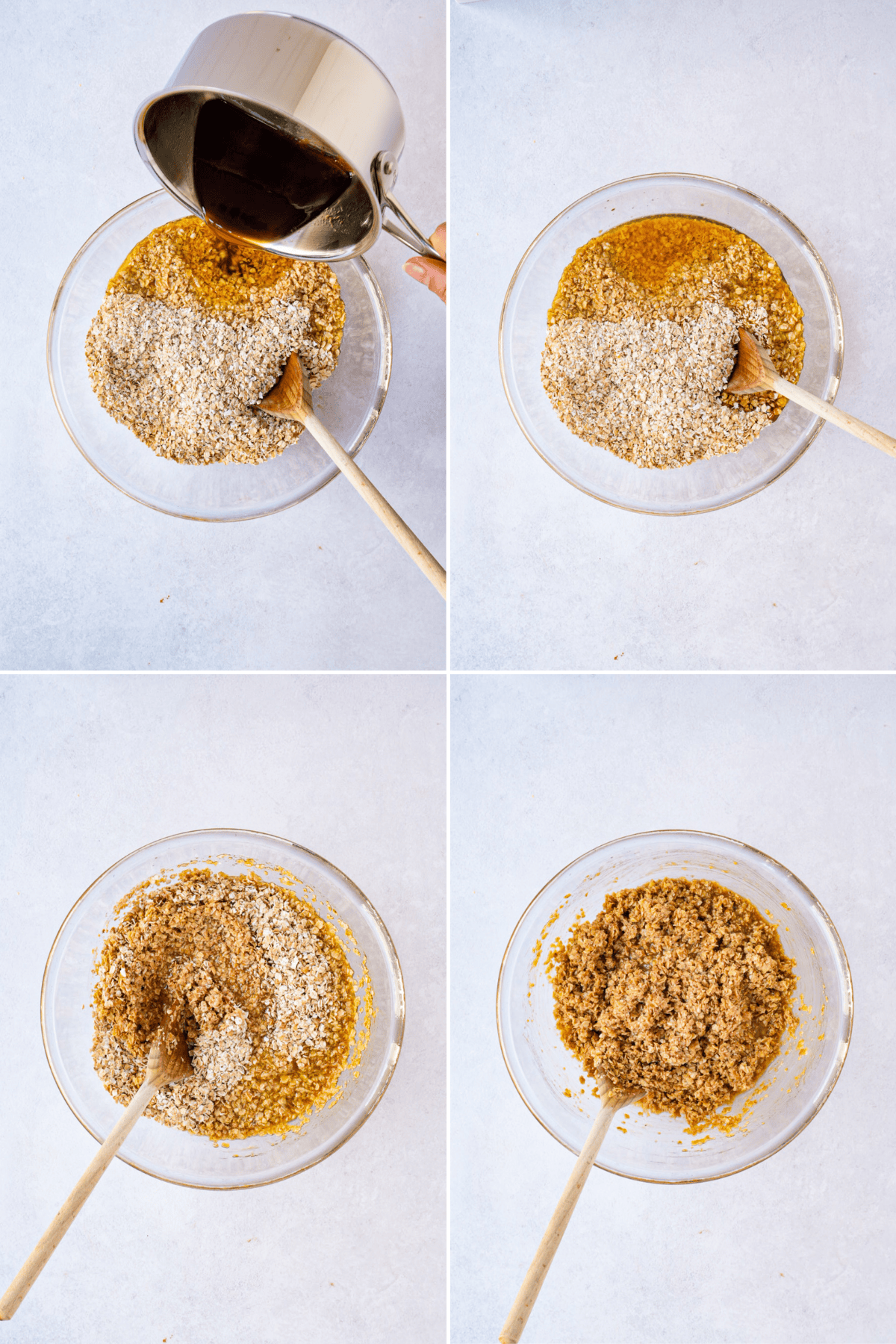
- Combine with the oats. Pour the melted mixture over the oats and stir thoroughly until all the oats are coated and there are no dry patches.
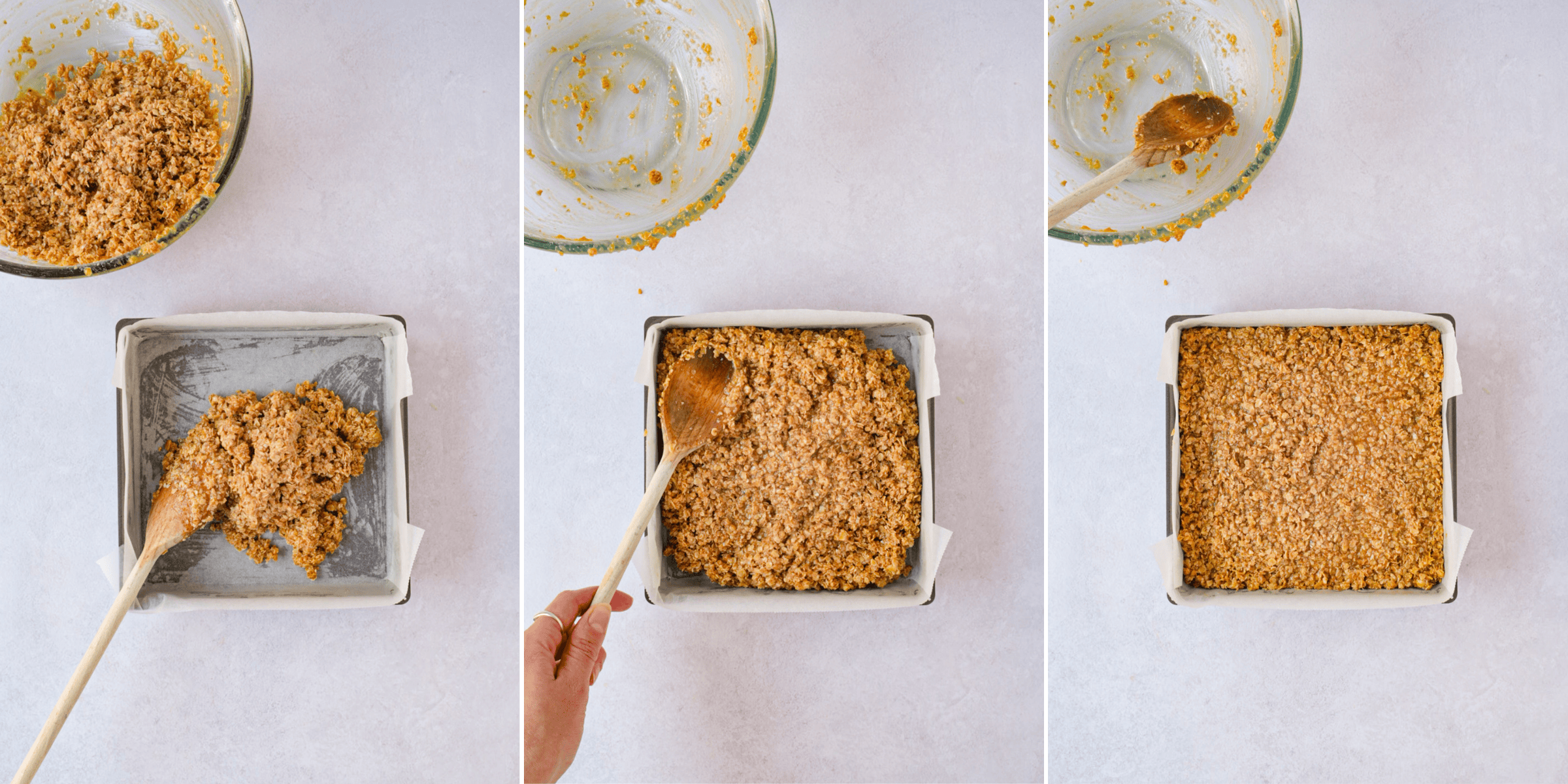
- Press into the tin. Transfer the mixture to your prepared tin, then use the back of a spoon to spread it evenly into the corners and press it down.
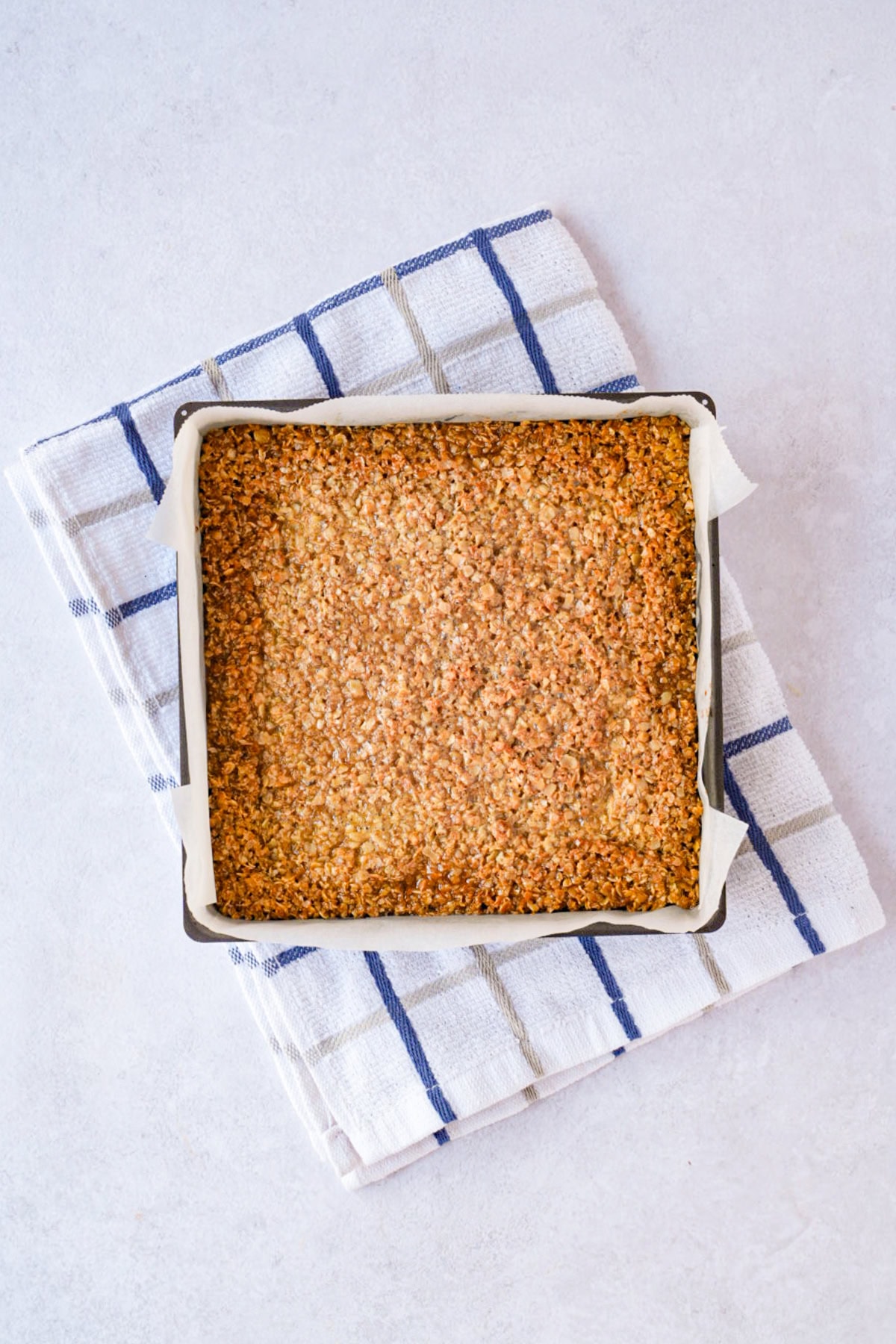
- Bake. Bake for around 22-25 minutes, until the edges are lightly golden, but the middle still has a slight wobble. It might still look a little underbaked in the centre, but it will continue to set as it cools.
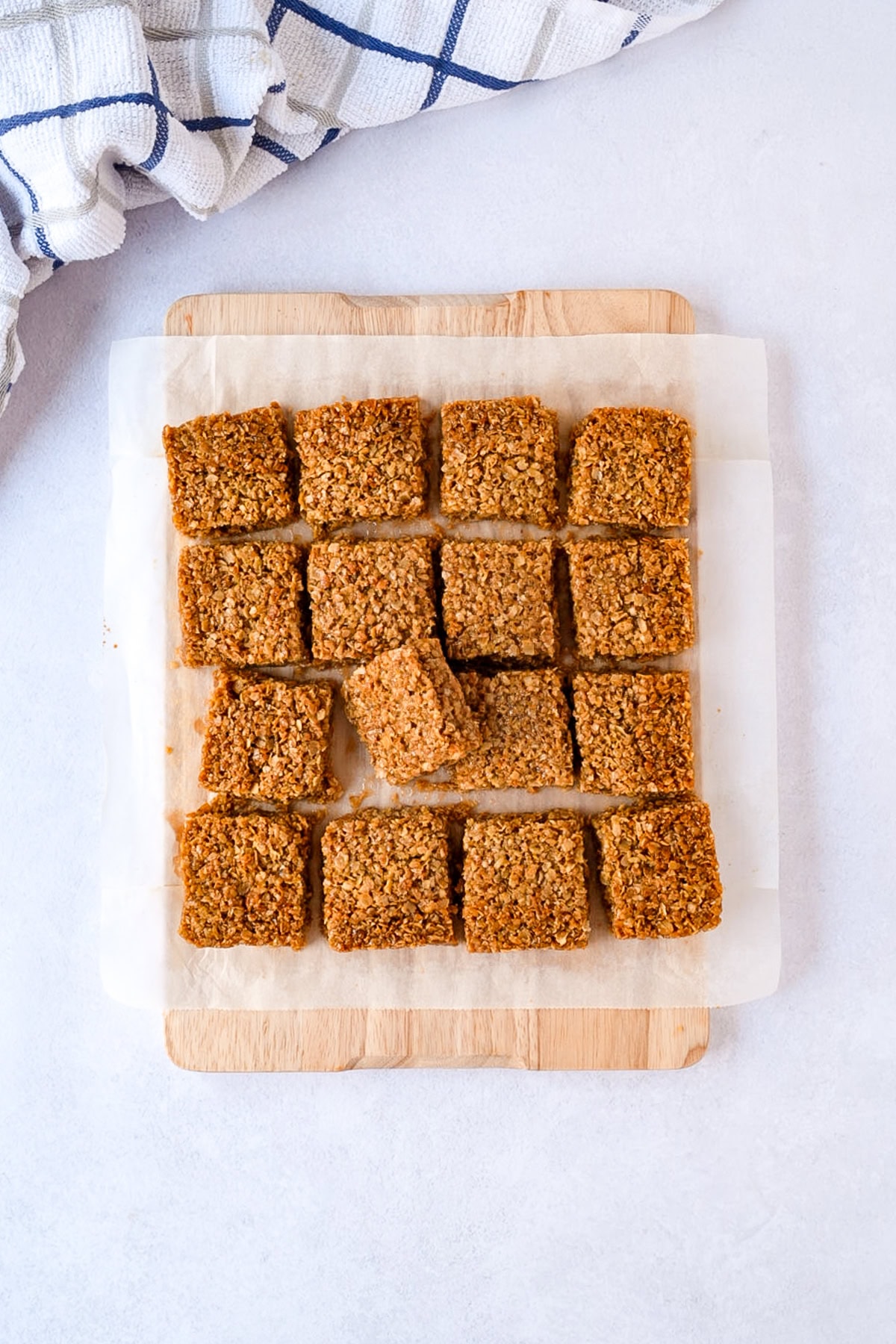
- Cool completely. If the edges have risen slightly, gently press them down with the back of a cold spoon while the flapjack is still warm. Then leave it to cool completely in the tin before lifting or cutting.
Top Tips for the Perfect Flapjack
- Line the Tin Completely: When I first published this recipe, I recommended using foil – and after making many, many more batches of Flapjack since, I 110% take that back! Greaseproof paper is much easier to work with. Make sure the whole tin is lined with no gaps, as any Flapjack mixture that seeps underneath can stick firmly to the tin and make removing it a lot more difficult than it needs to be.
- Press the Mixture Down: Once you’ve transferred the Flapjack mixture to your tin, use the back of a spoon to press it flat and evenly into the corners. This helps everything hold together and gives you nice, even pieces once baked.
- Don’t Wait for the Middle to Look Baked: This is probably the most important tip – cannot stress this one enough. Your Flapjack should still have a slight wobble in the middle when it comes out of the oven. As long as the edges are lightly golden, it is ready, and the centre will continue to set as it cools.
- Neaten the Edges While Warm: The edges can rise slightly during baking. Leave the Flapjack for a few minutes, then use the back of a cold spoon to gently press them back down while everything is still soft.
- Let It Cool Completely: Probably the second most important tip. Don’t be tempted to lift your Flapjack from the tin while it is still warm. This chewy version needs time to set properly as it cools, and trying to move or cut it too soon will make it fall apart.
- Take Care When Lifting the Middle Pieces: The centre pieces are deliberately softer and chewier than the edges. Make sure you’ve cut all the way through and use a small palette knife or spatula to gently lift them away from the paper if needed.
Storage & Freezing
- Storage: Store your Flapjack in an airtight container at room temperature for up to 1 week. If you prefer a firmer texture, you could also keep it in the fridge.
- Freezing: Flapjack freezes well. Wrap in individual portions or the whole slab tightly in cling film, then place in a freezer-safe container. Freeze for up to 3 months. Defrost at room temperature before serving.
UK Flapjack FAQs
Flapjack can crumble if the mixture hasn’t been pressed firmly enough into the tin, if it is removed or cut before it has completely cooled, or if the balance of ingredients has been changed. Make sure all of the oats are thoroughly coated in the melted mixture, press everything into the tin with the back of a spoon and leave the baked Flapjack to cool completely before lifting it out. This recipe is deliberately soft and chewy in the centre, so take extra care when cutting and lifting those middle pieces.
The most common cause is overbaking. Flapjack continues to firm up considerably as it cools down, so if you wait for the centre to look completely set in the oven, it can end up hard once cold. Remove it when the edges are lightly golden, and the centre still looks a little soft and wobbly.
Flapjack can look surprisingly buttery when it first comes out of the oven because the fats are still completely melted. Most of this should melt back into the oats as it cools. Make sure you weigh the ingredients accurately, use the full 400g of porridge oats and avoid spreadable margarines, which contain more water than butter or block margarine. Different oats can absorb the mixture slightly differently too, which is one of the reasons I prefer ordinary supermarket-own-brand porridge oats for this recipe.
This is definitely a chewy Flapjack recipe, with slightly crisp edges and a softer middle. The key is not to overbake it – take it out when the edges are lightly golden, but the centre still has a slight wobble. If you prefer crunchier Flapjacks, you can bake them a little longer or use caster sugar instead of soft light brown sugar.
Yes. You can customise Flapjack with dried fruit, desiccated coconut, nuts, seeds or chocolate. I like adding some chopped-up dried apricots, and some readers have successfully added ingredients including cranberries, sultanas, pumpkin seeds and dates. Keep any extra additions fairly modest, though, as adding too much can make it harder for the mixture to bind together properly.
More UK Tray Bakes
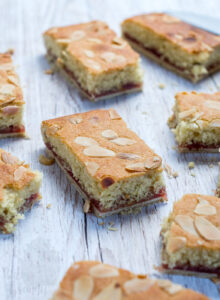
If you loved this traditional UK Flapjack, here are some more of my favourite British tray bake recipes for you to try next:
Save this recipe!
Want to save this recipe for later? Pop your email below and come back to it when you’re ready to bake.
Flapjack
INGREDIENTS
- 250 g Block Margarine or Butter (plus extra for greasing)
- 180 g Golden Syrup (see Golden Syrup note below)
- 200 g Soft Light Brown Sugar
- 400 g Porridge Oats
- ¼ tsp Ground Cinnamon (optional)
EQUIPMENT
INSTRUCTIONS
- Preheat your oven to 180°C (160°C for a fan-assisted oven, Gas Mark 4 or 350°F). Grease a 20×20cm (8×8 inch) baking tin with some extra butter/margarine before lining with
greaseproof paper . Set aside. - In a large bowl, lightly mix the oats and cinnamon (if using).400 g Porridge Oats; ¼ tsp Ground Cinnamon
- In a medium-sized saucepan, warm the butter/margarine, golden syrup and sugar over a low heat, stirring regularly, until all the ingredients have melted together.250 g Block Margarine or Butter; 180 g Golden Syrup; 200 g Soft Light Brown Sugar
- Add the melted mixture to the oats and stir together until all of the oats are coated and no dry spots remain.
- Transfer the mixture to your prepared tin. Smooth and press it into the corners with the back of a spoon.
- Bake in your preheated oven for about 22-25 minutes, until the edges are lightly golden and the middle still has a slight wobble. It may look like it has not completely baked, but don't worry! It will set as it cools down.
- Leave to cool completely in the tin before lifting out by the
greaseproof paper . Slowly and gently peel back the edges – if you go too quickly, you may tear the greaseproof paper. Cut into your desired sizes (I like 16 smaller squares).
IMPORTANT NOTE:
All my recipes are developed using a digital scale and the metric system (grams and millilitres). Cup measurements are available as a conversion, but these, unfortunately, won’t always be as accurate. For best results, I always recommend baking with a digital scale.
RECIPE NOTES:
LIKE THIS RECIPE?
Leave a comment and rating below!Originally published in 2017.
Comments and reviews prior to 2024 may reflect old recipe quantities and instructions.







ABOUT THE AUTHOR
Amy Beth Reid
Amy Beth Reid is an award-winning food blogger, mother, wife and cookbook author. Inspired by her childhood in the kitchen with her Mum – a professional baker and her children’s Granny – Amy now shares her tried-and-tested traditional home baking recipes with bakers of all abilities around the world. She lives in Scotland with her husband, two sons and her small pack of Siberian huskies.